
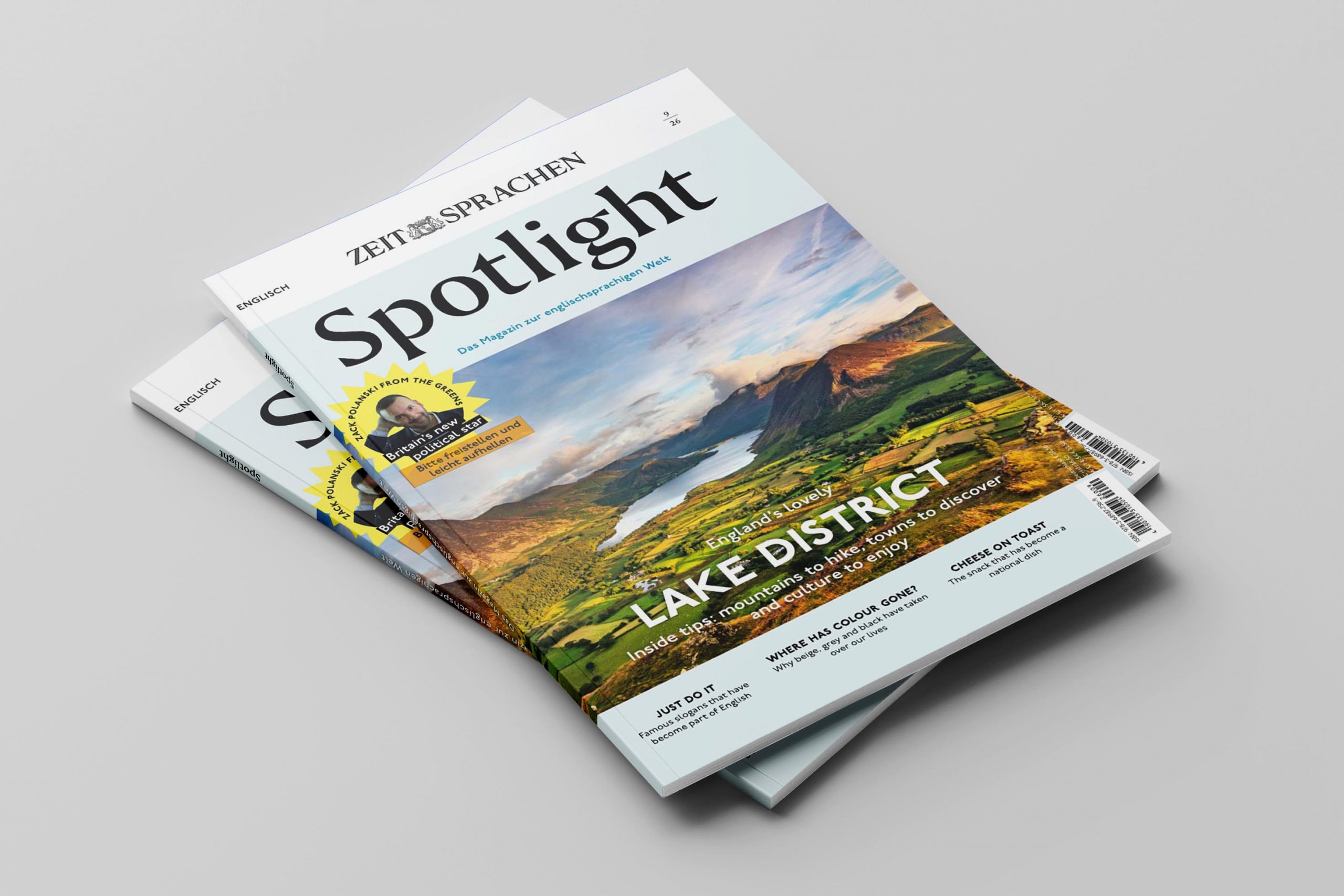
My image from the summit of Low Fell featured on the June 2026 issue of Spotlight Magazine
I was recently approached by the German Magazine Spotlight to feature one of my Lake District photos on their cover, which was quite a privilege. Spotlight is a well-read German language magazine designed specifically for German-speaking learners to improve their English skills. As part of this I was asked to feature on a Podcast to chat about the Lake District and introduce it for their German audience. Now I’m very familair with the Lake District having visited for most of my life and know quite a lot about it, and as I live quite clodse to teh region you coudl say I take visitingf it for granted! So it was a bit different to me to be able to think of this beautiful area and explain it to someone who has never been or even heard of it!
I thought I would share some of the questions I was asked on the podcast and also a more long form of my answers to anyone else who hasn’t heard about the Lake District and wants to know more!
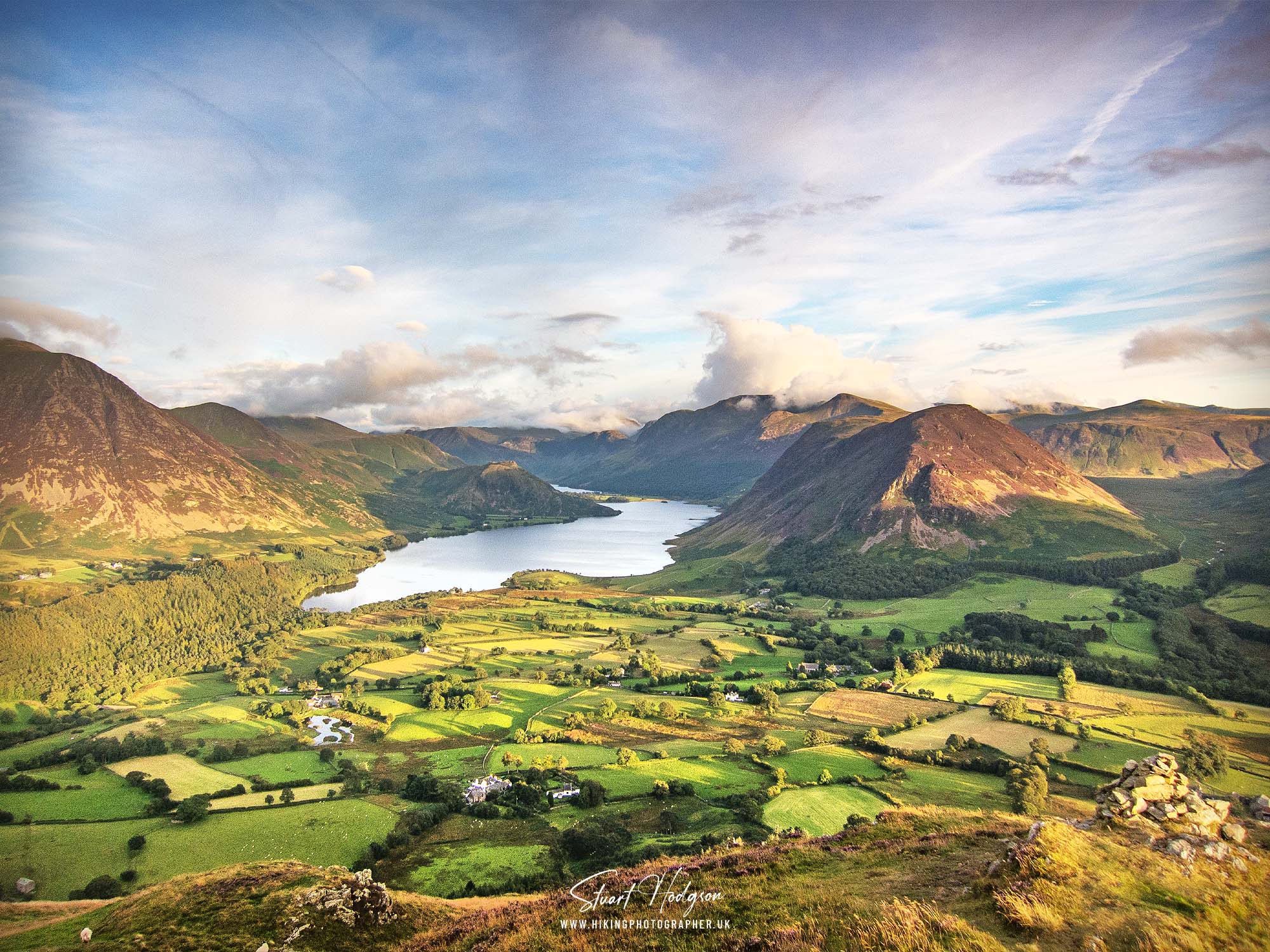
The view from the summit of Low Fell, over towards Crummock Water and the western Lakeland Fells – a quintessential Lake District view
Introduction to the Lake District
Located in Cumbria in north-west England, the Lake District is England’s largest national park and one of its most treasured landscapes. Covering approximately 2,300 square kilometres, this designated area of protected countryside is renowned for its dramatic scenery, rich cultural heritage, and endless opportunities for adventure.
What makes the Lake District particularly special is how concentrated it is. Despite feeling wonderfully wild and expansive, it measures only around 64 kilometres (40 miles) from north to south and 51 kilometres (32 miles) from east to west. This means visitors can experience an incredible variety of landscapes and attractions within a relatively small area.
In 2017, the Lake District was awarded UNESCO World Heritage Site status, recognising not only its outstanding natural beauty but also the unique way humans have shaped and managed this landscape over thousands of years.
The region is characterised by its rugged fells – the local term for mountains and hills – alongside sparkling lakes, ancient woodlands, and traditional farming landscapes that have remained largely unchanged for centuries.
The Lake District is home to some remarkable geographical extremes. It contains England’s highest mountain, Scafell Pike, which rises to 978 metres (3,209 feet) above sea level. It also boasts England’s deepest lake, Wast Water, reaching depths of around 79 metres (258 feet).
It is also famously the wettest place in England, with some areas receiving around three metres of rainfall each year. While this may sound daunting, this abundance of rain is responsible for creating the lush green valleys, dramatic waterfalls, and stunning landscapes that make the region so distinctive.
The National Park contains 16 major lakes, including iconic bodies of water such as Windermere, Derwentwater, and Ullswater. Interestingly, despite the area’s name, only one of these officially includes “Lake” in its title: Bassenthwaite Lake.
Beyond the larger lakes, there are over 100 mountain tarns scattered throughout the fells. A tarn is a small mountain lake or pond, typically formed within a glacial hollow during the last Ice Age. These hidden gems often provide some of the Lake District’s most magical and peaceful settings.

A map of the 16 major lakes in the Lake District, with only Bassenthwaite Lake actually having the term ‘Lake’ in it’s name
My Own Personal Connection to the Lake District
I live around two hours away from the Lake District on England’s North-East coast in an old industrial town. Growing up, annual family holidays to the Lake District were filled with awe of the sheer scale of the Lake District mountains and beauty of the place and looking back these trips where incredibly important in shaping my appreciation of the natural world.
Those early experiences planted the seeds of a lifelong connection with the outdoors. Standing beneath towering mountains, spending time on the water and exploring wild landscapes inspired me to eventually begin hiking, camping, and later documenting my adventures on this website.
The Lake District has given me countless memories and adventures over the years, and it remains somewhere I return to time and time again.
Today, I share my experiences in the hope of helping others discover and enjoy this extraordinary place for themselves. I also think the more people can enjoy and connect with the Lake District responsibly, the more likely they are to value and help preserve it for future generations.
Three Things Everyone Should Do in the Lake District
For first time visitors to the Lake District here are three things you must do:
1. Combine a Hike with a Lake
One of the greatest joys of visiting the Lake District is experiencing both its mountains and lakes together. There are walks suitable for every ability level, from gentle lakeside strolls to challenging mountain adventures.
A personal favourite that I recommend to almost everyone – including families with children – is the Buttermere circular walk. The route follows the shoreline of one of the Lake District’s most beautiful lakes and offers spectacular mountain views throughout.
Buttermere feels quieter and less commercialised than many other parts of the National Park. It possesses an almost timeless quality, as though very little has changed here over generations. It perfectly captures what many people imagine when they think of the Lake District.
It is impossible thouyh to select just one Lake District walk – as there are lots of excellent walks for all abilities and preferences. Visit my dedicated Lake District page to discover lots more walk ideas.
2. Get Out on the Water
Experiencing the lakes from the water offers a completely different perspective on the surrounding landscape.
One of the best ways to do this is aboard the historic Ullswater Steamers, which have been operating for over 167 years along the entire length of England’s second-largest lake. One vessel in the fleet, Lady of the Lake, is among the oldest working passenger boats in the United Kingdom.
For those seeking a more active experience, paddleboarding has become one of my favourite ways to explore. Ullswateris my personal favourite lake for paddleboarding, thanks to its stunning scenery and generally quieter atmosphere. While Windermere is beautiful, it can often feel much busier, particularly during peak season.
3. Visit a Traditional Lakeland Village
No visit to the Lake District would be complete without spending time in one of its charming villages. Grasmere is perhaps the perfect example.
Home to the celebrated nineteenth-century poet William Wordsworth, Grasmere was famously described by him as “the loveliest spot that man hath ever found.” Nestled within a valley and surrounded by a dramatic amphitheatre of rugged fells, it is easy to understand why he felt such affection for the village.
Wordsworth was a pioneering British poet and one of the founders of the Romantic movement. He revolutionised literature by using everyday language to explore the profound relationship between human emotion and the natural world.
Modern historians sometimes refer to Wordsworth as the Lake District’s very first “influencer.” Through his poetry and writings, he transformed what had once been viewed as a remote and inhospitable region into one of Britain’s most desirable destinations.
He also championed ideas far ahead of his time. Wordsworth argued that the Lake District should be treated as “a sort of national property, in which every person has a right and interest who has an eye to perceive and a heart to enjoy.” This philosophy helped lay the foundations for the establishment of the National Trust in 1895 and eventually the creation of the Lake District National Park in 1951.
What Is the Best Time of Year to Visit?
The truth is that there is no bad time to visit the Lake District. Every season brings its own unique character and appeal.
For first-time visitors, I generally recommend visiting during the warmer months when the days are longer and weather conditions are often more favourable. Since it is the wettest part of England, planning a trip in May, June, or September offers an excellent balance of milder weather while avoiding the busiest school holiday periods.
Autumn is another wonderful time to visit. In late October and early November, the ancient woodlands burst into shades of gold, orange, and red, creating some of the most spectacular scenery of the year.
Winter can be equally magical. Snow-capped fells and frosty mornings transform the landscape into something truly special. However, snowfall is difficult to predict, and winter conditions in the mountains require additional preparation and experience.
Ultimately, each season offers a different perspective on the Lake District, which is one reason why so many visitors return year after year.
Books I Would Recommend
If I had to recommend just one set of books about the Lake District, it would undoubtedly be The Pictorial Guides to the Lakeland Fells by Alfred Wainwright.
Published between 1955 and 1966, these seven entirely handwritten and hand-drawn volumes are widely regarded as the absolute bible for fellwalkers.
Alfred Wainwright became the most influential fellwalker, guidebook author, and illustrator in British history. Through his meticulous guides, he popularised the Lake District fells and inspired generations of people to explore them.
The 214 hills he categorised eventually became known simply as “The Wainwrights.” To this day, thousands of hikers set themselves the challenge of climbing every one of them – a testament to Wainwright’s enduring influence on outdoor culture in Britain.
Speciality Foods to Try
Kendal Mint Cake
Despite its name, Kendal Mint Cake isn’t actually a cake at all. It is a solid, sugary confection infused with peppermint oil and packed with fast-releasing glucose energy.
It gained worldwide fame as a mountaineering survival ration after being carried by Sir Edmund Hillary during the first successful ascent of Mount Everest in 1953. Today, it remains an iconic Cumbrian treat and a favourite among walkers.
Traditional Cumberland Sausage
The famous Cumberland Sausage is instantly recognisable thanks to its distinctive coiled shape, often resembling a sleeping snake.
Unlike standard sausages sold in linked casings, traditional Cumberland Sausage is heavily seasoned with black pepper and herbs, giving it a robust and memorable flavour. Its origins stretch back several centuries and it remains one of Cumbria’s most celebrated regional foods.
Lakeland Beer
The Lake District possesses a world-class brewing heritage and is a paradise for both real ale enthusiasts and craft beer lovers.
Thanks to exceptionally soft mountain spring water, local breweries produce remarkably clean-tasting bitters, pale ales, and stouts. Exploring some of the region’s independent breweries and traditional pubs offers another excellent way to experience local culture.
What Is Transport Like?
Reaching the Lake District is easier than many people expect.
There are excellent rail connections into the region, with services linking major cities across the UK to stations such as Oxenholme, Penrith, and Windermere.
Once there, a network of buses connects many of the major towns and villages, providing access to numerous popular attractions and walking routes.
However, having access to a car offers much greater flexibility, particularly if you want to explore some of the quieter and more remote corners of the National Park. Visitors should be aware that many Lakeland roads are narrow, winding, and include steep mountain passes, all of which add to the area’s unique character.
My Favourite Lake District Photo
Choosing a favourite photograph from the Lake District is incredibly difficult, but one image stands above all the others.
It’s actually quite an old photograph, taken during a spectacular sunset from the summit of Haystacks, overlooking Buttermere and stretching westwards towards the Irish Sea (see below).
Haystacks was famously Alfred Wainwright’s favourite fell, and it’s easy to understand why. Despite having completed hundreds of hikes throughout the Lake District, sunsets in the mountains remain surprisingly elusive.
I’ve witnessed countless beautiful moments in the fells, but I have never seen another sunset quite like that one. It remains a powerful reminder of why I fell in love with the Lake District in the first place.

SUMMARY
I hope this has provided a bit of a useful introduction to the Lake District for those unfamilar with Englands most stunning region, and along with this website I really do hope it helps inspire and plan a trip to the Lake District




0 Comments