
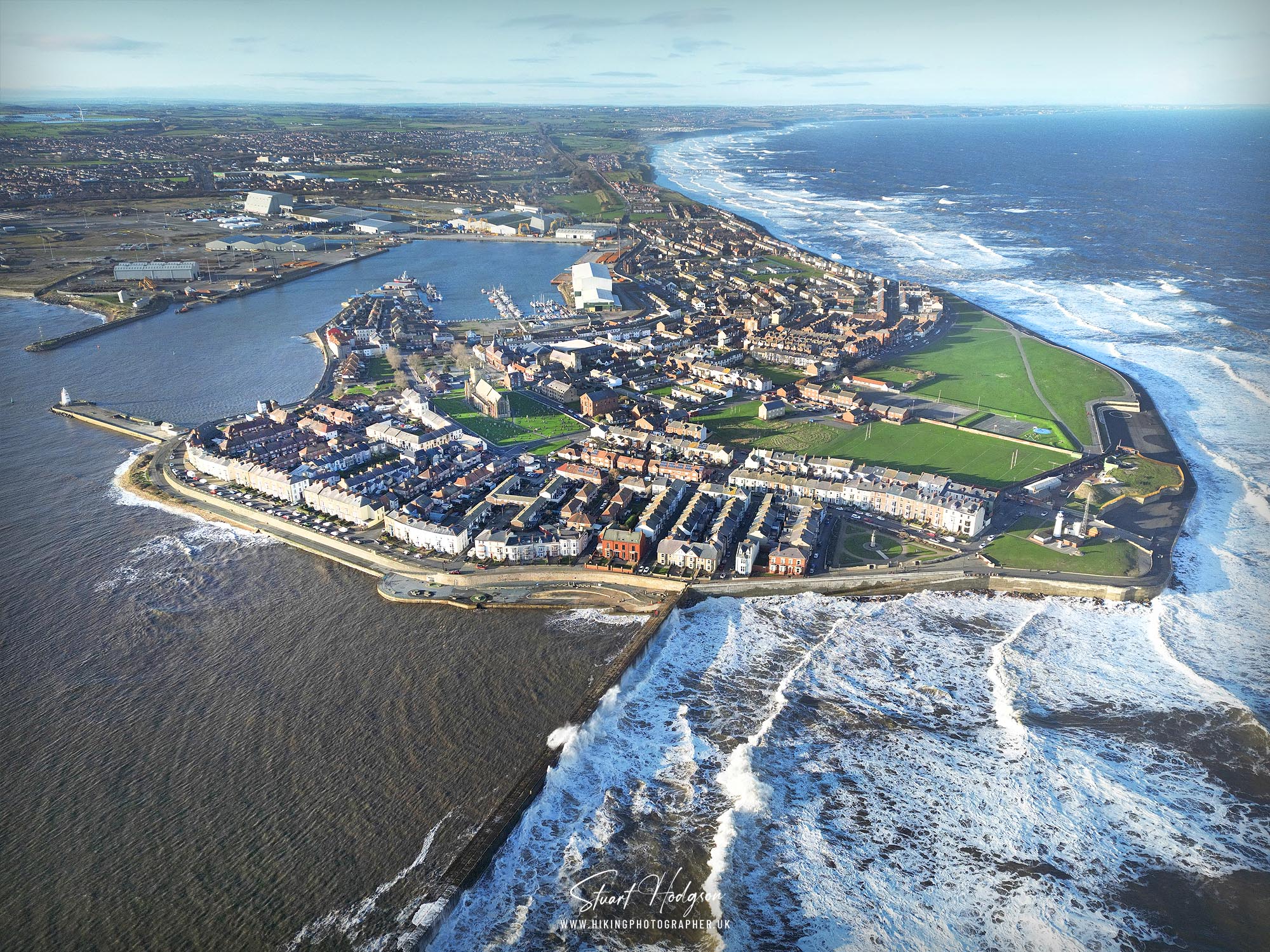
The Historic Hartlepool Headland on the County Durham Coast. This penisula is full of history and well worth an explore in itself – but there’s an excellent coastal walk you can do from here all the way up to Crimdon Dene (top centre in photo). Read on to learn more….
WALK OVERVIEW:
DISTANCE: 8.8 miles
TIME: 3.5 hours
TOTAL ASCENT: 474ft
DIFFICULTY: EASY

HARTLEPOOL HEADLAND WALK TO CRIMDON ROUTE
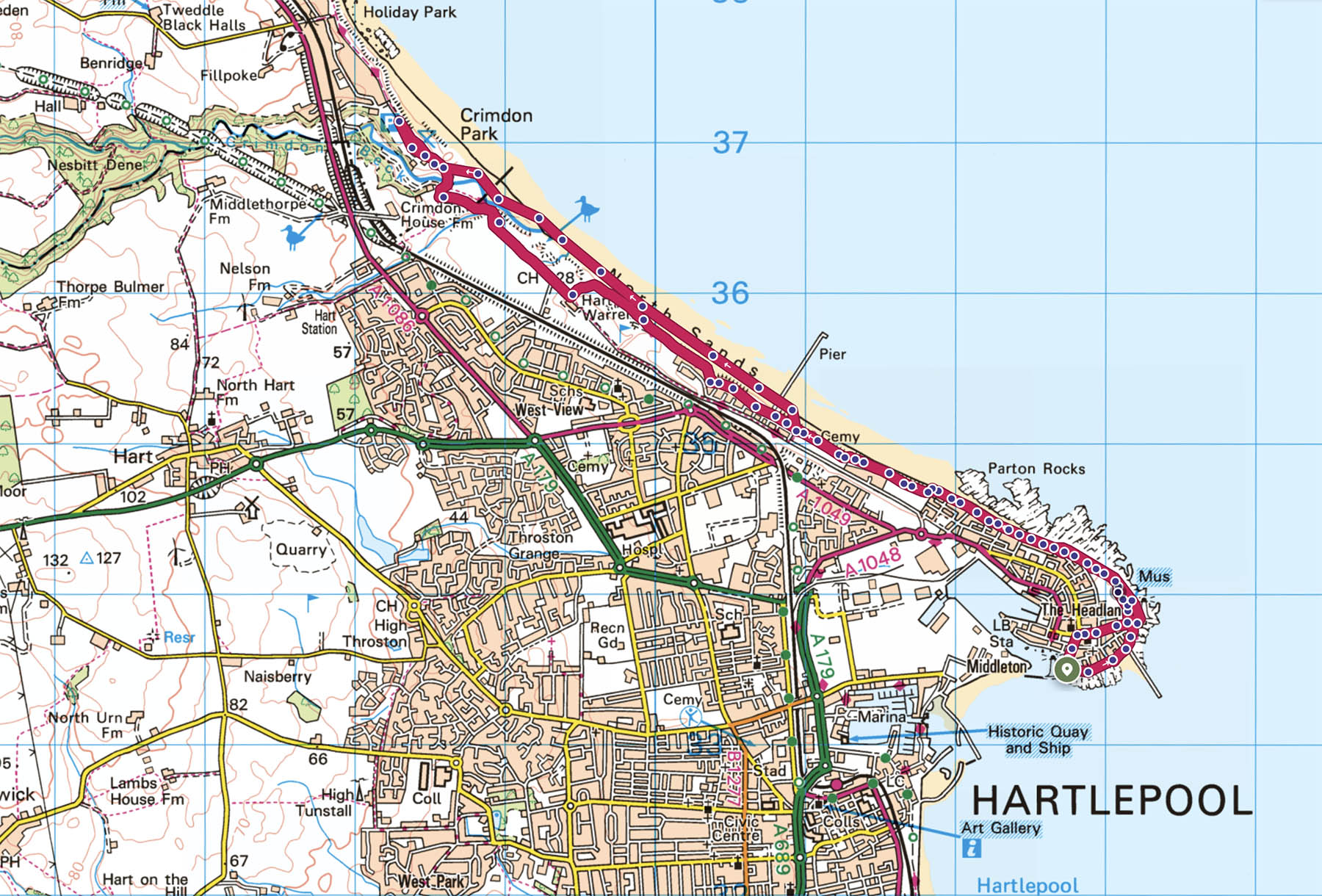
The walk starts on Hartlepool’s Headland (free street parking in most places – recommend Albion Terrace) and heads along the promenade past the Heugh Breakwater, The Lighthouse and further along the promenade all the way to the end of Marine Drive (where Parton Rocks is mentioned on the map) From here you head up onto the gravel coastal path which is on the cliff tops (or you can even go on the beach if the tide is out – check tide times!) You then walk all the way to Crimdon where there is a nice cafe for refreshments. Then simply retrace your steps on the coastal path or beach – whatever takes your fancy!
HISTORIC HARTLEPOOL HEADLAND
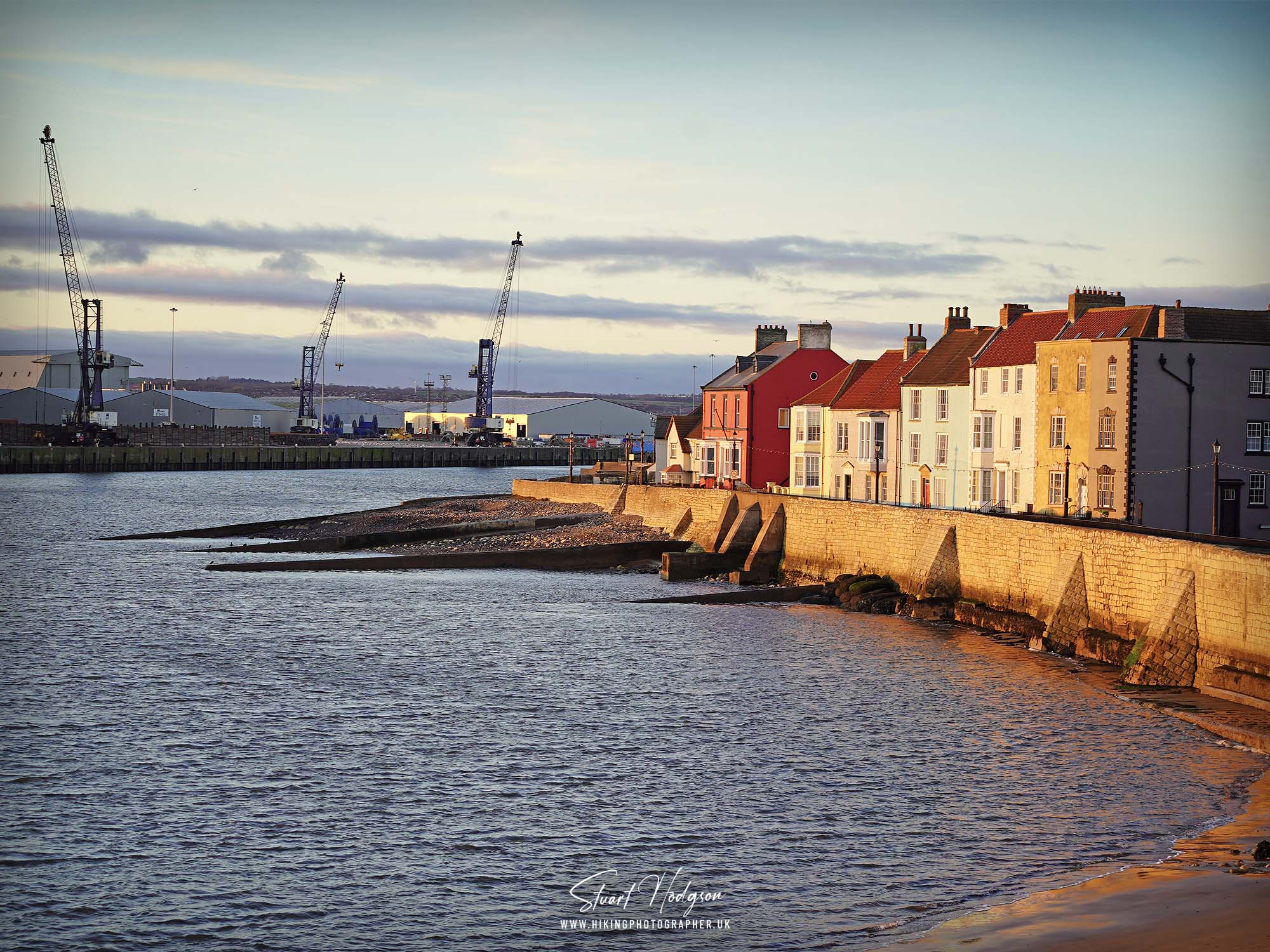
You are greeted by fine seaside views of the historic Hartlpool Headland and the charming houses which line the coast here
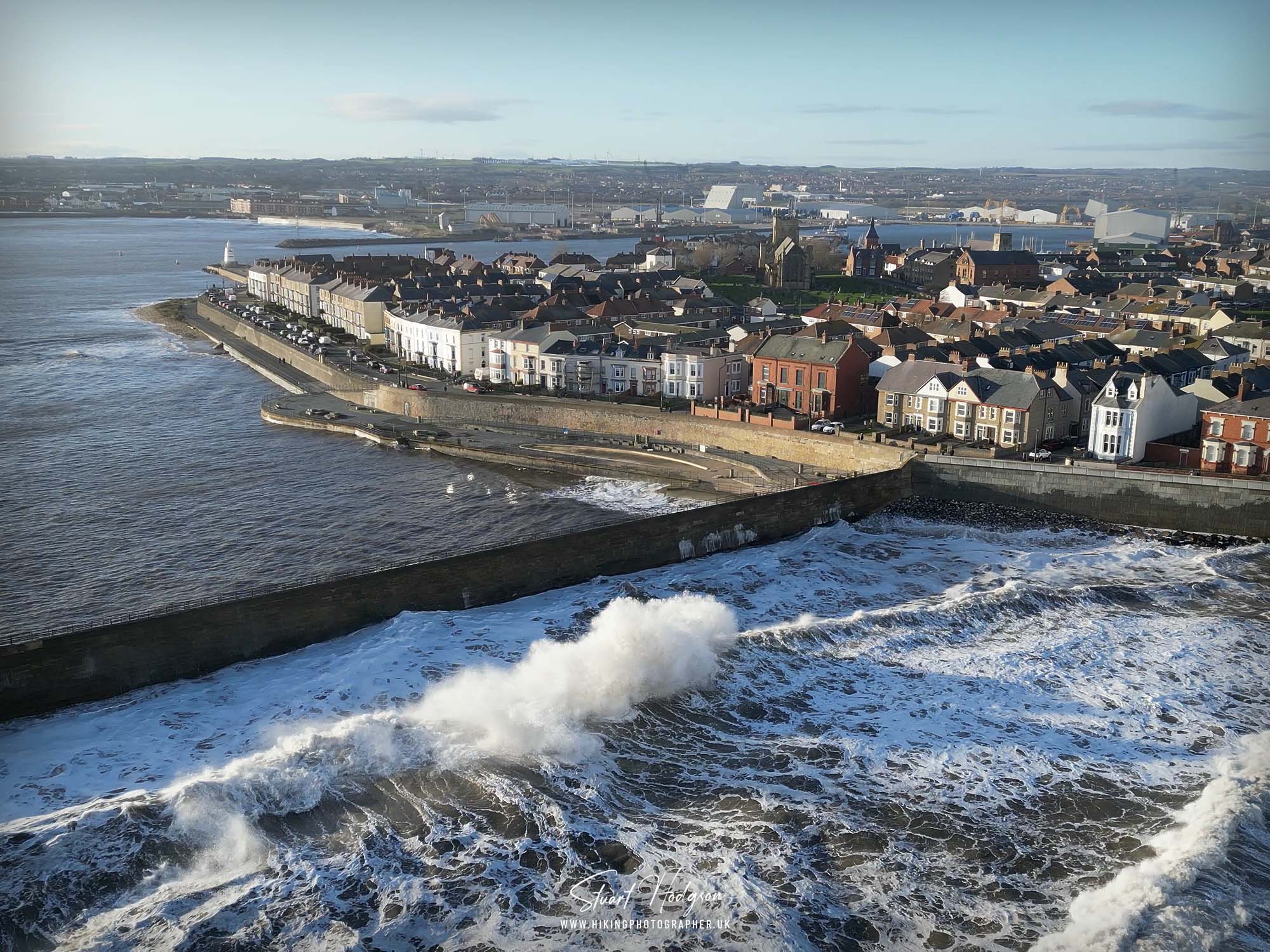
You can park on Albion Terrace for free (pictured to the left of the pic – and then follow the promenade walk, past the Heugh Breakwater which is an excellent place to see the waves crashing on this historic pier). I actually made a video showing the dramatic waves crashing on the Heugh Breakwater – check out the video below:
COASTAL PATH
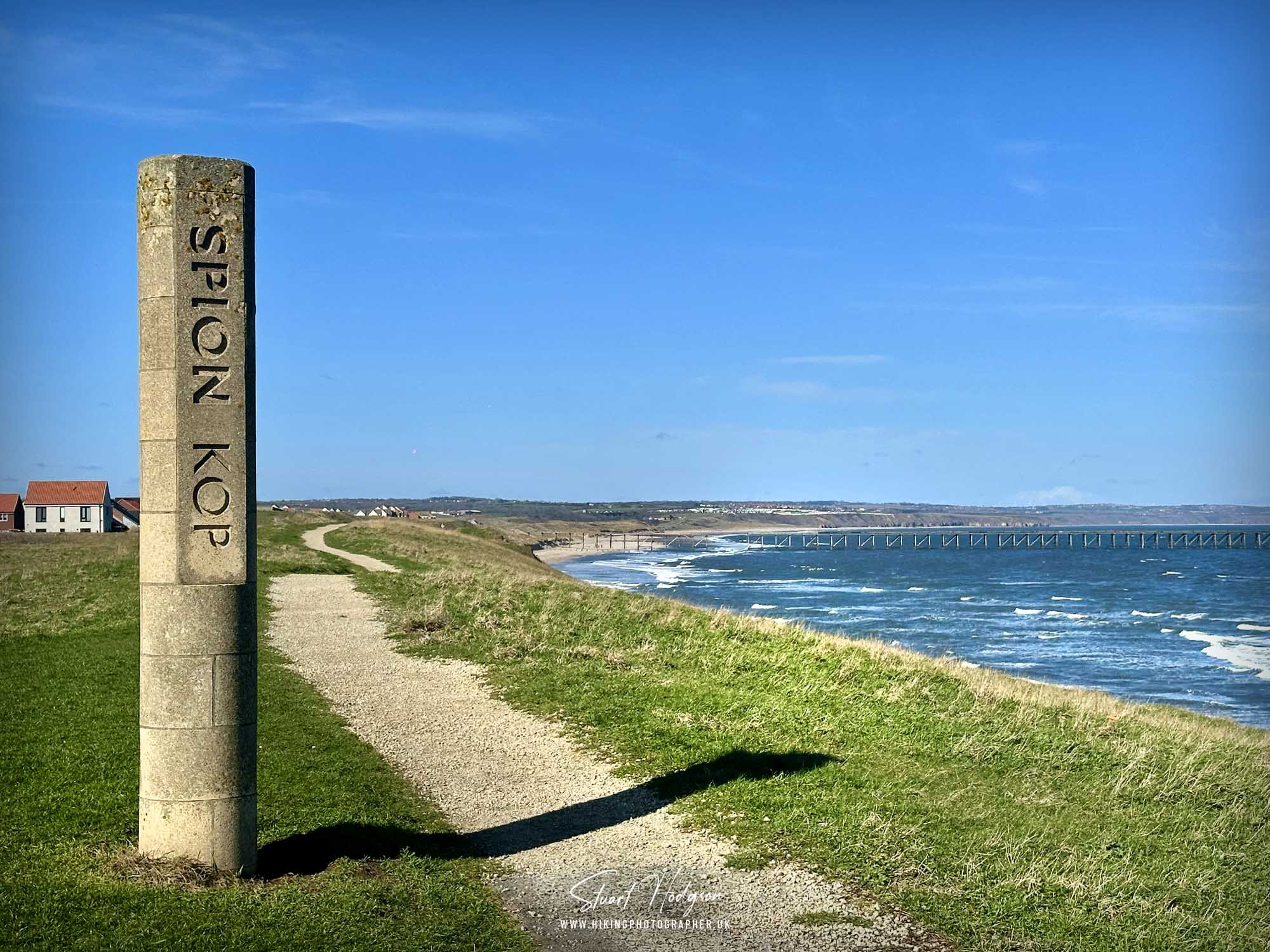
Once you depart the Headland Promenade you head up onto the Coastal path which is clearly marked, giving fine views all the way up the County Durham coast towards Seaham, Sunderland and beyond
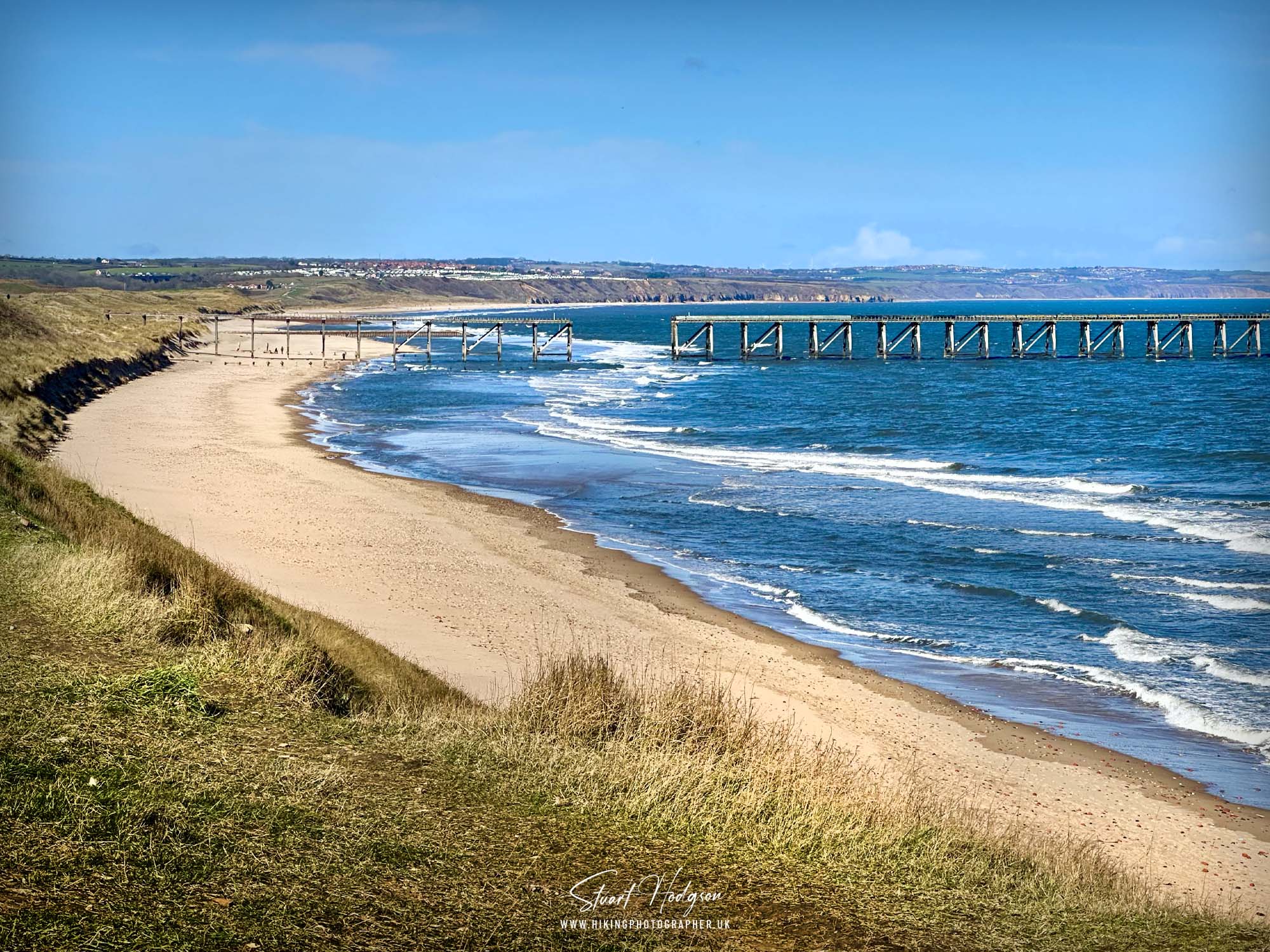
I like to walk the elevated coastal path until you get to the disused Steetly Pier and then I’ll drop down onto the beach and walk the 20 mins or so to Crimdon on the sand rather than the path which is on the Dunes from the pier onwards.
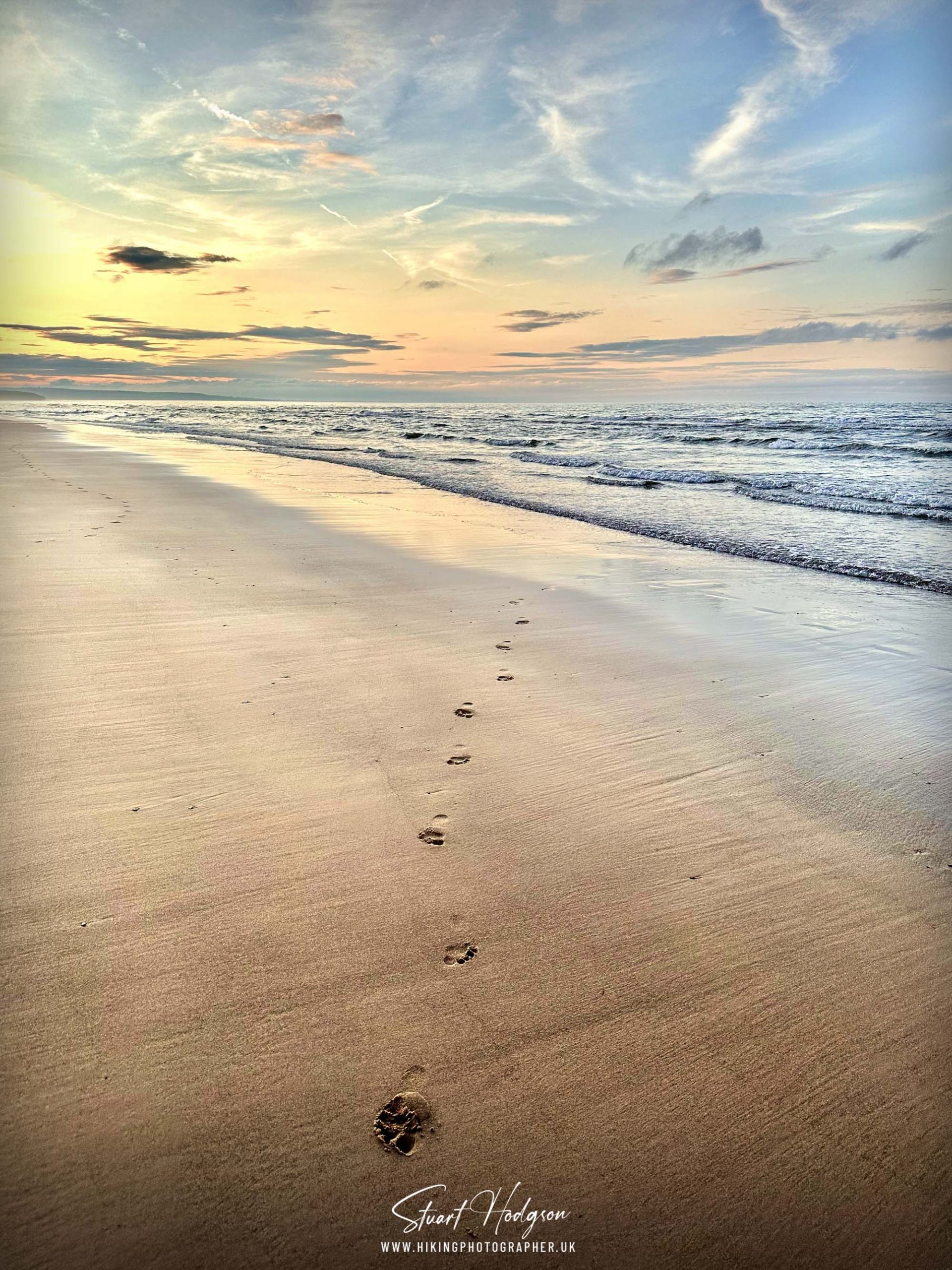
For me the beach around here is a real hidden gem, often quiet, except for locals often walking their dogs and even kick off your shoes if the weather is favourable! It really is a fantastic stretch of coastline.
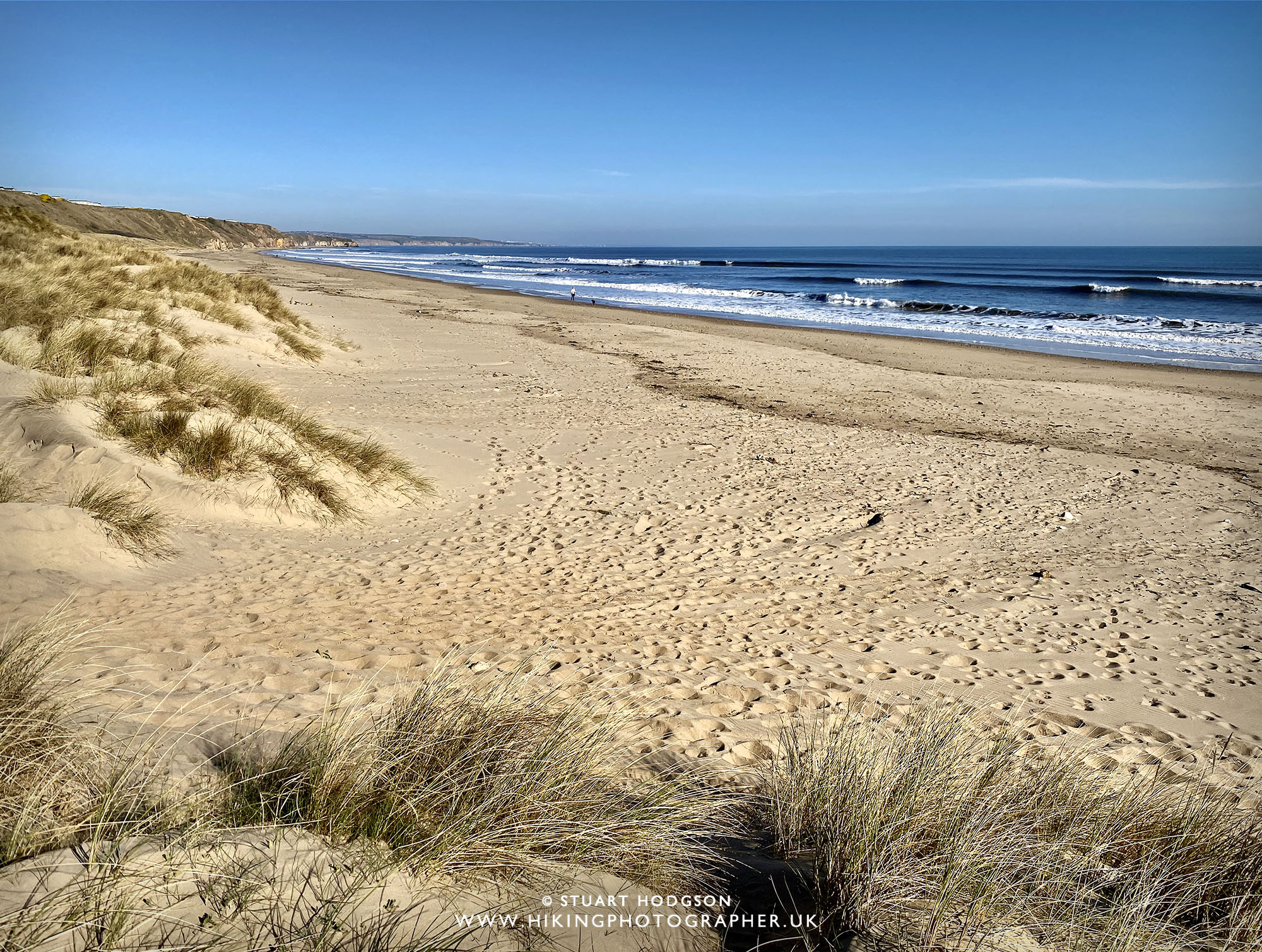
This is my local stretch of beach as you approach Crimdon Dene – and it’s up there with the best of them in England – and you won’t find many people around here too! I often pop to Crimdon Beach for a stroll to get soem fresh sea air and uninterupted County Durham coastal views.
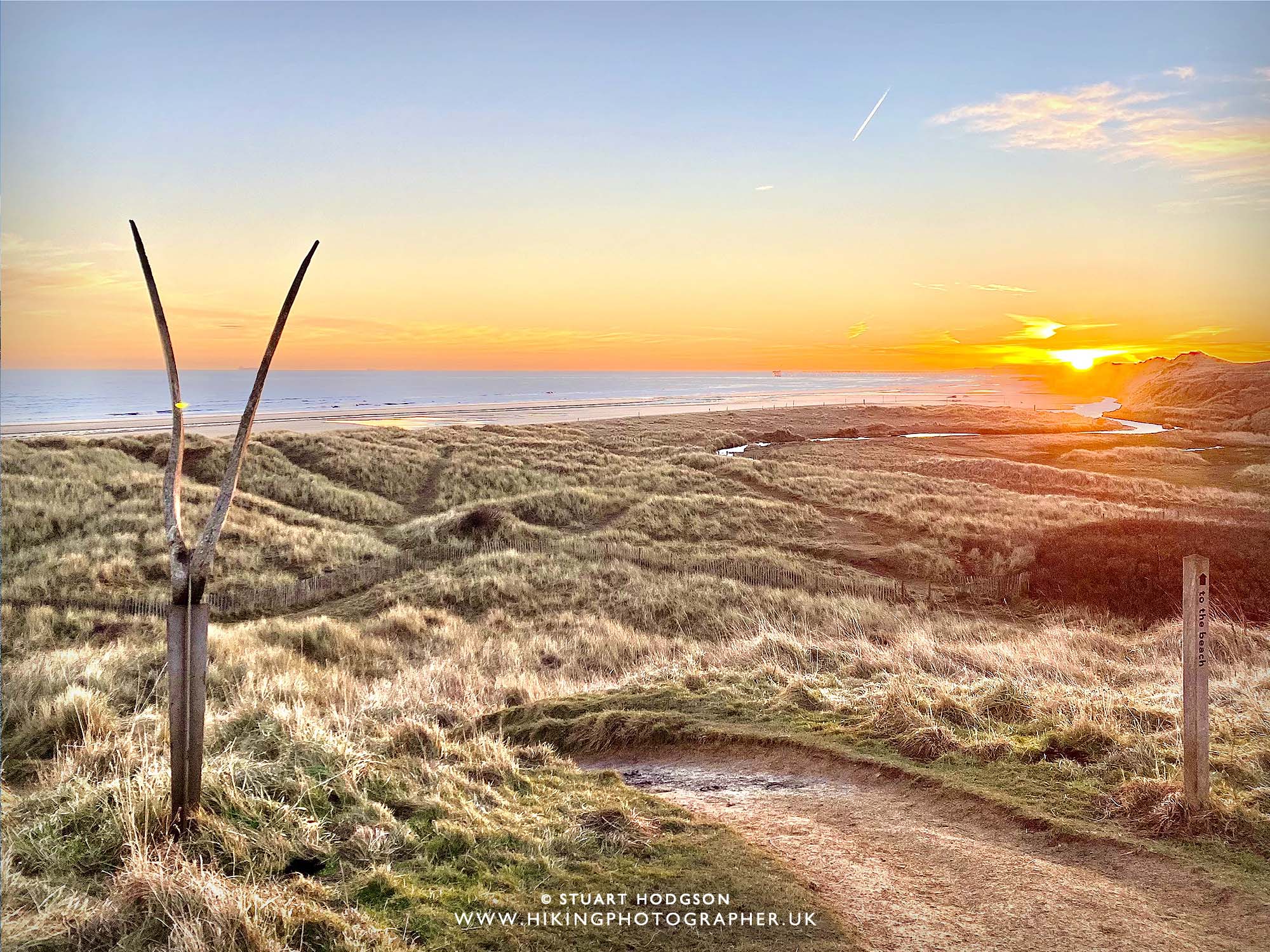
Here we are just above Crimson Dene looking back towards the stretch of coast we have just walked along, with Steetley Pier and the Headland in the far distance. As you get to Crimdon – you have the option of turning back – or making your way up through the dunes paths to go into the Cafe at Crimdon.
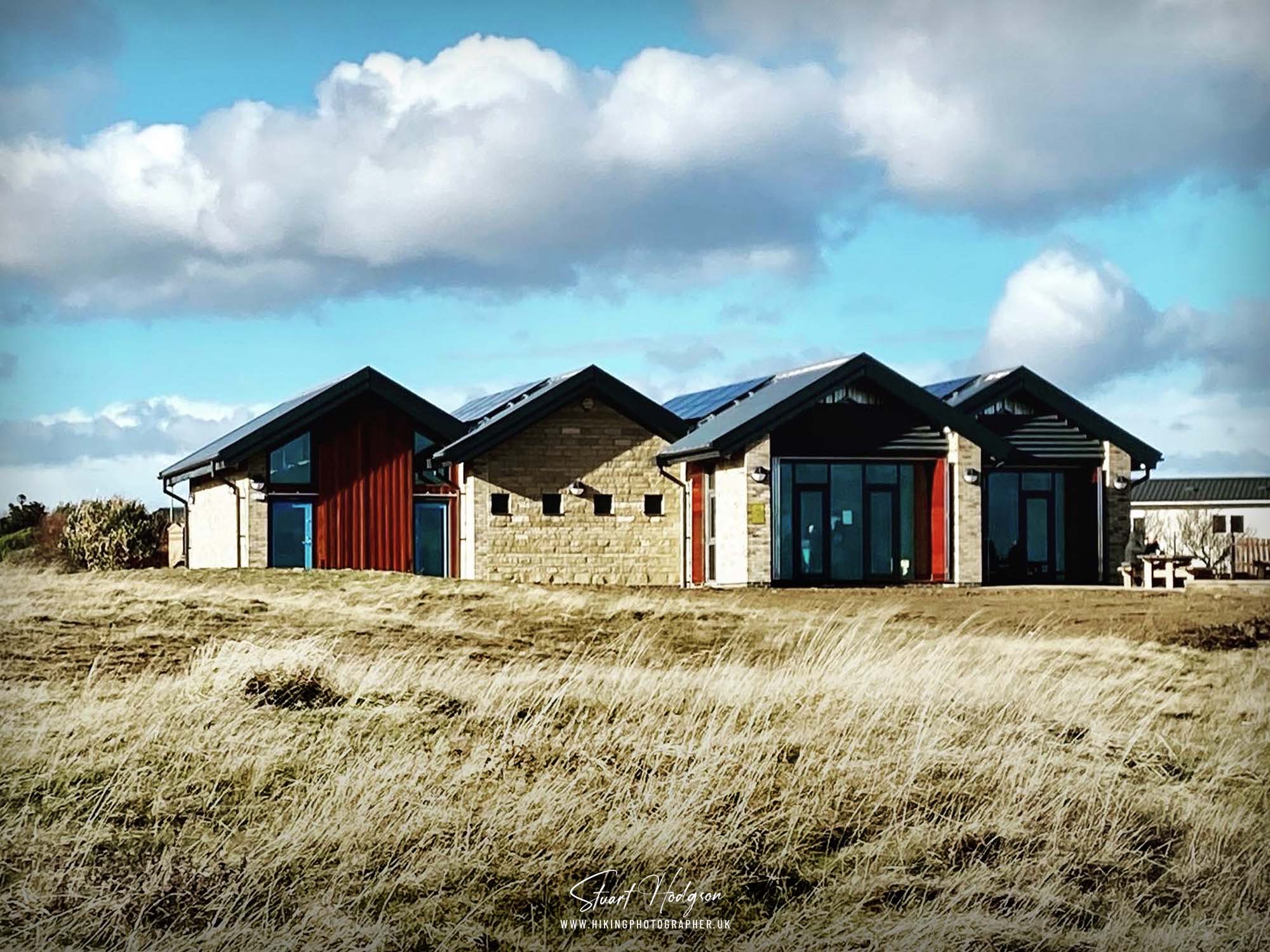
The new cafe at Crimdon Dene. A great place to grab a coffee and bite to eat. It has fine views over the coastline and there is a car park here, so it can get busy on weekends.
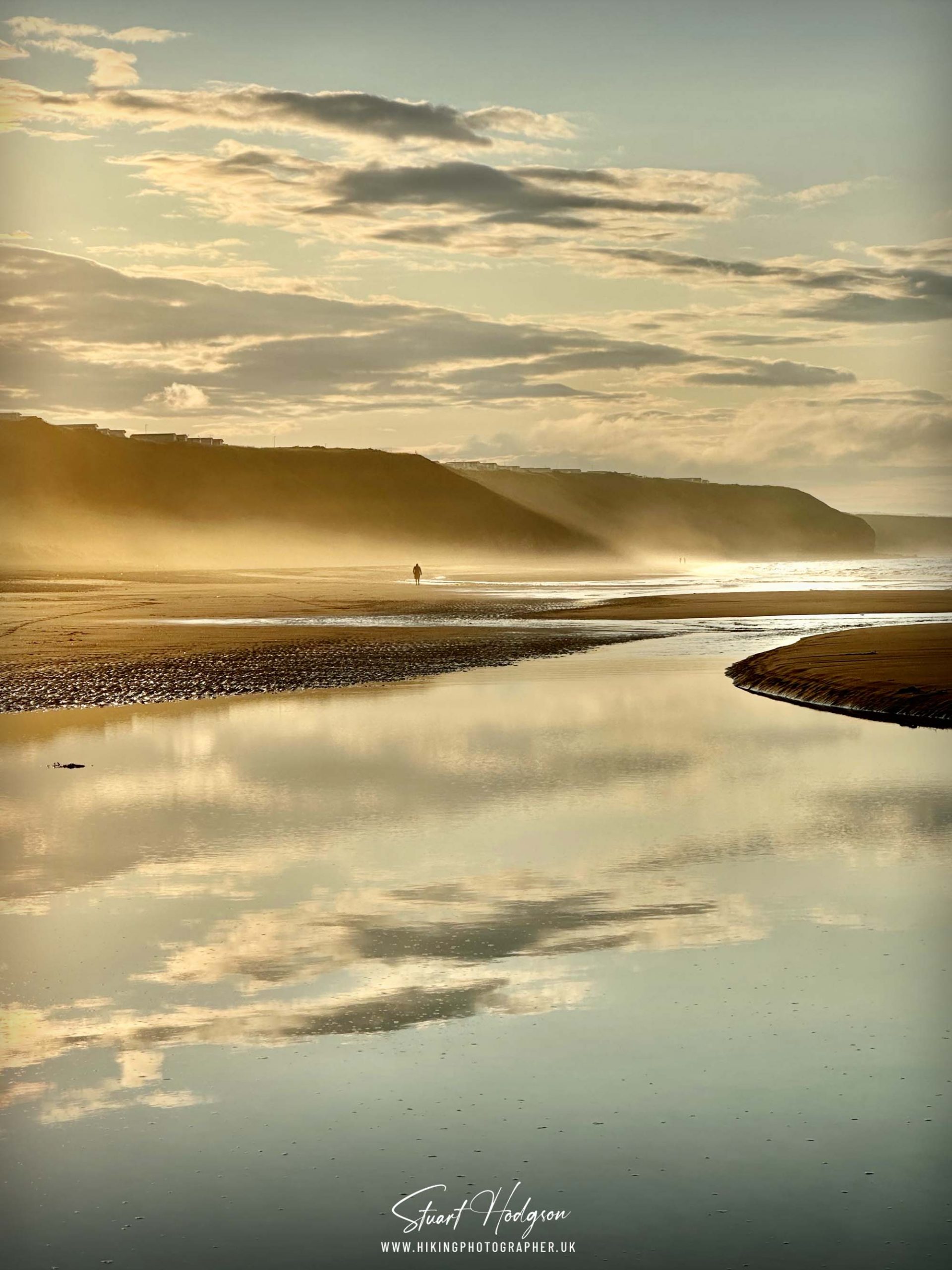
Once you have reached Crimdon – simply retrace your steps all the way back, either on the beach or the coastal path that follows the dunes and cliff tops. Whatver you feel like! It really is a nice coastal walk and one I’d highly recommend.
THE HISTORY OF HARTLEPOOL HEADLAND
When in this part of the world – If you have time I really recommend an explore of the small peninsula which is Hartlepool Headland, a place where English history feels close enough to touch.
Once a separate town known as Old Hartlepool, this small peninsula has been shaped by monks, mariners, soldiers and smugglers over more than a thousand years. It was an important medieval port, and is home to St Hilda’s Church (dating back to the 12th century – pictured above) which itself was built on the site of an ancient 7th century monastery, founded around 640 AD and famously led by St Hilda, one of the most influential religious figures in early England. St Hilda later went on to found Whitby Abbey. The monastery was likely destroyed during Viking raids in the 9th century, but its legacy lived on —and the Headland remained a sacred site, eventually leading to the construction of St Hilda’s Church, which still stands today as a powerful reminder of Hartlepool’s deep spiritual and historical roots.
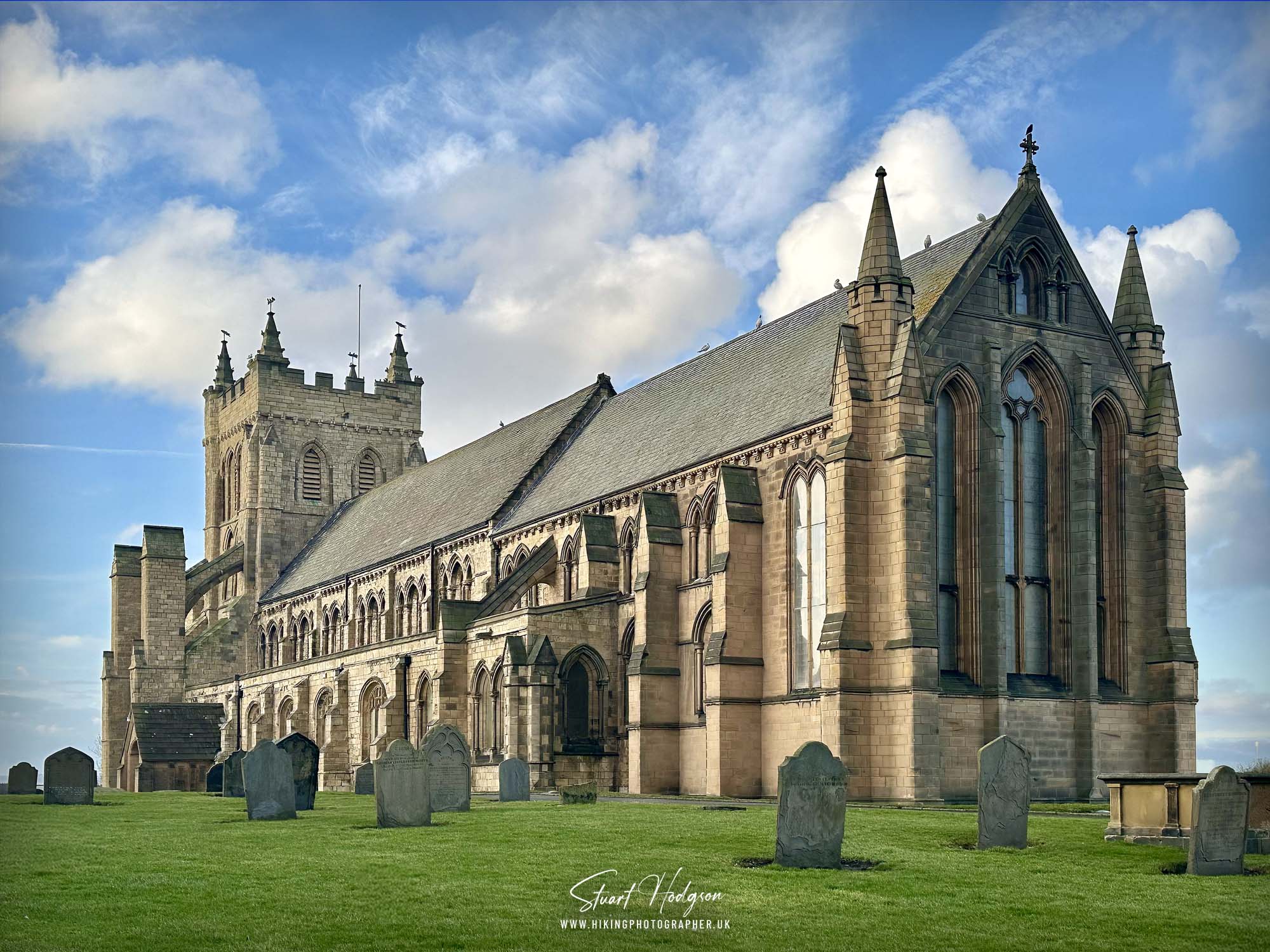
The impressive St Hilads church on Hartlepool’s Headland dates back to the 12th century and well worth popping in.
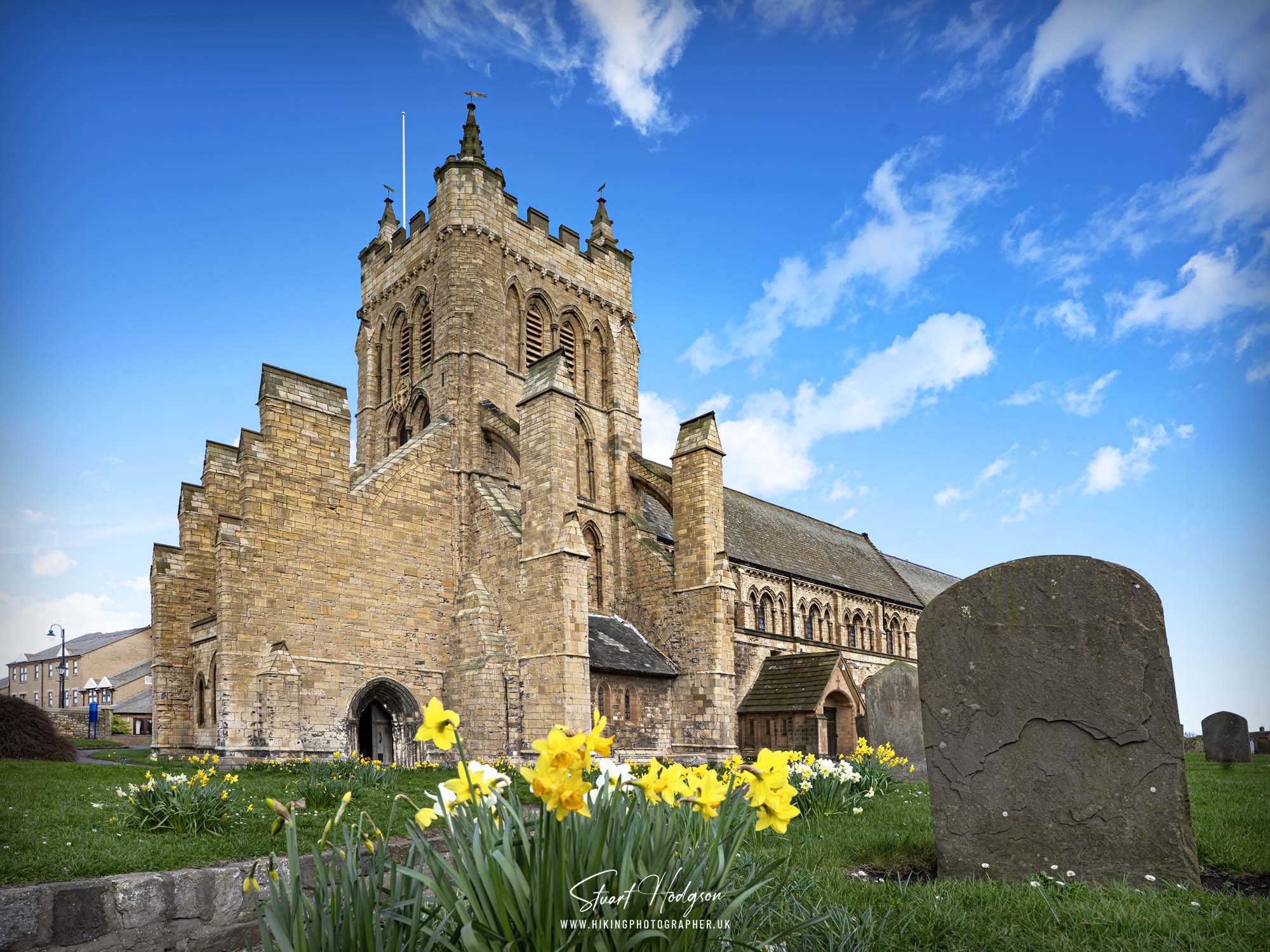
A FASCINATING HISTORY
The Headland even played a role in the First World War, when it was bombarded by German warships in 1914 – the first British mainland location to be attacked in the conflict. Today you can visit the Heugh Gun Battery museum to learn about it’s war history.
Today the Headlands narrow streets and dramatic sea views make Hartlepool Headland a compact but powerful reminder of Britain’s coastal past, perfect for anyone who enjoys history with a salty sea breeze.
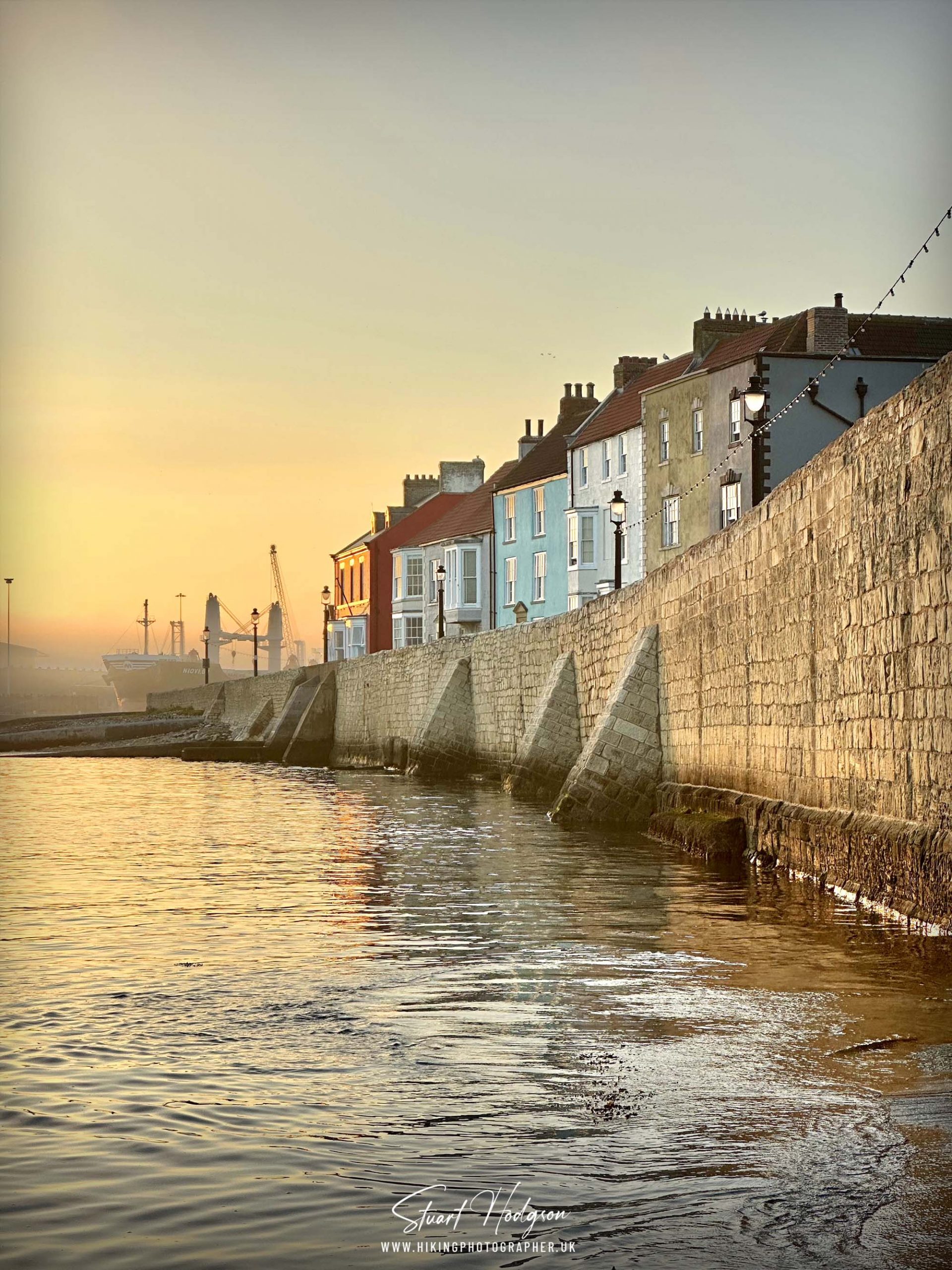
HARTLEPOOL TOWN WALL & THE DE BRUS FAMILY
Hartlepool’s town wall was built in the medieval period, most likely in the early 13th century, to defend the Headland settlement as its importance as a port grew, and part of it is still entact to this day. The construction is closely linked to the de Brus (Bruce) family, powerful Norman lords of the area, including Robert de Brus, who held land in Hartlepool and the wider region. With wealth coming from trade and the town exposed to Scottish raids, pirates and seaborne attacks, the de Brus family had strong reasons to fortify the peninsula. The stone wall, with its towers and controlled gateways, transformed Hartlepool into a defensible stronghold, reflecting both the strategic value of the town and the influence of its medieval overlords. Ironically, it was a decendant of the De Brus family, Robert the Bruce (Robert I of Scotland) who became King of Scotland and in his reign led raids down the North East Coast – including on Hartlepool itself!
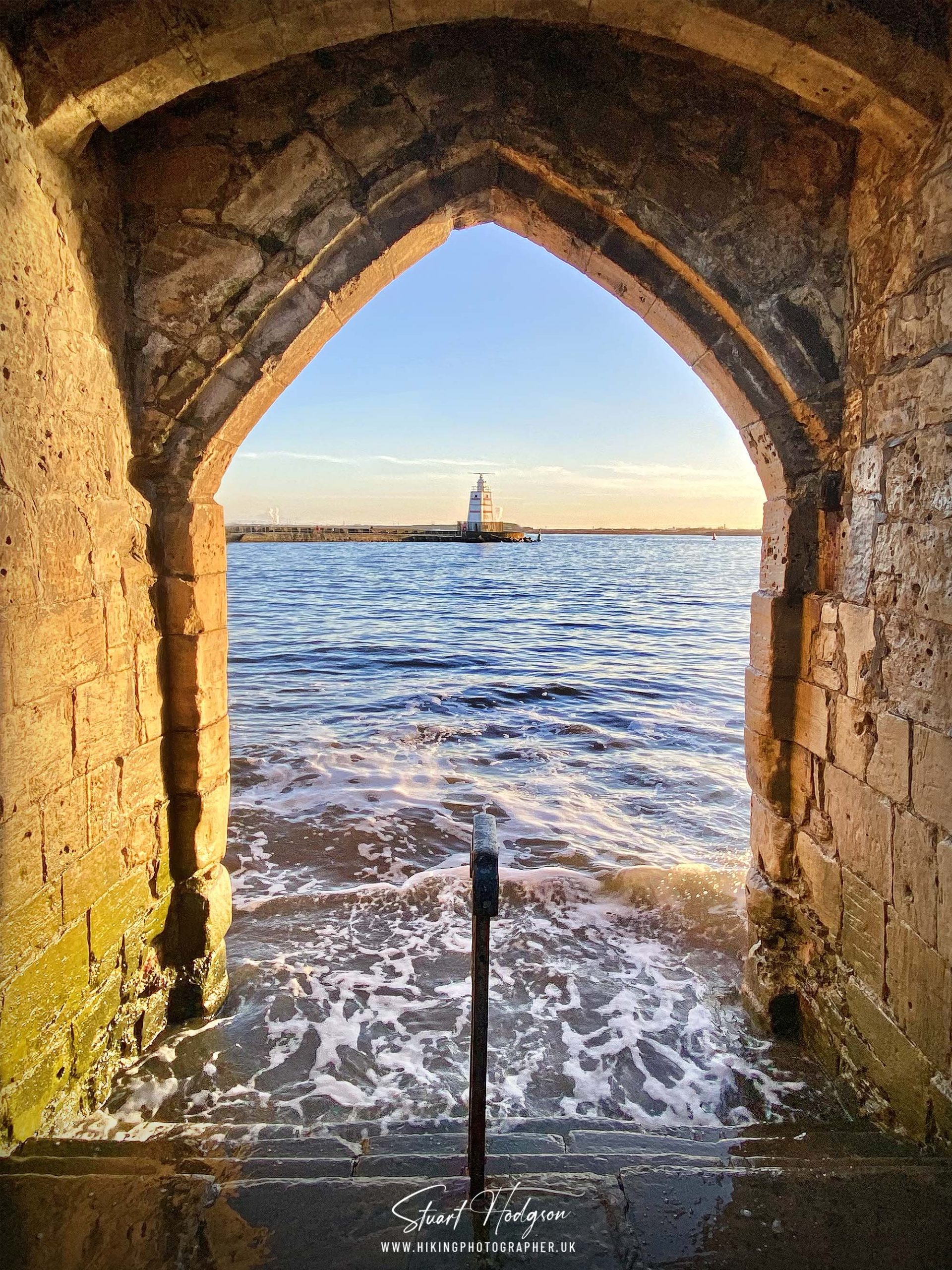
HARTLEPOOL – Hereteu ‘STAG ISLAND’
Hartlepool’s original name was Hereteu, a Northumbrian Old English name meaning “stag island” (from heorotmeaning stag and ēg meaning island or dry ground). This name referred to the rocky headland itself, which would have stood out as a island or near-island surrounded by marsh and sea in the early medieval period. The name Hereteu is first recorded in the 7th century as the site of the monastery led by St Hilda, making it one of the earliest named settlements in the region. Over time, as the settlement grew into a port, the name evolved through forms like Herterpol and Hartilpol, eventually becoming Hartlepool, with “pool” referring to a sheltered stretch of water used by ships. The modern name still carries a clear echo of its ancient origins.
I’m personally fascinated by how places must have looked before human settlment – and I used AI to create an image of what Hereteu might have looked like before human settlement. See my creation below, whilst it misses key features – it gives a flavour of what it might have looked like. The island is known in geological form as a Tombolo, which is a depositional landform—a ridge of sand or shingle—that connects an island to the mainland or to another island. Formed by wave refraction and longshore drift, these features often develop in the sheltered, low-energy wake of an island where sediment accumulates, which can be partially submerged at high tide. It’s these natural features which give the island natural protection – and likely the reason why the early Monastery was built here (like the one on Lindisfarne up the coast) and once the early monastry was here – the rest of the Headlands history followed!
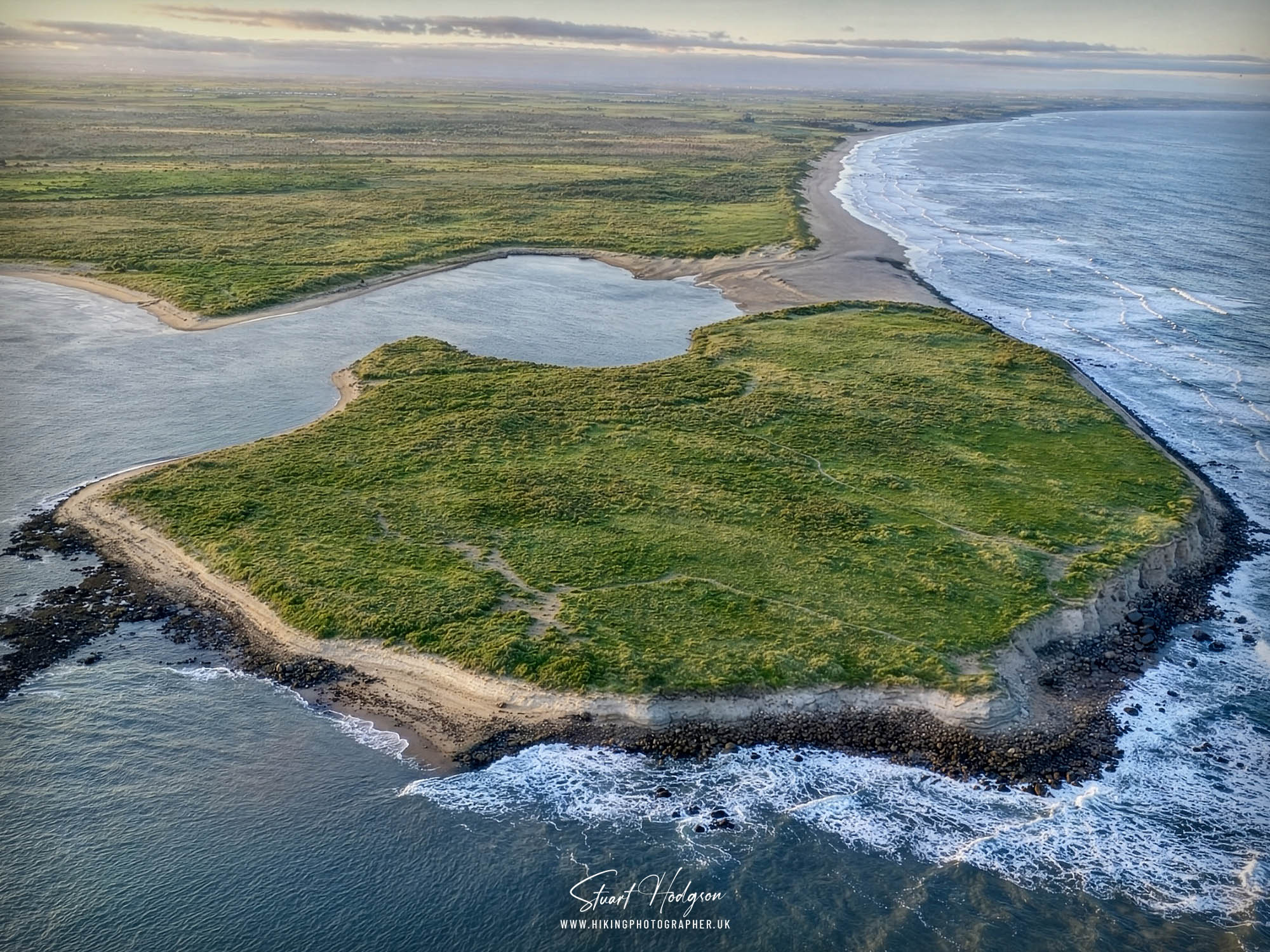
So there you go, some history of Hartlepool’s Headland and I hope it inspires you to give the place a visit and enjoy a walk in the area. It’s actually my home town, and I’m fully aware that out of the region it maybe doesn’t have the best of reputations – but honestly it has some really excellent coastline, fascinating history and is a real hidden gem and worth a visit!




0 Comments