
There are certain places that stay with you long after you’ve left. Not because they are the biggest, grandest or most famous landmarks, but because they feel and look different.
On recent trips to the Balearic and Canary Islands, two places stood out for exactly that reason: Cova d’en Xoroi in Menorca and Jameos del Agua in Lanzarote. Although very different in appearance, both share the same philosophy. Rather than reshaping the landscape, they embrace it. The architecture works with nature instead of against it.
In a world where we’re used to seeing towering skyscrapers, modern materials and vast developments, these places remind us that the most beautiful architecture doesn’t always need to dominate the environment. Sometimes the greatest achievement is simply allowing nature to remain the star of the show.
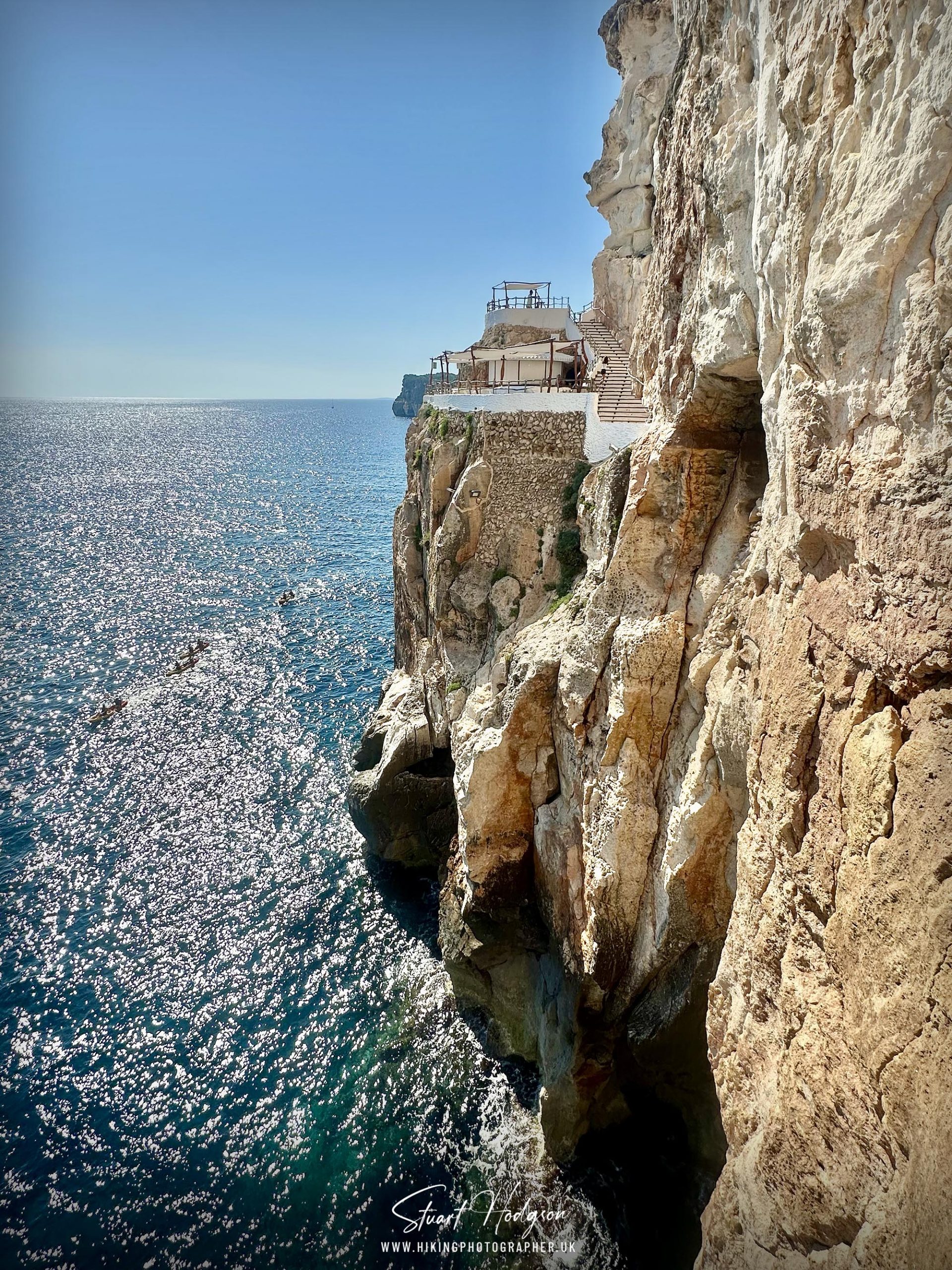
Cova d’en Xoroi – A Building Carved by the Sea
Perched high above the turquoise waters of the Mediterranean, Cova d’en Xoroi feels less like a building and more like the discovery of a secret world.
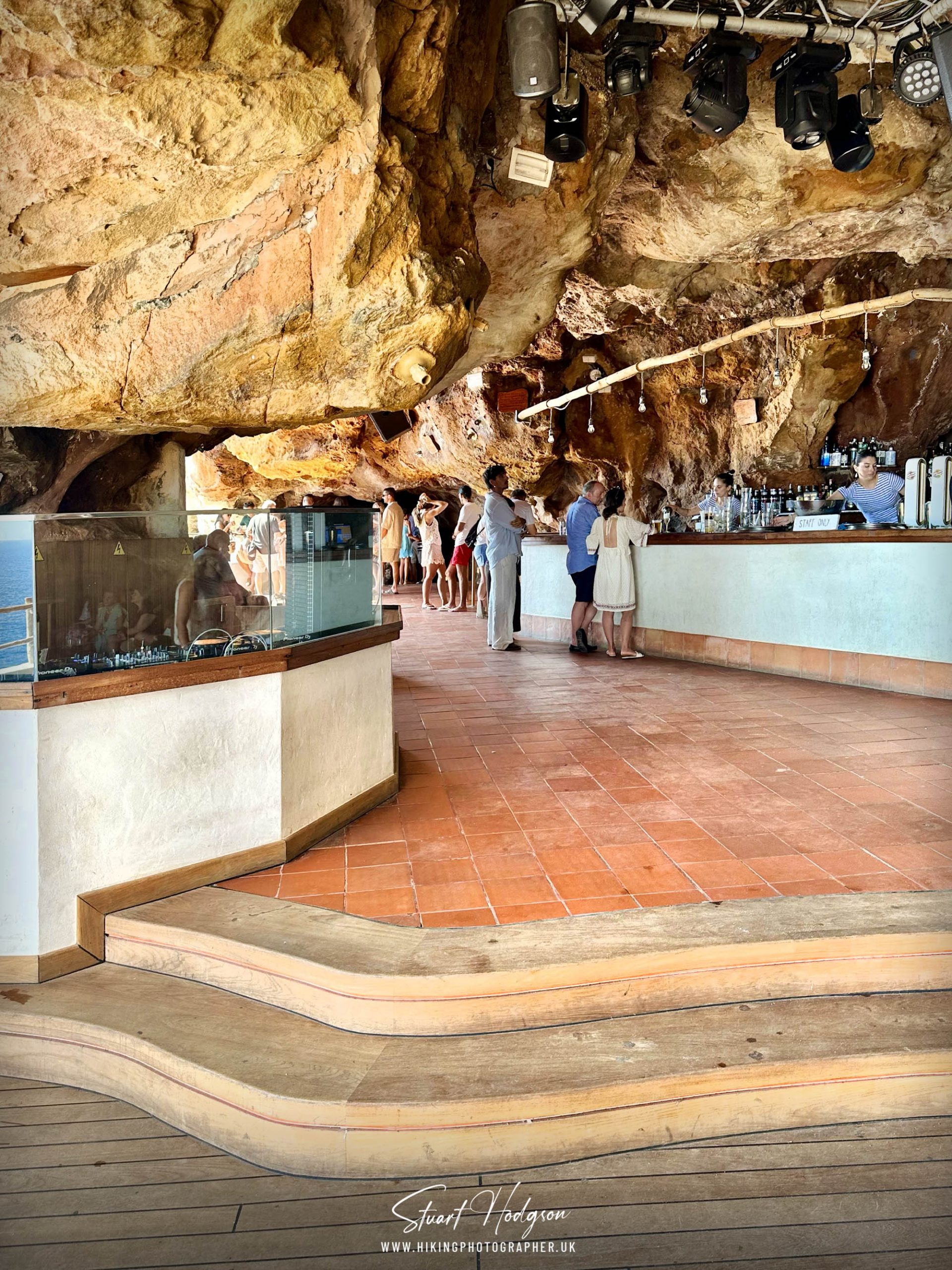
The venue occupies a series of natural limestone caves that have been sculpted by the sea over thousands of years. Rather than constructing something entirely new on top of the cliffs, the designers adapted what already existed. Whitewashed terraces, winding staircases and viewing platforms follow the contours of the rock, creating spaces that feel as though they have grown naturally from the cliff itself.
What struck me most wasn’t the architecture—it was how little of it you actually notice.
Every pathway follows the shape of the cave. Every seating area is positioned to frame another spectacular view across the Mediterranean. The rugged limestone walls remain exposed, the ceilings untouched, and the sea is never out of sight.
As you wander deeper into the caves, it almost feels as though nature has designed every room itself.
Visiting at sunset only enhances the experience. The warm evening light spills through the cave openings, illuminating the rock while the sea below reflects shades of gold, orange and deep blue. It’s an environment that constantly changes with the light, making it a dream location for photographers.
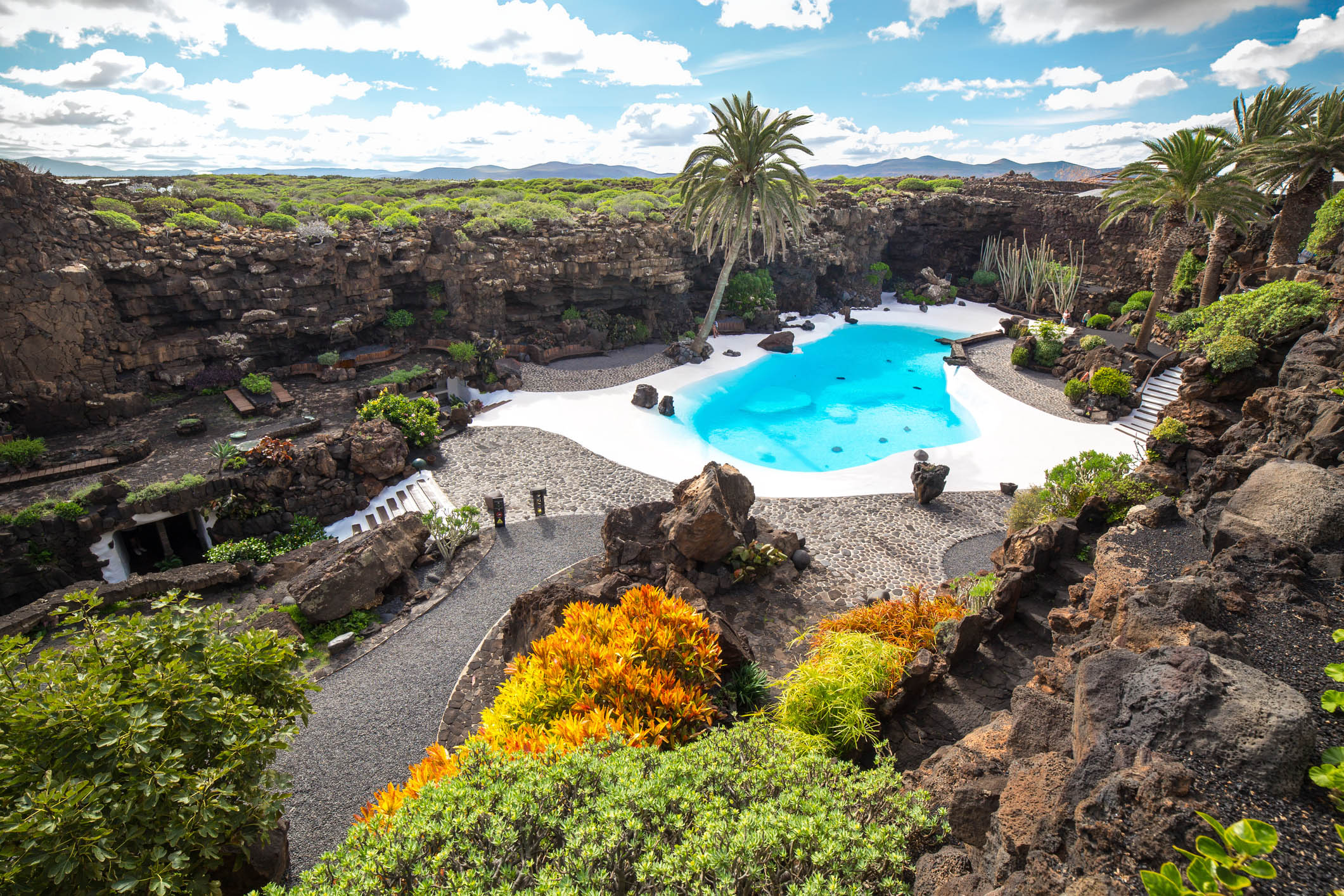
Jameos del Agua – César Manrique’s Vision Brought to Life
If Cova d’en Xoroi is shaped by the sea, Jameos del Agua is shaped by fire.
Created inside a volcanic lava tube formed thousands of years ago by eruptions from La Corona volcano, Jameos del Agua was transformed by the visionary Lanzarote-born artist, architect and environmentalist César Manrique. More than simply designing a visitor attraction, Manrique sought to redefine the relationship between people and the landscapes they inhabit.
His philosophy was refreshingly simple: architecture should never compete with nature.
Throughout his work across Lanzarote, Manrique believed that buildings should respect the identity of a place, preserving its geology, culture and natural beauty rather than replacing them. He opposed uncontrolled development and argued that good design should enhance a landscape, allowing visitors to experience it more deeply without diminishing its character.
Jameos del Agua is perhaps the purest expression of that philosophy.
Rather than concealing the ancient lava tube, Manrique celebrated it. The rugged volcanic walls remain exposed while crisp white architectural forms create a striking yet understated contrast. Crystal-clear pools reflect the surrounding rock, lush palms soften the space and carefully positioned openings allow shafts of natural light to illuminate the underground chambers.
Walking through Jameos del Agua never feels like entering a conventional building. Instead, it feels as though the architecture has quietly stepped aside, allowing the volcano itself to become the masterpiece.
It’s architecture that whispers rather than shouts.
César Manrique’s Legacy
The more I learned about César Manrique, the more I realised that Jameos del Agua wasn’t an isolated project—it was part of a much bigger vision for Lanzarote.
He believed tourism and conservation could exist together, provided development respected the island rather than exploiting it. His influence can still be seen throughout Lanzarote today, where strict planning regulations, whitewashed buildings and low-rise developments help preserve the island’s unique volcanic identity.
Long before sustainability became a global conversation, Manrique was demonstrating how architecture could celebrate the landscape instead of consuming it.
Looking around Jameos del Agua, it’s difficult not to think he was decades ahead of his time.
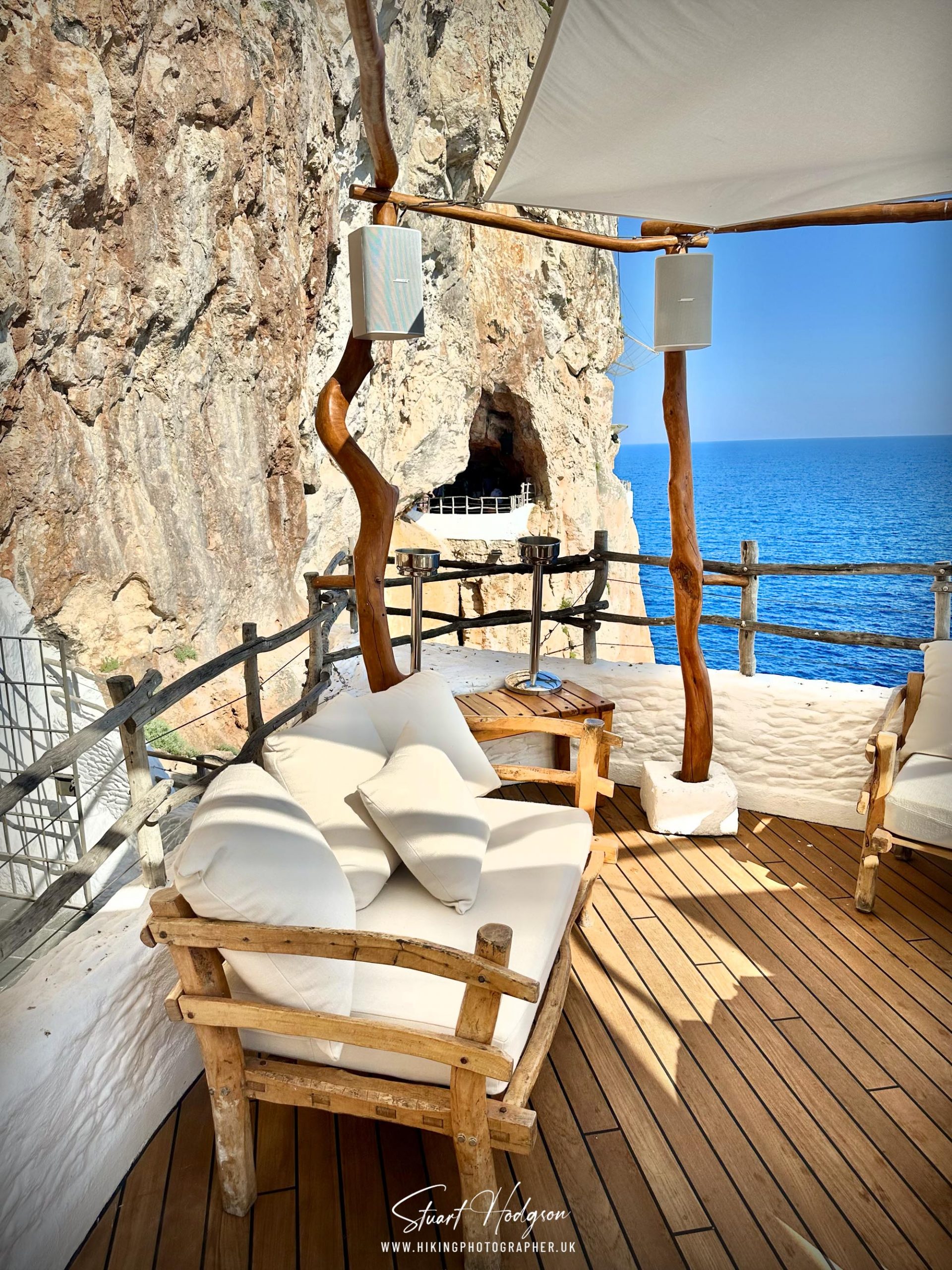
Biophilic Design – Why These Places Feel So Good
Although neither Cova d’en Xoroi nor Jameos del Agua was originally described using the term, both are wonderful examples of what we now call biophilic design.
Biophilic design is based on a simple but powerful idea: humans have an innate connection with nature. By incorporating natural materials, daylight, flowing water, vegetation and organic forms into the built environment, designers can create spaces that improve wellbeing, reduce stress and foster a stronger sense of place.
Research over the past two decades has shown that environments with strong connections to nature can lower stress hormones, improve mood, support creativity and even aid recovery from illness. Perhaps that’s why places like these leave such a lasting impression—they don’t just look beautiful, they feel good to be in.
Cova d’en Xoroi and Jameos del Agua achieve this almost effortlessly.
Neither relies on artificial spectacle. Instead, the architecture allows the surrounding landscape to become part of the experience. The sound of waves reverberating through limestone caves, sunlight dancing across volcanic rock, the cooling effect of underground spaces and uninterrupted views across the sea all combine to create environments that engage every one of our senses.
Rather than separating visitors from nature, they immerse us within it.
Letting Nature Lead the Design
Although separated by hundreds of miles, both locations share an important idea.
Neither tries to compete with the landscape.
Instead, the landscape dictates the architecture.
The cliffs determine where terraces are built. The caves shape the rooms. Natural openings become windows. Sunlight becomes part of the design, changing the atmosphere from morning to evening. Rather than forcing straight lines into an irregular environment, the buildings simply adapt to what nature has already created.
It’s a refreshing contrast to so much modern development, where the first step is often to flatten, excavate or replace the natural environment.
Here, very little has been taken away.
Instead, the architecture exists to reveal what was already there.
A More Meaningful Way to Experience Nature
As someone who spends much of my time hiking, photographing landscapes and seeking out quieter places, these two attractions resonated with me for another reason.
They don’t separate you from nature.
They immerse you within it.
At Cova d’en Xoroi, you’re surrounded by limestone cliffs while the sound of waves echoes through the caves below.
At Jameos del Agua, you’re enclosed by ancient volcanic rock, reminded at every step that you’re walking through the geological history of Lanzarote.
You’re not simply looking at nature through a window.
You’re inside it.
Perhaps that’s why these places leave such a lasting impression. They don’t rely on elaborate architecture or extravagant design. Instead, they celebrate something that already existed long before people arrived.
A Lesson for the Future
The more I travel, the more I appreciate places that respect their surroundings.
Whether it’s a simple mountain bothy, a thoughtfully designed cabin or somewhere as extraordinary as Cova d’en Xoroi or Jameos del Agua, the best places rarely feel imposed on the landscape. They feel as though they belong there.
In an age where sustainability is becoming one of architecture’s greatest challenges, these places offer an inspiring lesson.
César Manrique understood that humanity doesn’t always need to improve nature. Sometimes our greatest contribution is knowing when to step back.
The most memorable architecture isn’t always the tallest building or the boldest design.
Sometimes it’s the architecture you barely notice at all—because it allows the landscape to remain the true masterpiece.




0 Comments