
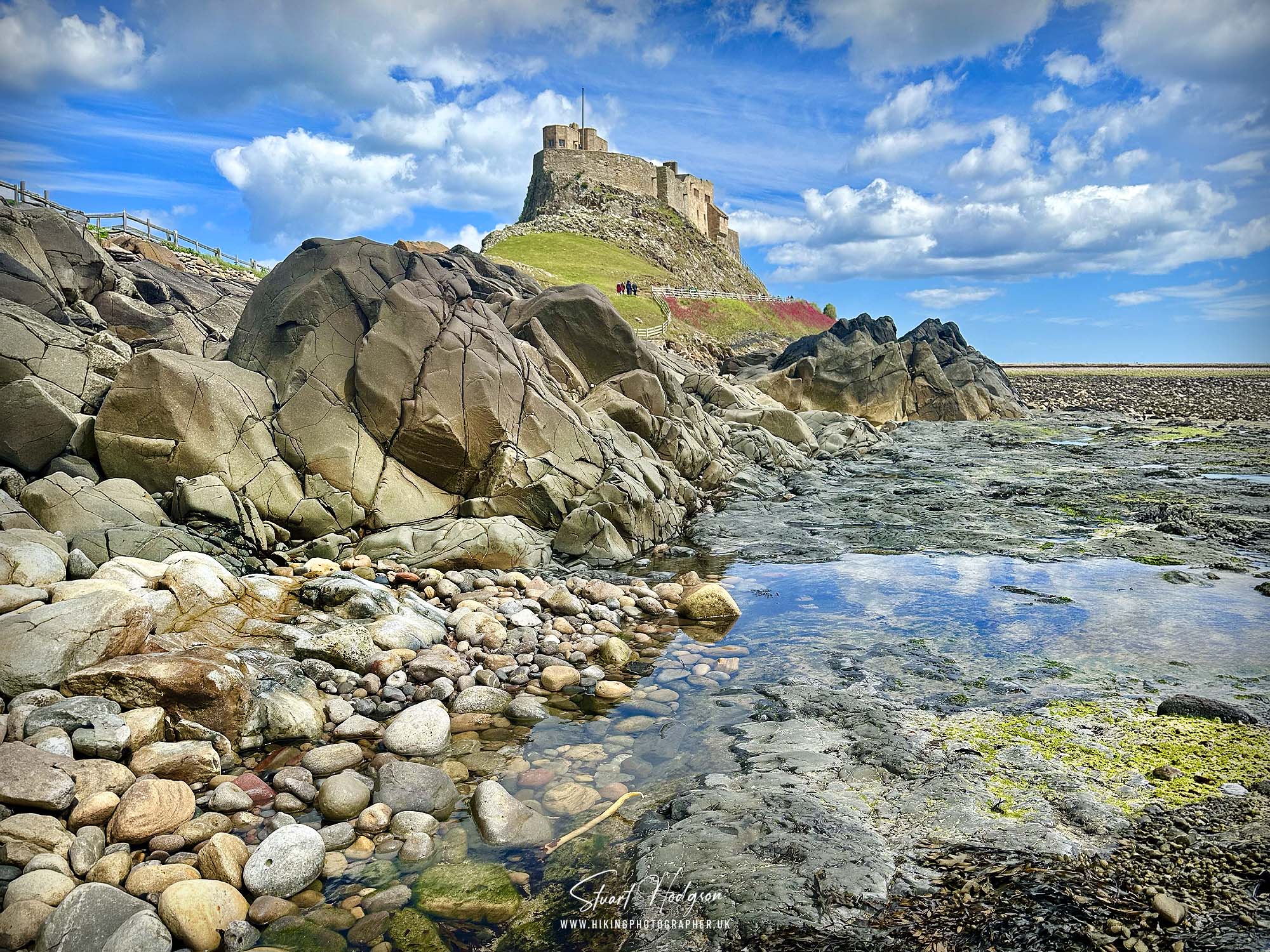
The impressive Lindisfarne Castleawaits you when you arrive on Holy Island. This 10 mile walking route lets you see all the best sights on Holy Island and is one of the most beautiful, historic and unique walks you can do in the whole of the UK.
THE HISTORIC PILGRIMS WAY WALKING ROUTE TO HOLY ISLAND IN NORTHUMBERLAND
What a memorable walk this is, certainly one of the most enjoyable I’ve done and it’s a must-do if you want to hike the best longer walks in Northumberland.
Holy Island (Lindisfarne) in Northumberland is a place where history, legend and spectacular coastal scenery come together, and this walk has to be the best way to experience it all.
Holy Island is a tidal island, cut off from the mainland at high tide, but time your visit carefully and you can follow the ancient Pilgrim’s Way at low tide – a 3-mile route across the sands marked by traditional wooden posts. Pilgrims have made this crossing for centuries to visit one of Christianity’s most important sites. Once you are on the Island – this route walks right around it’s coastal edge, before you return back over the causeway before the tide rises again and once more cutting off Holy Island from the mainland.
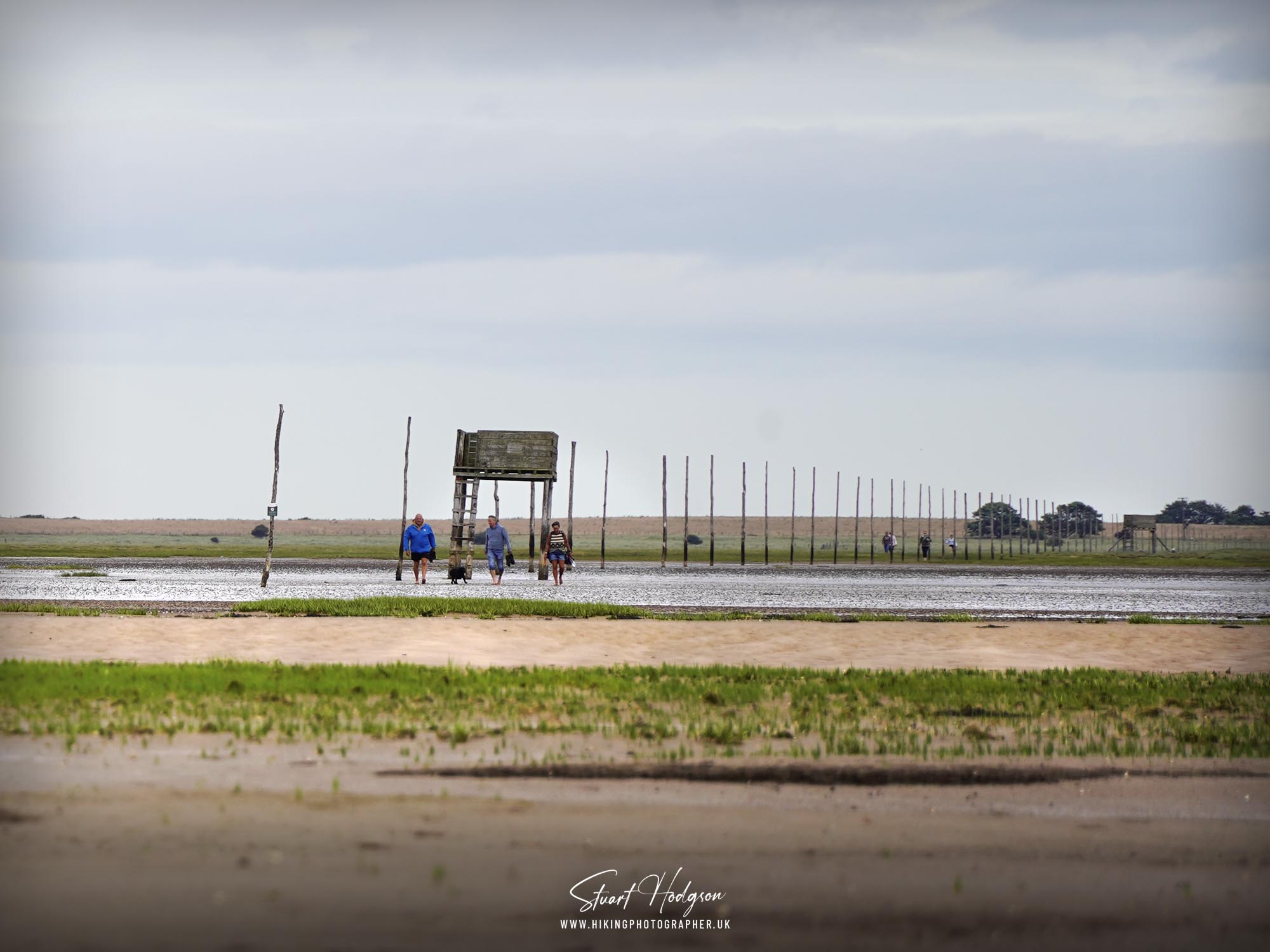
If you have the time and like walking – then hiking the Pilgrims Way over the tidal sands to Holy Island has to be the best way to visit this historic place. Just kick off the shoes and follow the wooden poles at low tide.
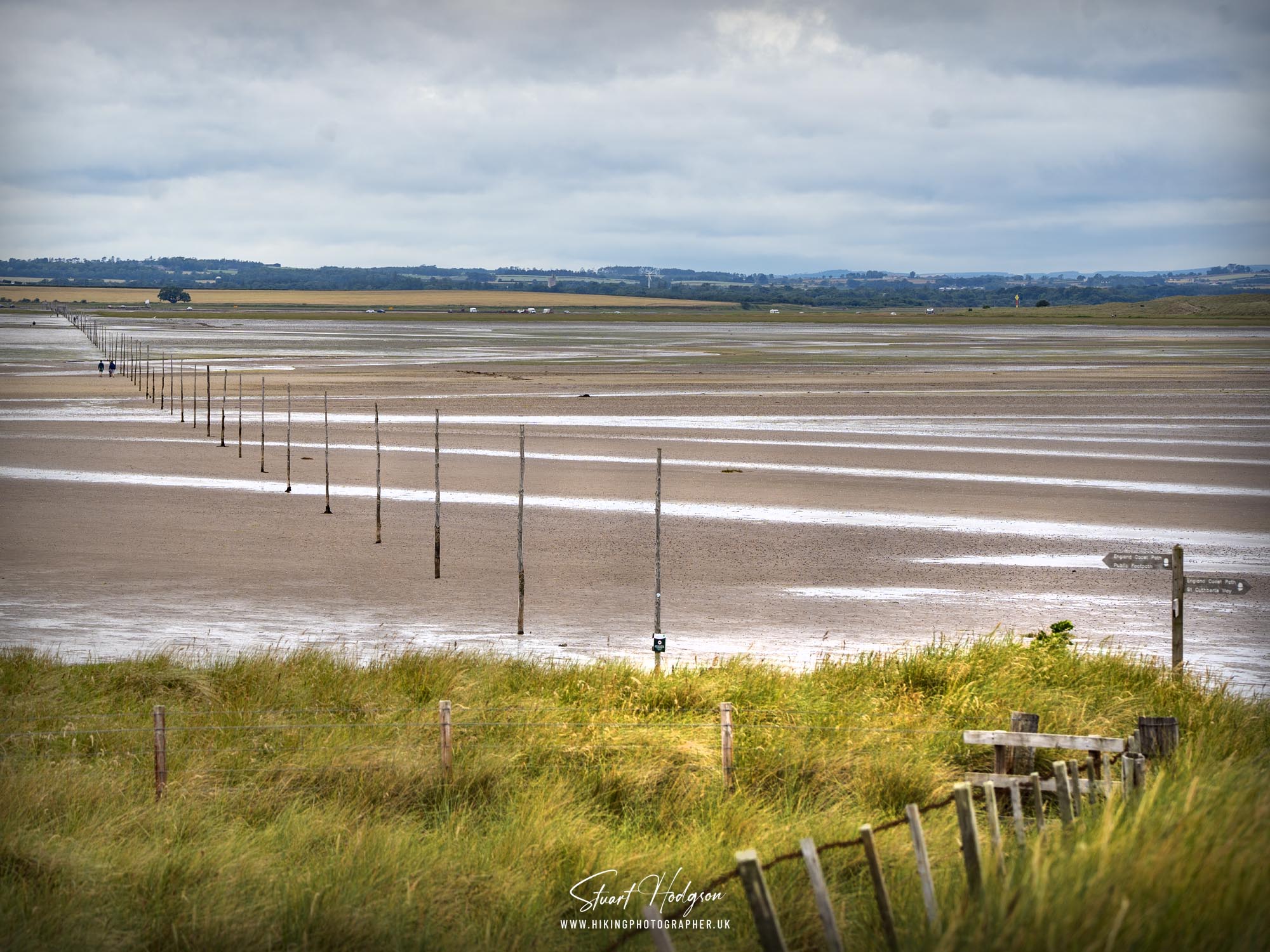
Looking back over the Pilgrims Way once you approach dry land at Holy Island. This photo was taken with a telephoto lens so maybe makes the poles look closer together than they actually are. It’s actually a 3 mile stretch across the tidal sands which is marked by 112 wooden poles, which are spaced roughly 30 to 45 metres apart in a straight line. Follow these and you can’t go wrong (as long as you have your tide times correct that is!)
PILGRIMS WAY TO HOLY ISLAND WALK DETAILS
WALK OVERVIEW:
DISTANCE: 10 miles
TIME: 4-5 hours
TOTAL ASCENT: 165ft
DIFFICULTY: MODERATE

WARNING – BE AWARE OF TIDE TIMES ON THE CAUSEWAY
Holy Island is a tidal island and the route walks over the sands which is only possible on low tide. You should start walking on the tidal sands 1.5-2 hours before low tide, on a receeding tide – to give you enough time to do the full route (the tidal window is around 7 hours) See link below for tide times to work out when to begin your walk – and also the causeway crossing times as you will walk back to the mainland on the road crossing
PILGRIMS WAY & HOLY ISLAND WALK MAP ROUTE

WALK TO HOLY ISLAND VIA THE PIGRIMS WAY OVERVIEW
You start the walk at Beal Car Park on the mainland. Start 1.5-2 hours before low tide. You walk initially on the road for around 100m on the small bridge to cross the small river (South Low) – don’t attempt to walk through this water it’s deep.
Once you’ve crossed the bridge – look to your right on the sands for the first wooden pole. You will probably be able to walk to the first wooden pole with your hiking boots on – but then I would recommend taking your shoes off and go barefoot (surely the best way to do this section) – otherwise your shoes will get wet, it’s pretty much impossible to keep them dry. Simply follow the poles for 3 miles in a straight line to the mainland.
Once on the island, this 10-mile circular walk showcases all of Lindisfarne’s highlights. Starting in the village, you can stop for food and a drink in one of the cafés or pubs, or even sample the famous Lindisfarne Mead, produced on the island for decades.
The route passes the atmospheric Lindisfarne Priory, founded in 1093 on the site of an earlier monastery established by St Aidan in AD 635. The priory became one of the most significant centres of early Christianity in Britain and was associated with St Cuthbert and the creation of the renowned Lindisfarne Gospels.
Following the shores of The Ouse, you’ll enjoy some of the best views of Lindisfarne Castle – a 16th-century fort built using stones from the priory ruins and later transformed into a striking holiday home by architect Sir Edwin Lutyens.
The route then heads along the quieter eastern coastline to Emmanuel Head, where the distinctive white pyramid-shaped daymark has guided sailors since the early 19th century and stands against dramatic coastal views.
From there, the path follows the island’s wild northern shoreline, passing untouched sandy coves and rolling dunes before joining the causeway back to the mainland.
Allow around 5 hours to complete this walk with plenty of stops – and remember, the tidal window is usually around 7 hours, so planning ahead is essential.
It’s one of the UK’s most iconic and unique walks – where every step across the sands feels like travelling through centuries of history. Just make sure you check the tide times before setting off.
WHERE IS HOLY ISLAND?
Holy Island, also known as Lindisfarne, is a small tidal island off the northeast coast of England, in Northumberland. It sits in the North Sea just a short distance from the mainland, near the village of Beal, and is connected to the coast by a causeway that is only accessible at low tide. When the tide comes in, the island is completely cut off, which has helped preserve its peaceful, historic character. Holy Island is best known for its ancient Christian heritage, including Lindisfarne Priory, and its dramatic coastal landscapes that overlook the Farne Islands and the wider Northumberland coastline.
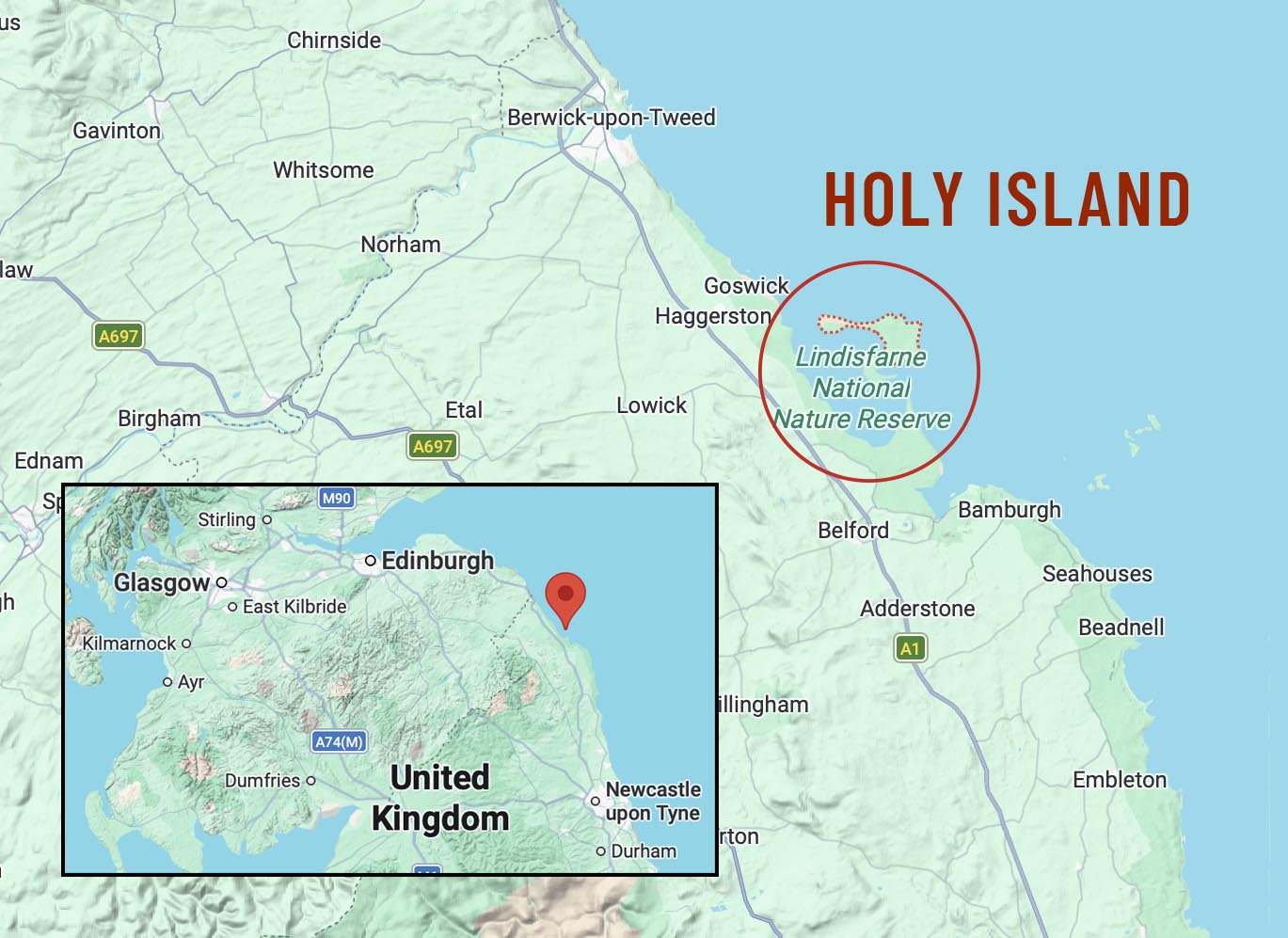
If you are driving to Holy Island, it isnt far from the A1. If you’re coming from the north on the A1, you’ll travel south past Berwick-upon-Tweed before turning off at Beal onto the B1342, whereas from the south you follow the A1 north through Northumberland and also exit at Beal, where the same tidal causeway leads across to Holy Island—just remember the crossing is only safe at low tide.
WHERE TO PARK FOR THE PILGRIMS WAY WALK
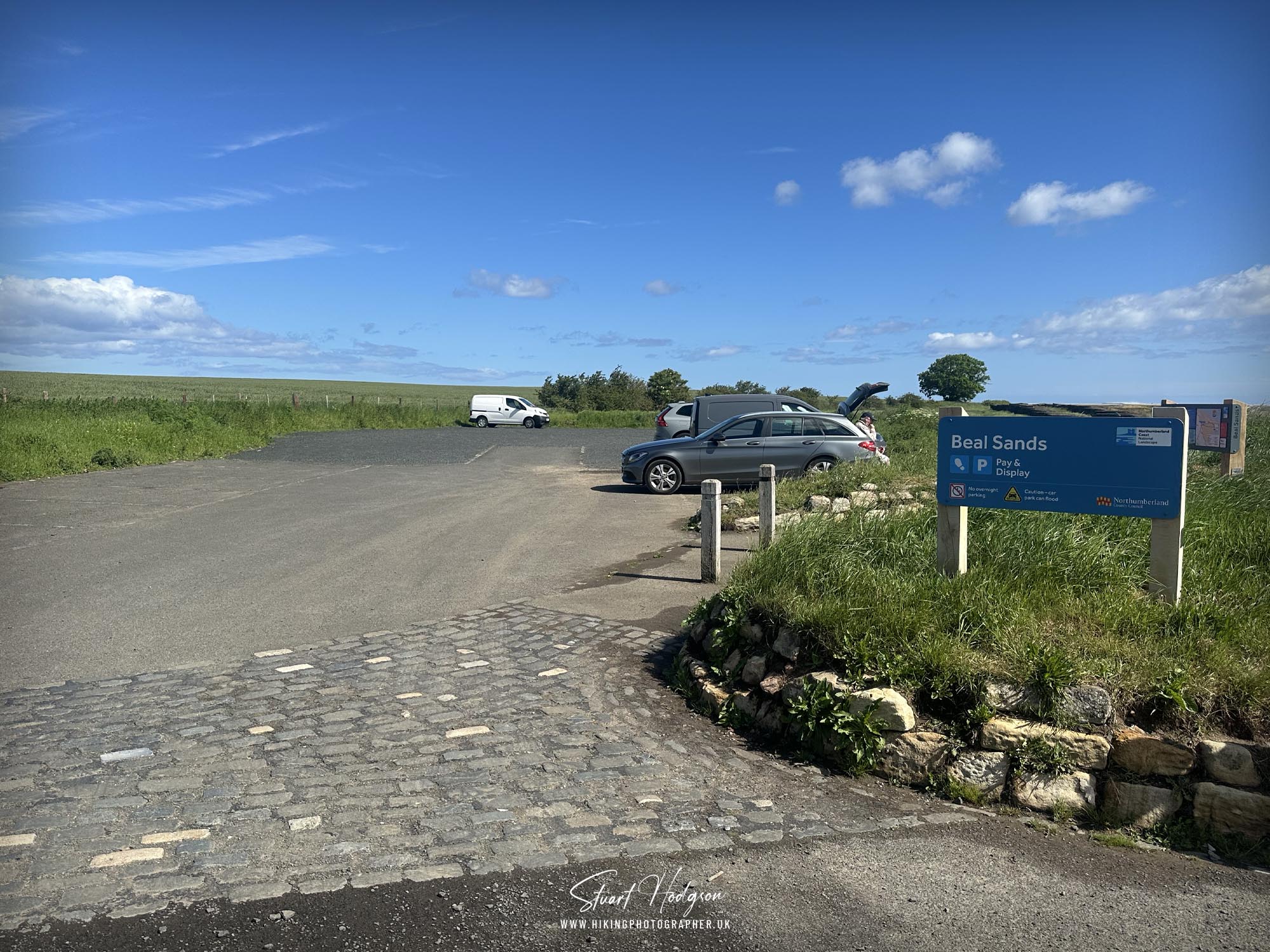
The best place to park for the Pilgrims Way walk is at Beal Sands Pay & Display Car Park. It’s about 100m before you get to the Holy Island Causeway. It will take you no more than 5 minutes to get onto the todal sands from here. Click the following link to see exactly where it is and to get directions https://maps.app.goo.gl/5Zh5jFFdcQYHwKdr5
PHOTOS OF WHAT TO EXPECT ON THE PILGRIMS WAY ACROSS THE TIDAL SANDS TO HOLY ISLAND
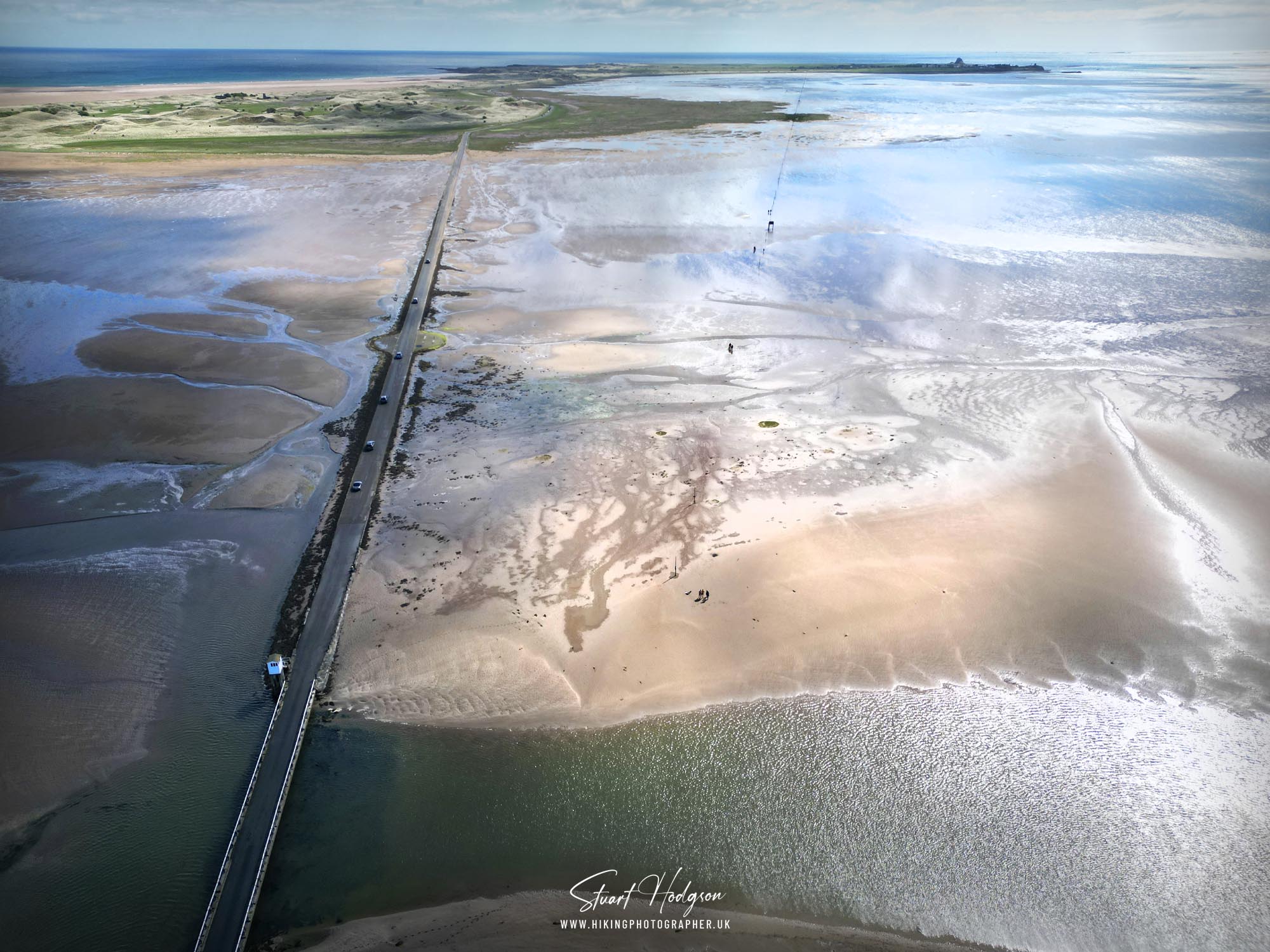
At the very start of my Holy Island Pilgrims way walk I got the drone up to show the 3 mile-ish route we would take across the sands to give you an idea of what to expect. This is taken 1 hour 45 mins before low tide. You can see bottom left the road crossing over the South Law Tidal Channel, which is pretty deep with a strong current and you wouldn’t want to walk through this deep channel – so use the road causeway until you come to the raised rescue hut.
In the centre of the pic about a third from the bottom, you can make out the silhouettes of me and my 2 mates at the first wooden pole – and then see the faint straight line leading towards the top of the photo which is the wooden pole route you follow. This is the Pilgrims Way route which travels in a straight line to Holy Island. At 2-1 hours before low tide you are walking a lot in wet sand and occasional very shallow pools (no more than ankle height) so I do recommend going bare foot – just how the pilgrims used to do it!
At around the halfway point across the sands it gets more like mud flats for a short section (which is where the green outcrop is on the photo above), so veer slightly to the right at this section to avoid the worst of the mud before returning close to the poles.
The shallow water is suprinsingly warm, so bare feet isn’t a problem to us and walking in this way makes it a very unique route unlike no other. If you time it right you wont have a problem as the going is easy – just make sure you set off 1-2 hours before low tide. And do not set off any later or you risk getting cut off by the tide. At a reasonable pace it will probably take you around 1-1.5 hours to walk this 3 mile section over the sands.
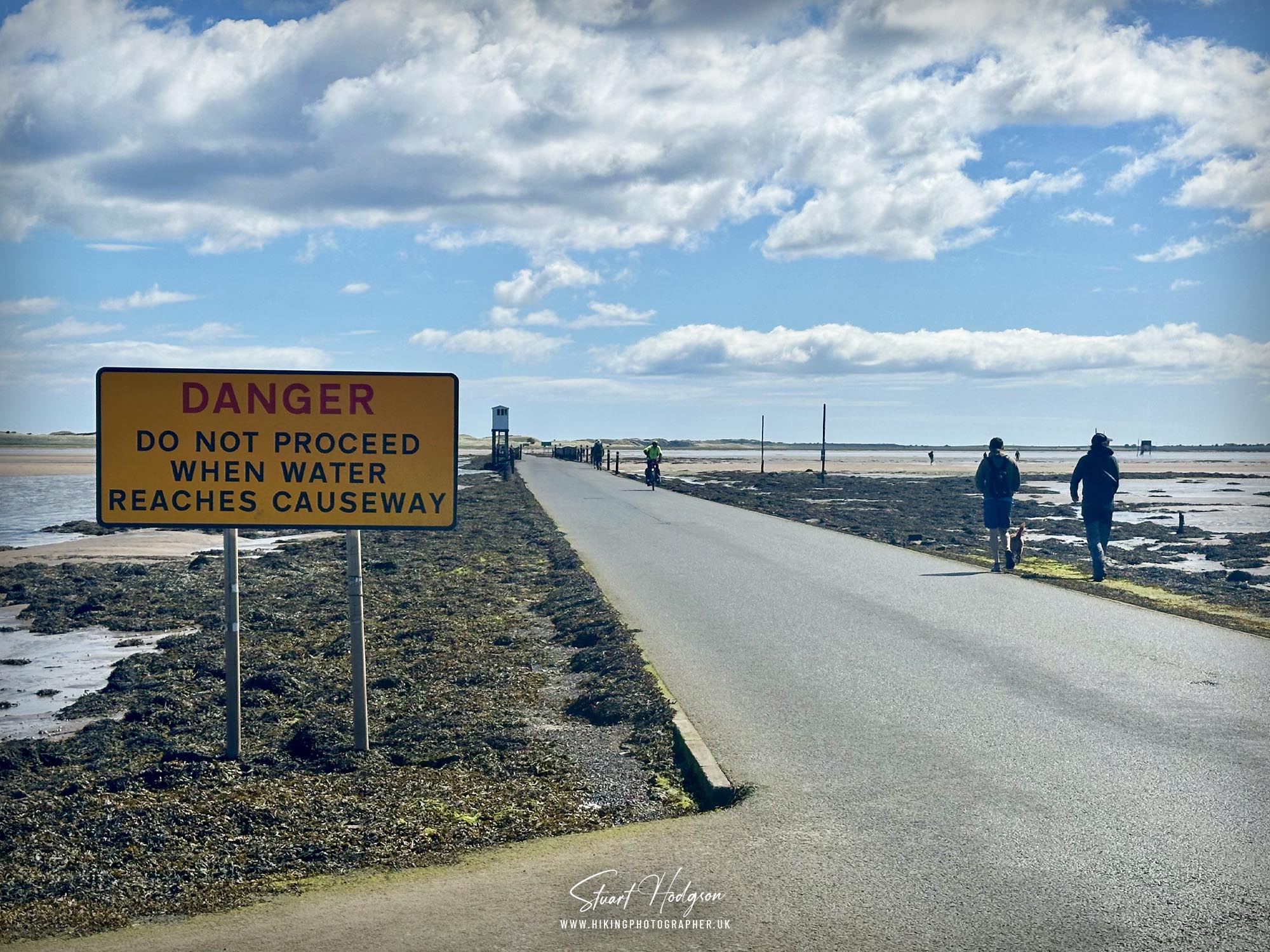
At the start of the way from Beal Sands Car Park I recommend walking on the causeway to cross South Law Tidal Channel. This photo also shows the all important sign – DO NOT go any further if water is at the side of the causeway. It’s strange to think that in about 7 hours this road will be submerged in over 1m of water!
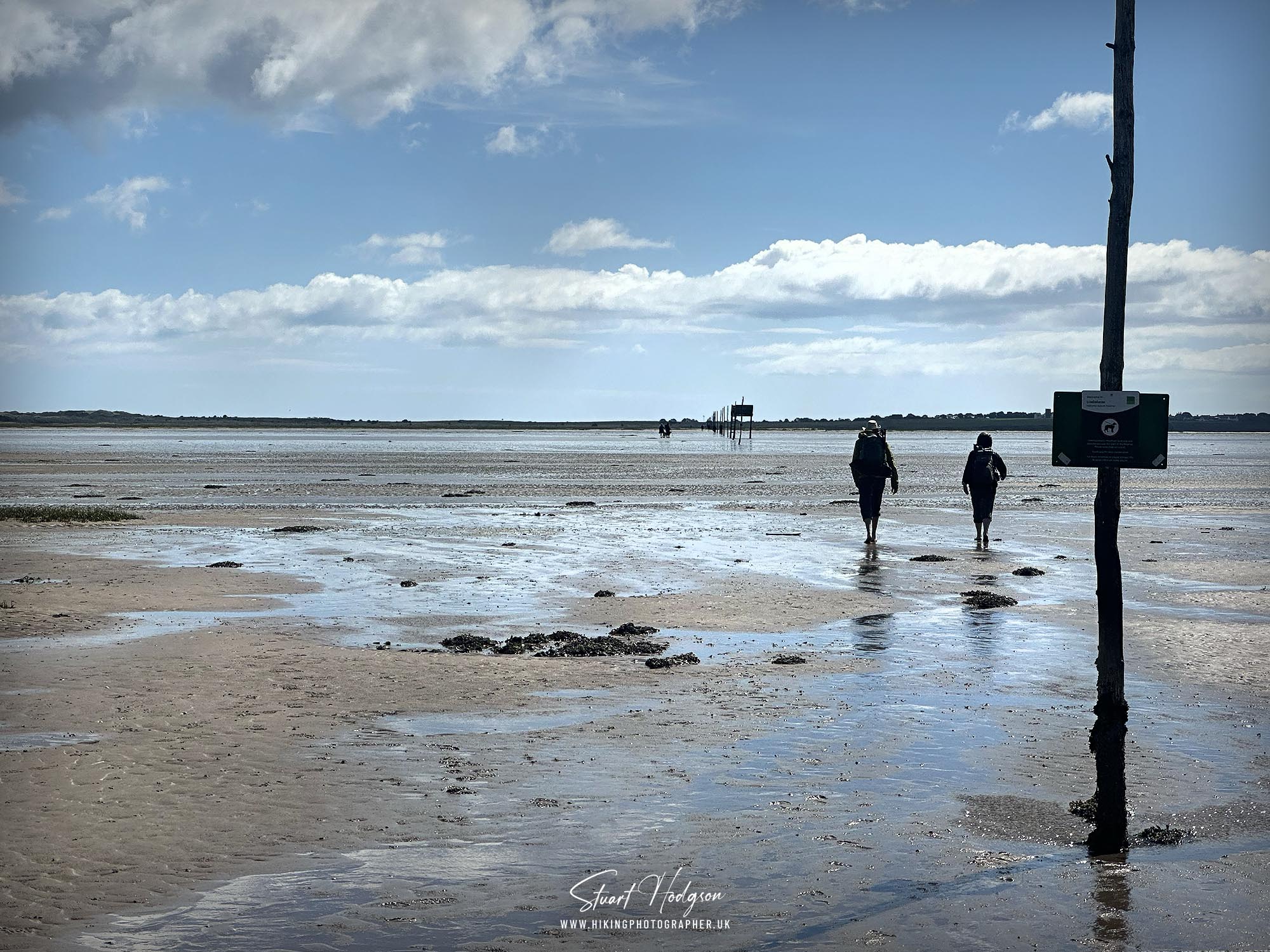
Once you cross the road bridge over the tidal channel, take a right straight onto the sands and head for the first wooden pole, pictured here. You then follow the poles in a straight line all the way to Holy Island. The first pole is where I recommend getting your shoes off! It’s patchy puddles on this day 1.5 hours before low tide, but it does get wetter so now is the time to go bare feet. I did wonder before my walk if it was all doable in hiking boots – but they would have got really wet in places and zig zagging all over to try and avoid the water. Bu going bare feet you can forget about where you are stepping and just get those feet wet and enjoy the walk and soak in the views.
TIP: You might want to bring extra water to wash your feet down at the very end and even a small hand towel to dry your feet.
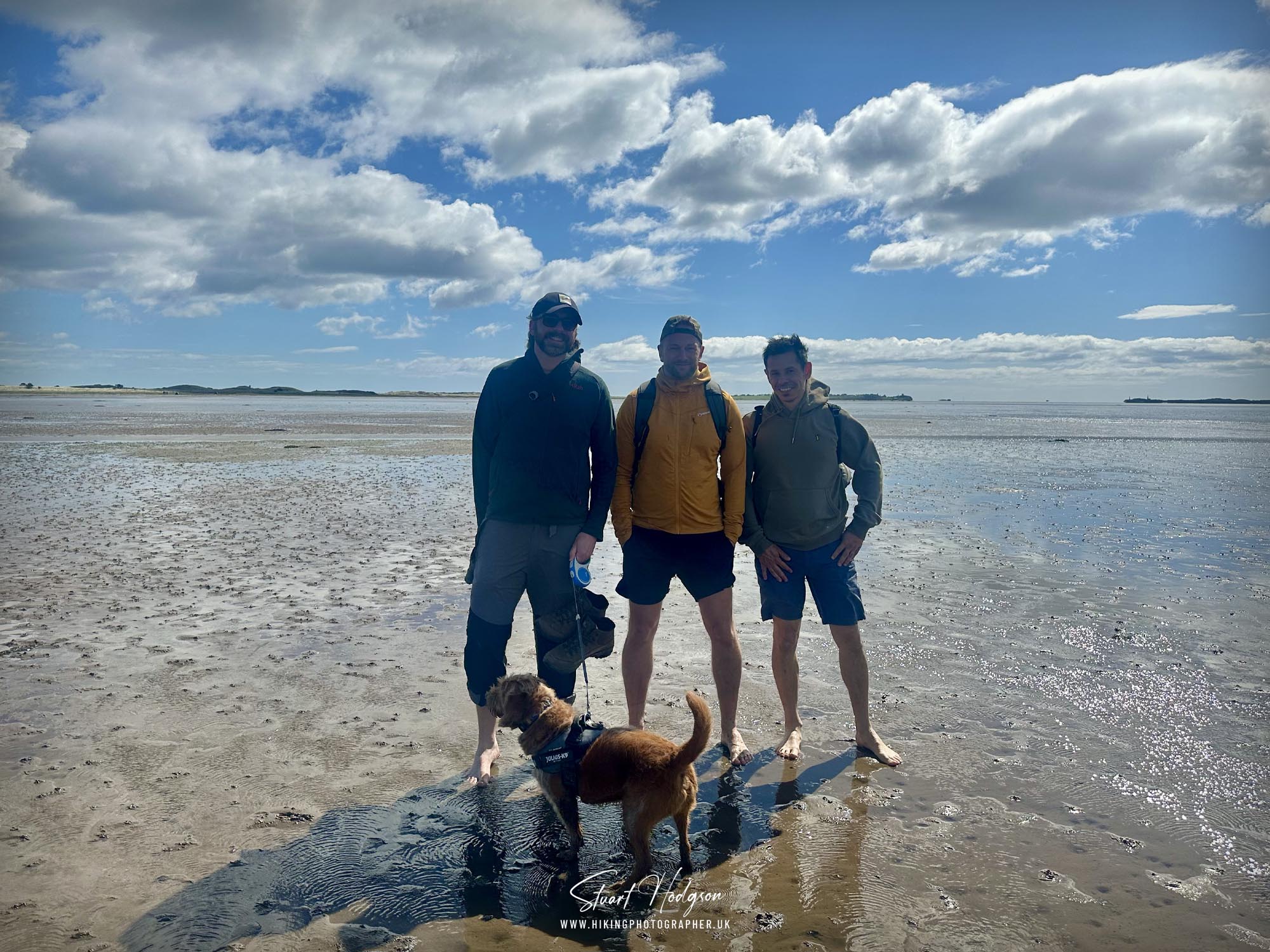
Me (centre) and my 2 mates at the start of our walk. This full route is dog friendly, although dogs do need to be kept on a lead.

The pic above marks the half way mark on the route across teh tidal sands and where the sand turns to mud flats and vegetation. As you can see above it’s a little muddy where the poles are – so just veer to the right to avoid the worst of it, being careful not to slip on the muddy bits! The mud you do get on your feet here will soon wash off – leaving your feet silky smooth haha
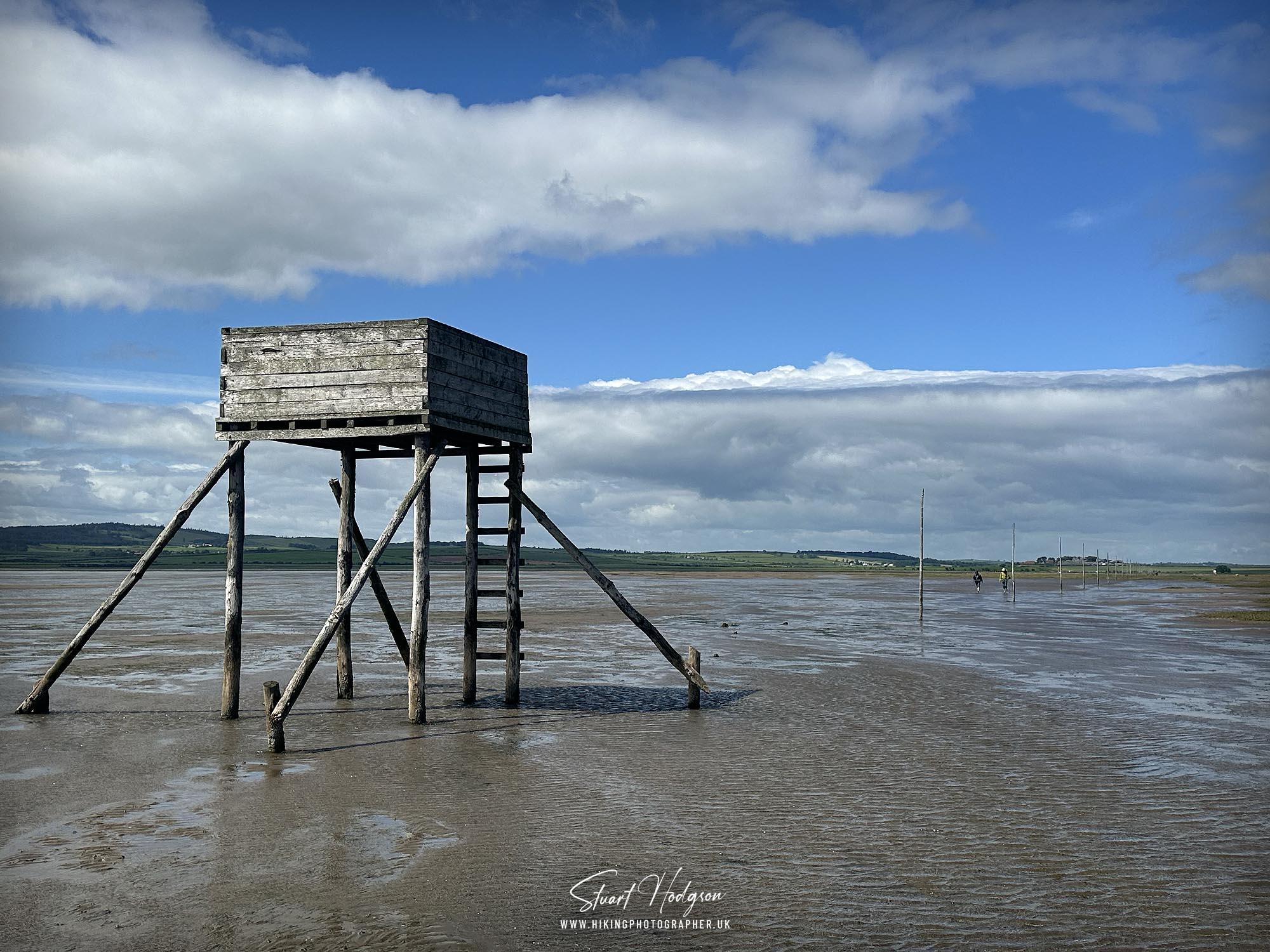
You pass a couple of raised wooden platforms, a safety place for those who don’t plan and end up getting caught out by the tide! They are a bit wobbly and not something I’d like to use, and I hope this blog post helps you plan accordingly so you dont have to use them either 🙂
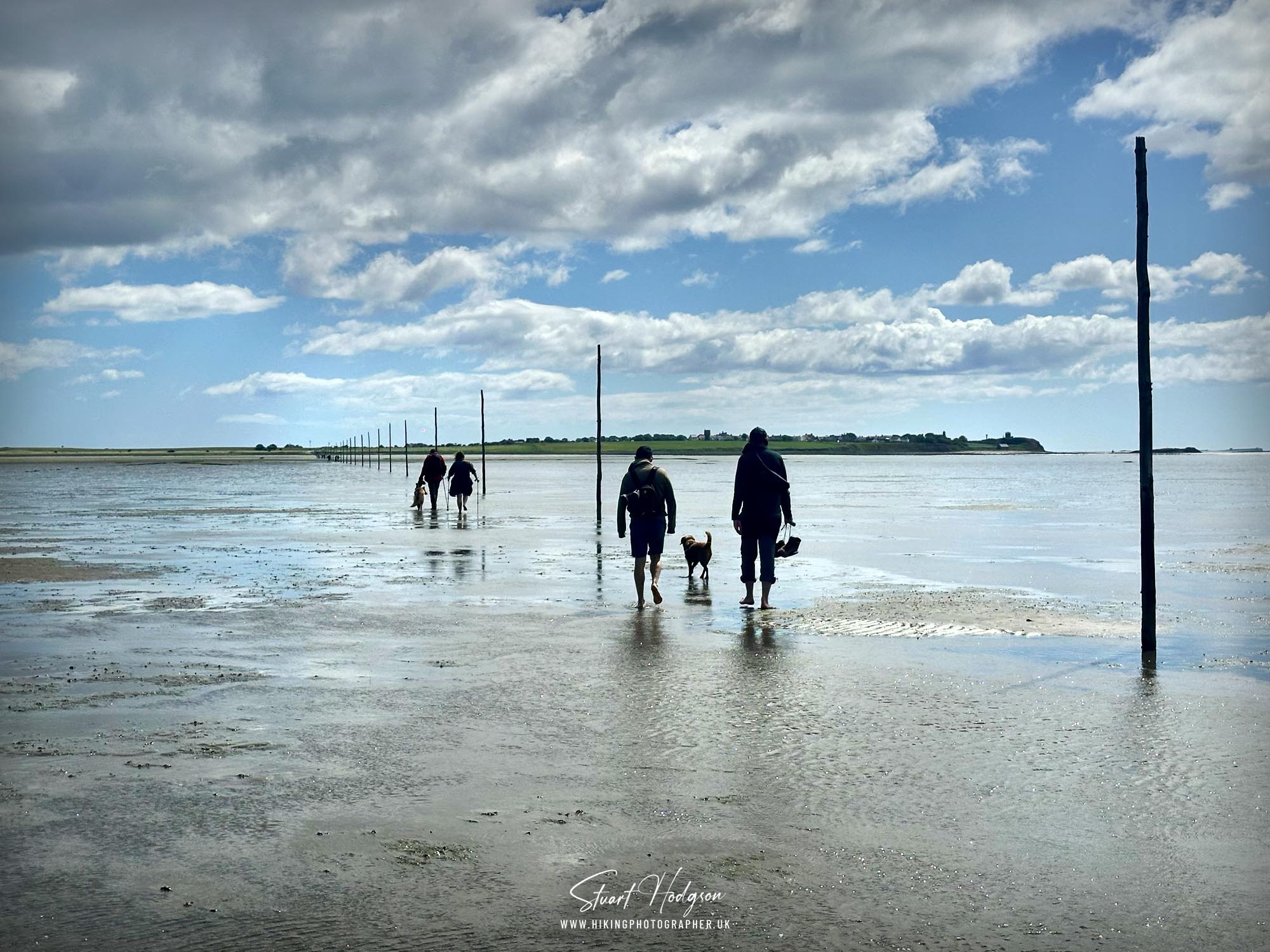
The end is in sight now and we approach Holy Island

Approaching the last pole and land! There is a little mound of stones around the last pole and a small pool.
TIP: This is where I think it’s best to dip your feet in the pool whilst standing on the stones and dry your feet and putting your shoes back on, rather than wait until you reach dry land – as your feet will be full of sand by then.

Once you reach land – there is a useful bench, where you can also put your shoes and socks back on. This is where your extra water and hand towel might come in useful!
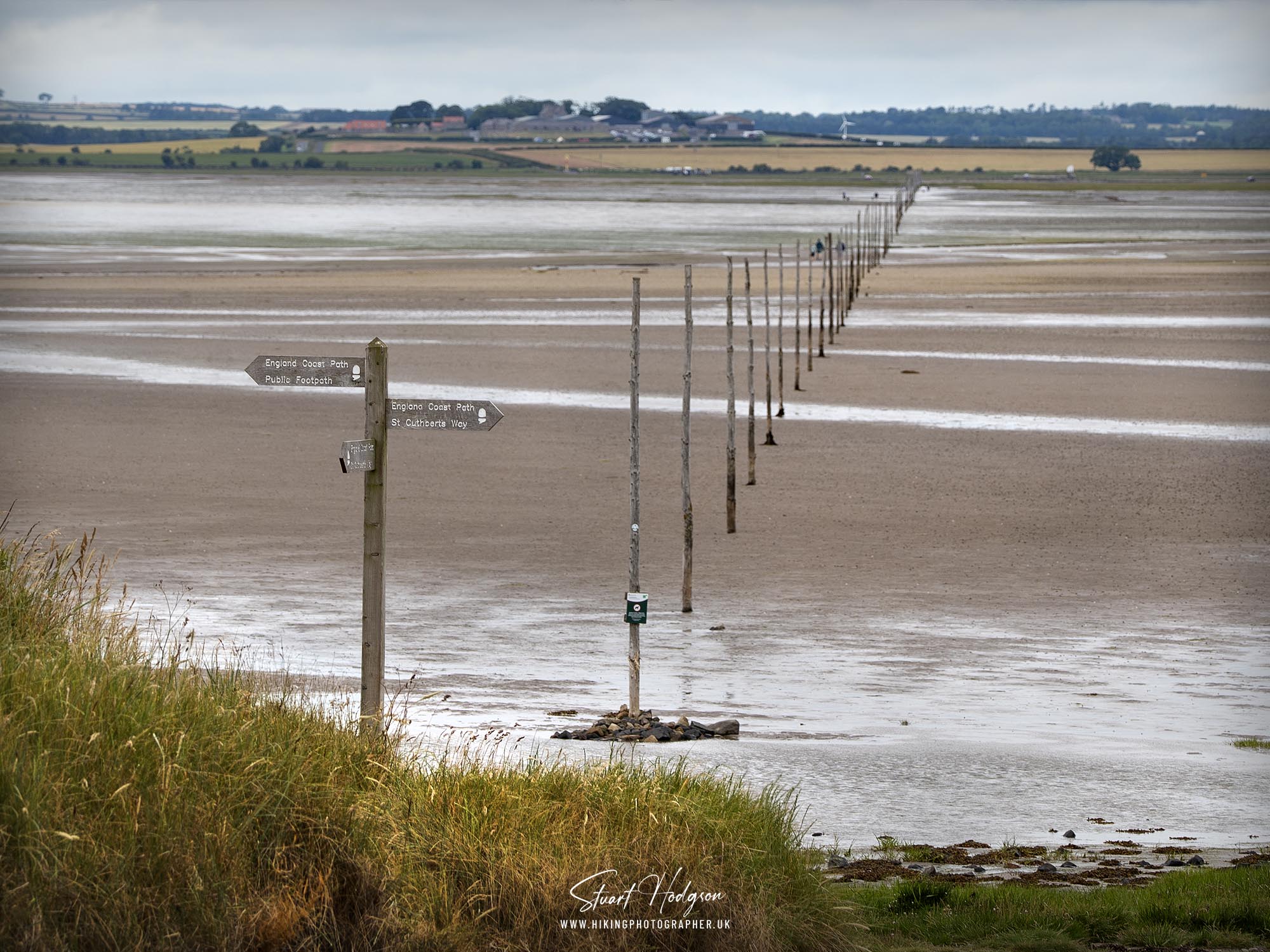
Looking back at the route we have just taken and the 112 wooden poles we followed. The wooden poles on the Pilgrim’s Way are spaced roughly 30 to 45 metres apart in a straight line across a vast, flat 3-mile expanse of sand and mudflats, and this spacing ensures that walkers can always easily see the next pole ahead, even in poor weather or light mist.
PHOTOS ON THE HOLY ISLAND SECTION OF THE WALK

Once you are on the landmass that is Holy Island, bear right and walk on the coastal path which will take you into the village
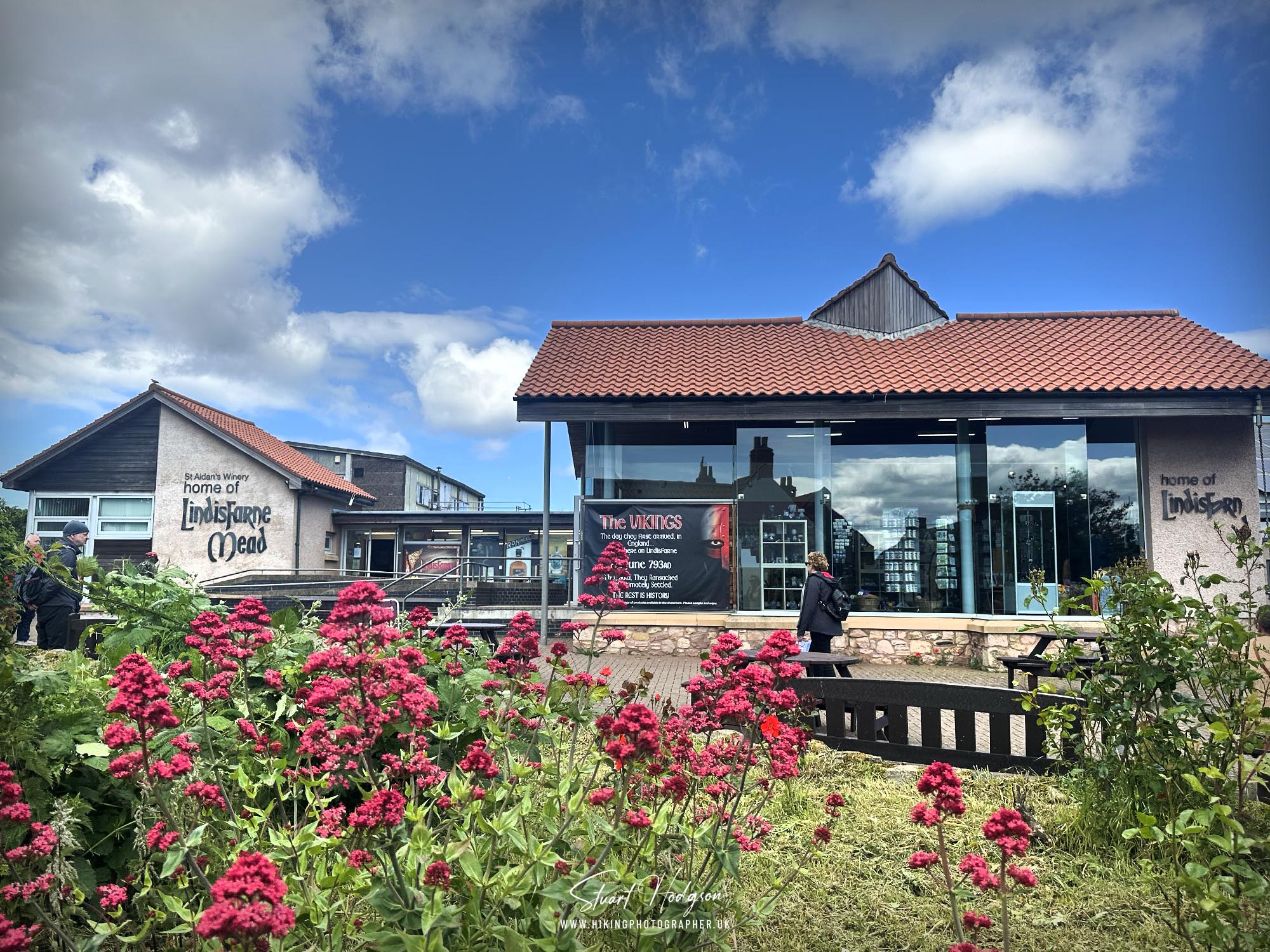
Once you reach the village onHoly Island you will find a few cafes, pubs and some shops. The building that caught our eye was the one called ‘The Home of Lindisfarne Mead”. I’d heard about Lindisfarne Mead but never tried it – so we ventured in to the shop to learn more…

Free shot samples! This walk gets even better haha Having never tried mead before I was suprised by the taste of the Lindisfarne Farne Mead – it was quite sweet and that Elderflower one was very nice indeed. After 3 samples it was time to go before this adventure took an unexpected turn lol
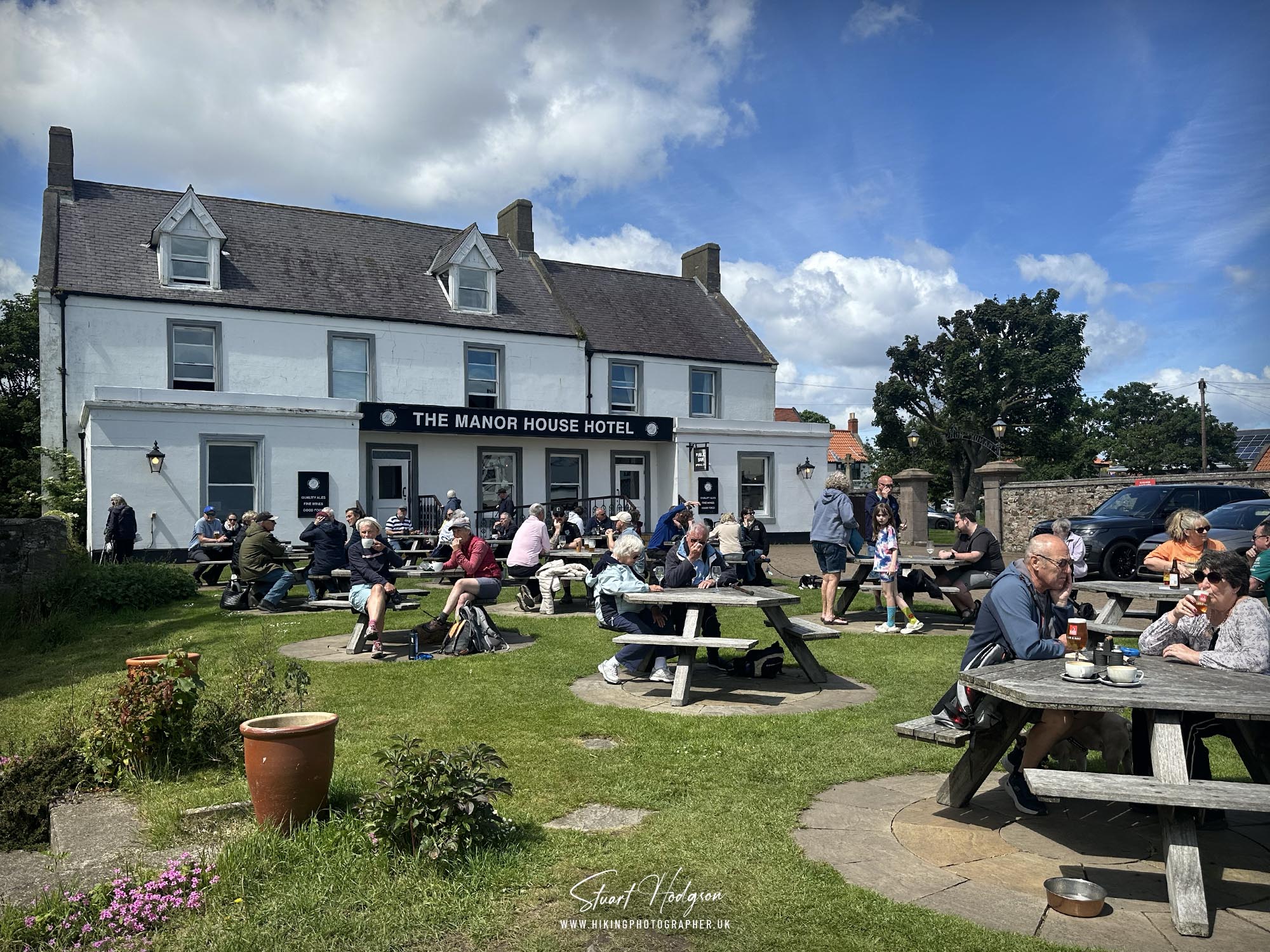
The route takes you through the village towards Lindisfarne Priory and right past The Manor House Hotel. On a sunny day this is a perfect place to stop as from the Beer Garden you get views of Lindisfarne Priory & Lindisfarne Castle. We grab a coffee here before pressing on, as tempting as it was to get a pint – but we’re not even half way on this walk yet so that’s not a good idea!
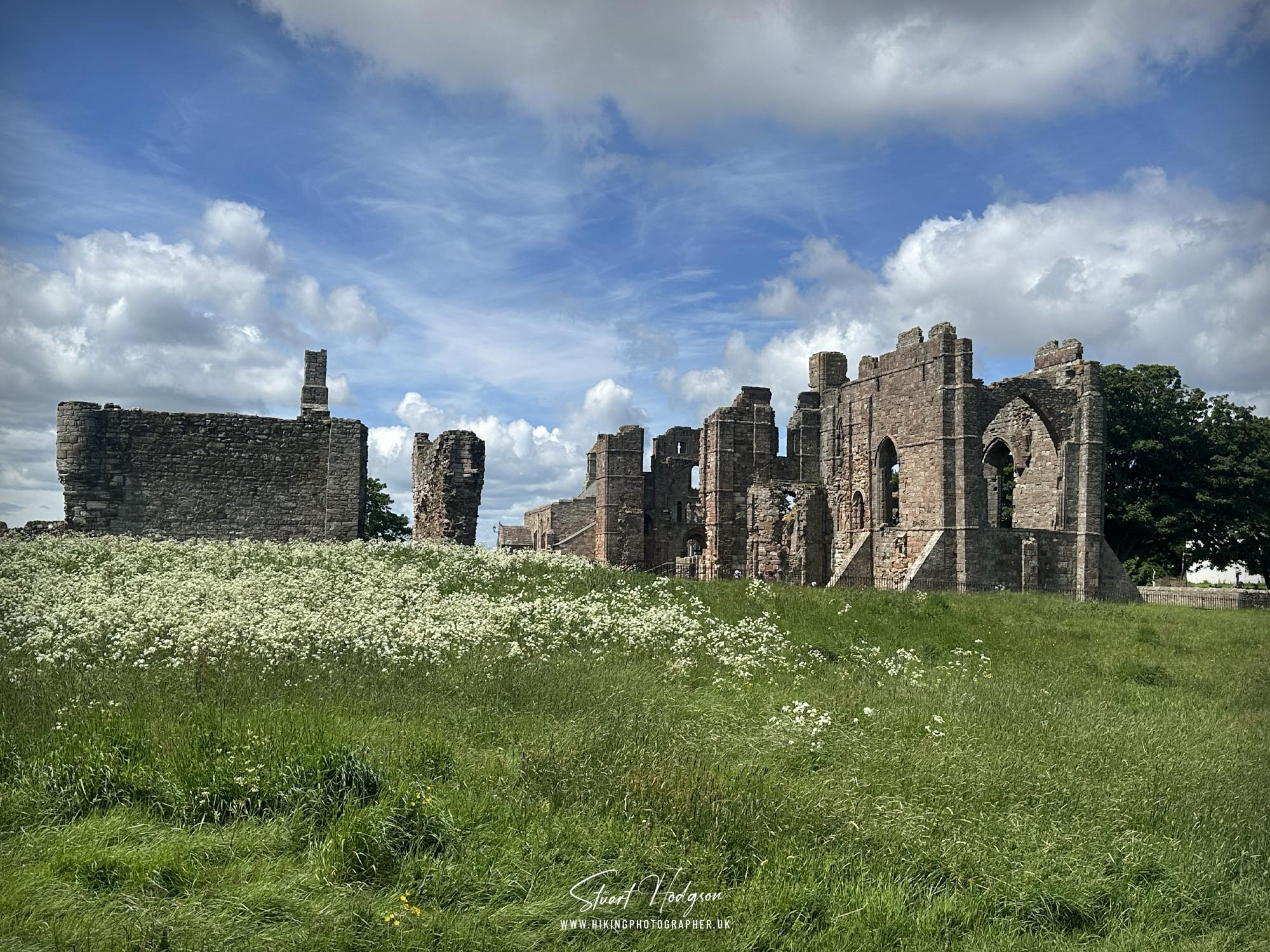
As we set off again – you get some great views of Lindisfarne Priory which is right next to the Manor House Hotel. You can pay to get into Lindisfarne Priory and see the ruins up close – but I think the views from the path are just as good to get a sense of the place.

We are soon passing through Lindisfarne Harbour and it’s well worth taking time to explore this area. Have a walk on the pier and wander in and around past the famous boat huts.
These iconic storage sheds are fashioned from the upturned hulls of old herring boats. Dating back to the early 20th century, these weathered, tar-coated structures were cleverly repurposed by local fishermen and remain a highly photographed, quirky piece of maritime history.

I’d seen photos previously of the quirky boat sheds on Lindisfarne and it was another one of the reasons I wanted to visit Holy Island so I took quite a few photos around here – bear with me haha
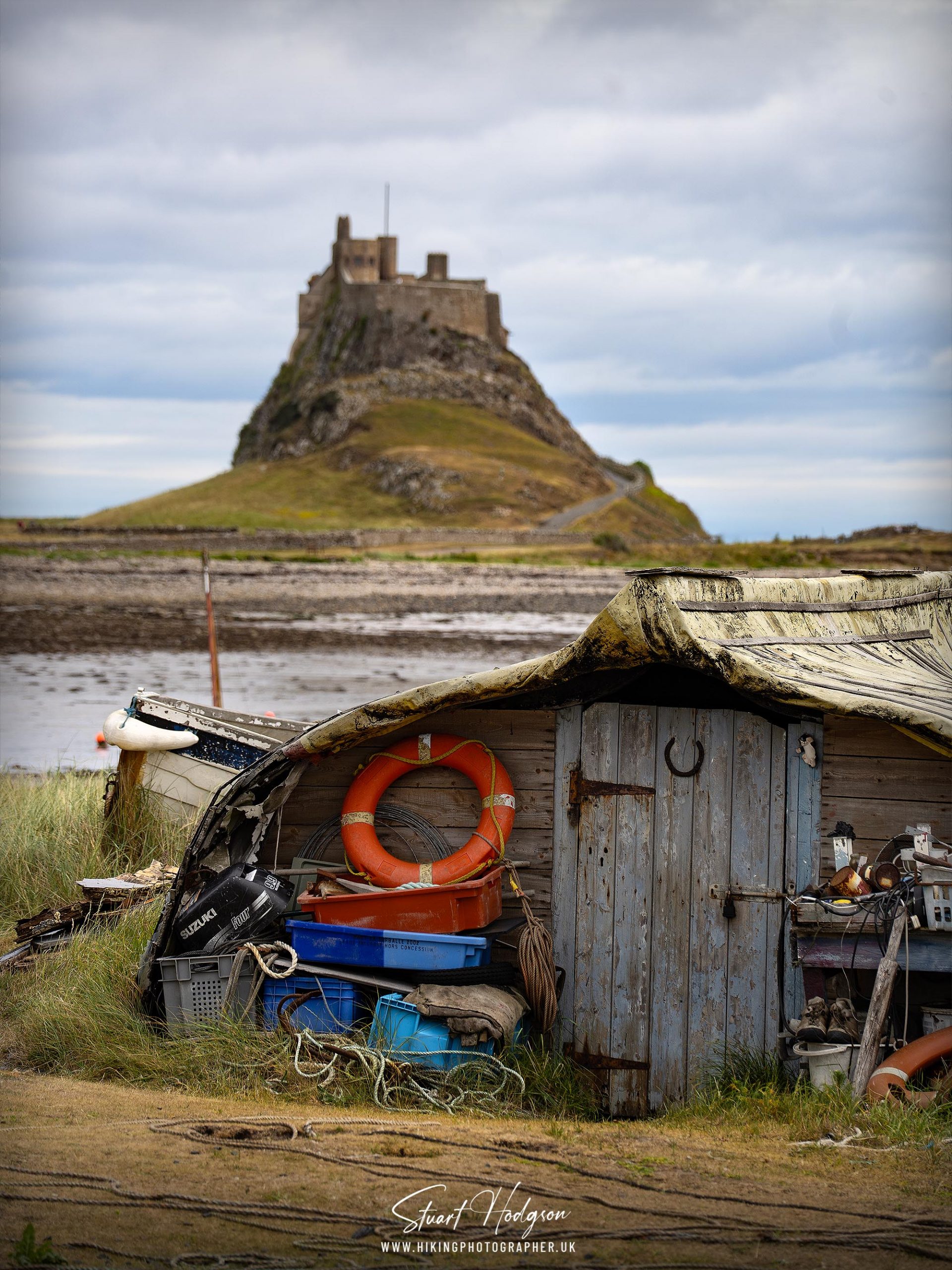
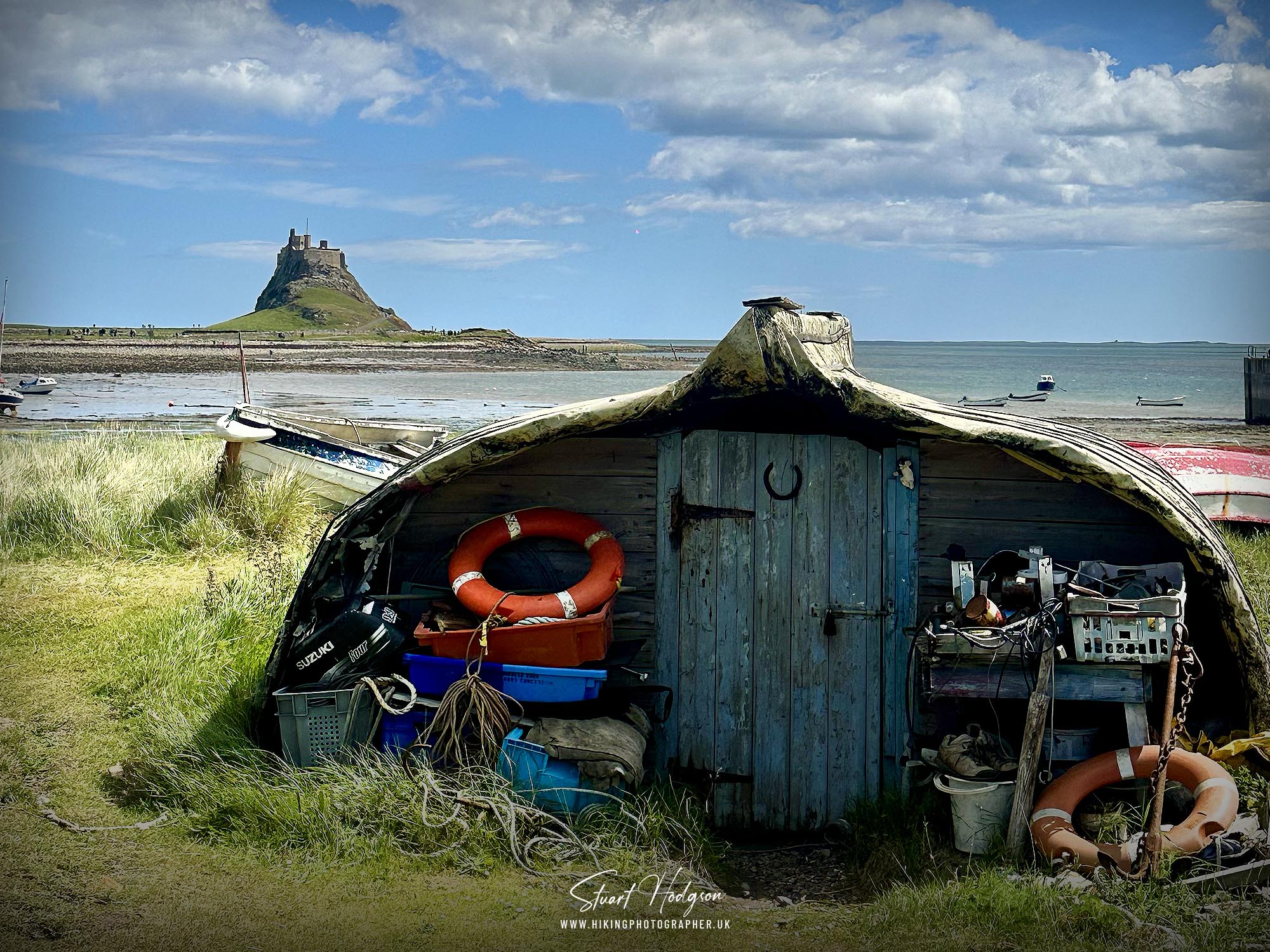
I really love it around Lindisfarne Harbour, and I could spend ages just around here with my camera.
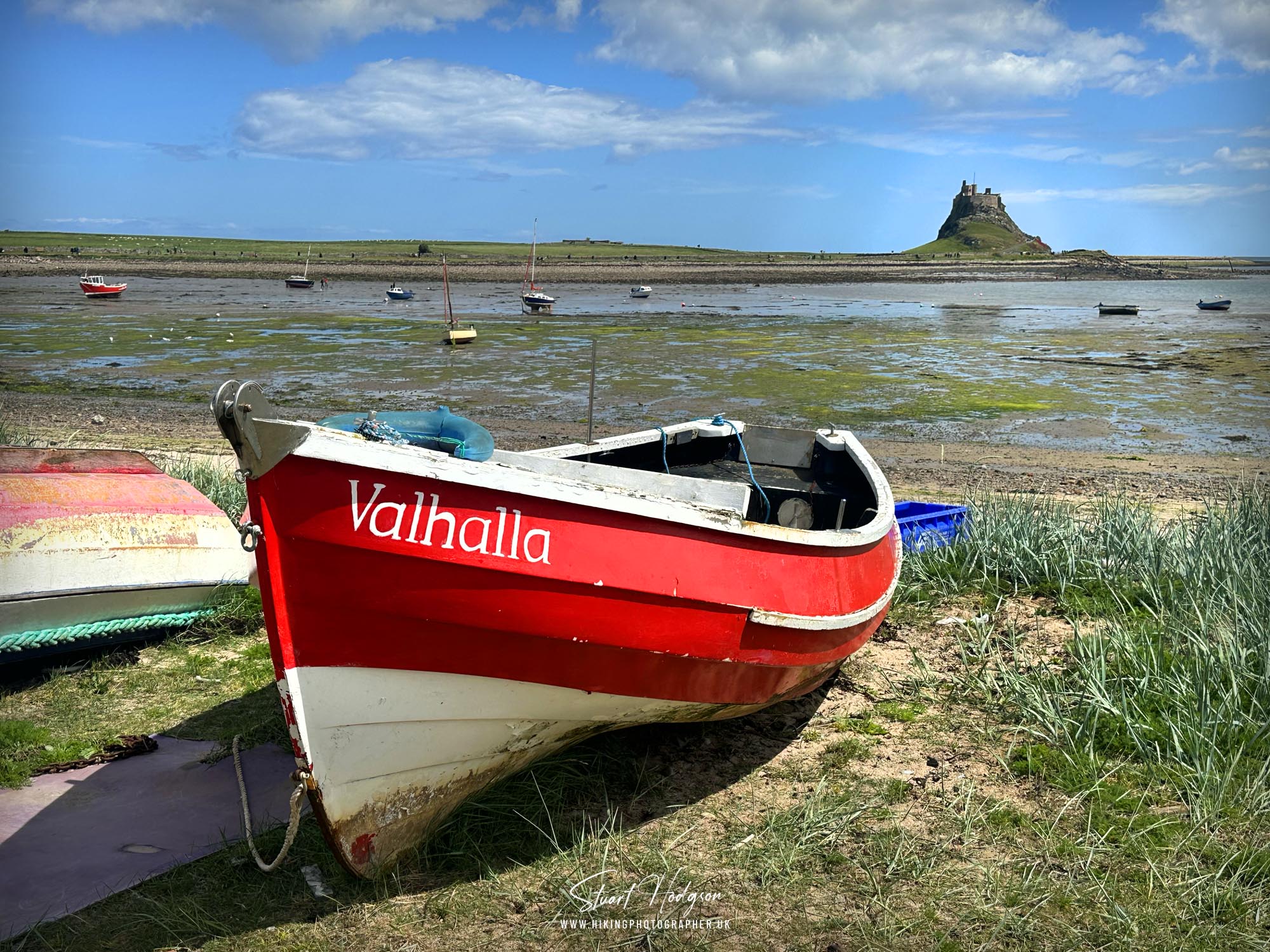
A boat named with a nod to Holy Islands brutal viking past. In Norse mythology, Valhalla is apparently a majestic, golden hall in Asgard presided over by the god Odin. According to legend, it serves as an eternal paradise and training ground for the bravest warriors who die heroically in battle. A strong myth to get vikings to lay everything on the line perhaps! Anyhow – we have around 4 more miles to go on this walk and you don’t want to lose track of time on Holy Island before that tide comes back in – so onwards we go.
WALK TO LINDISFARNE CASTLE
From Lindisfarne Harbour it’s a short walk around the shores of Ouse Bay to Lindisfarne Castle, which is a popular section.

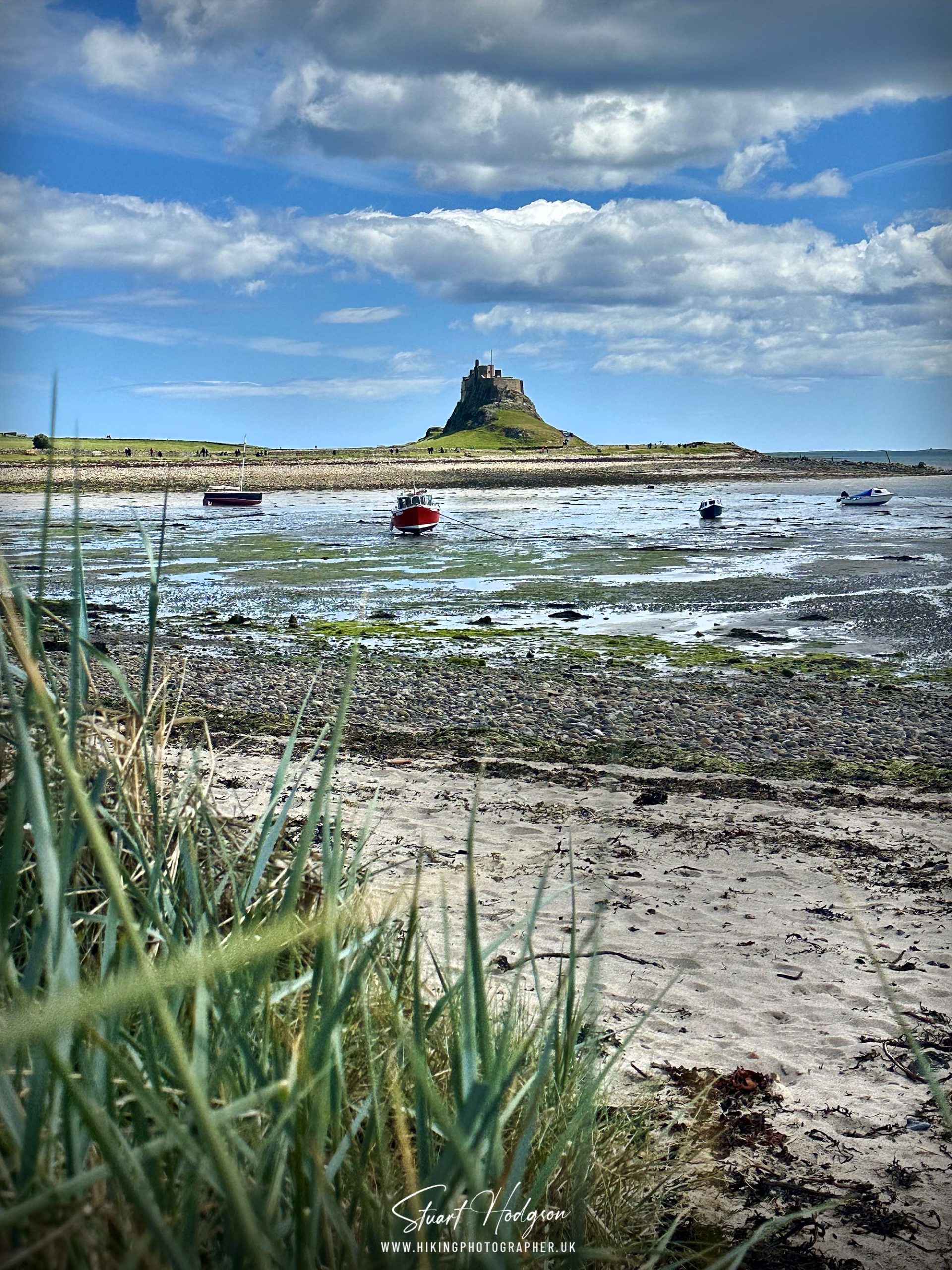
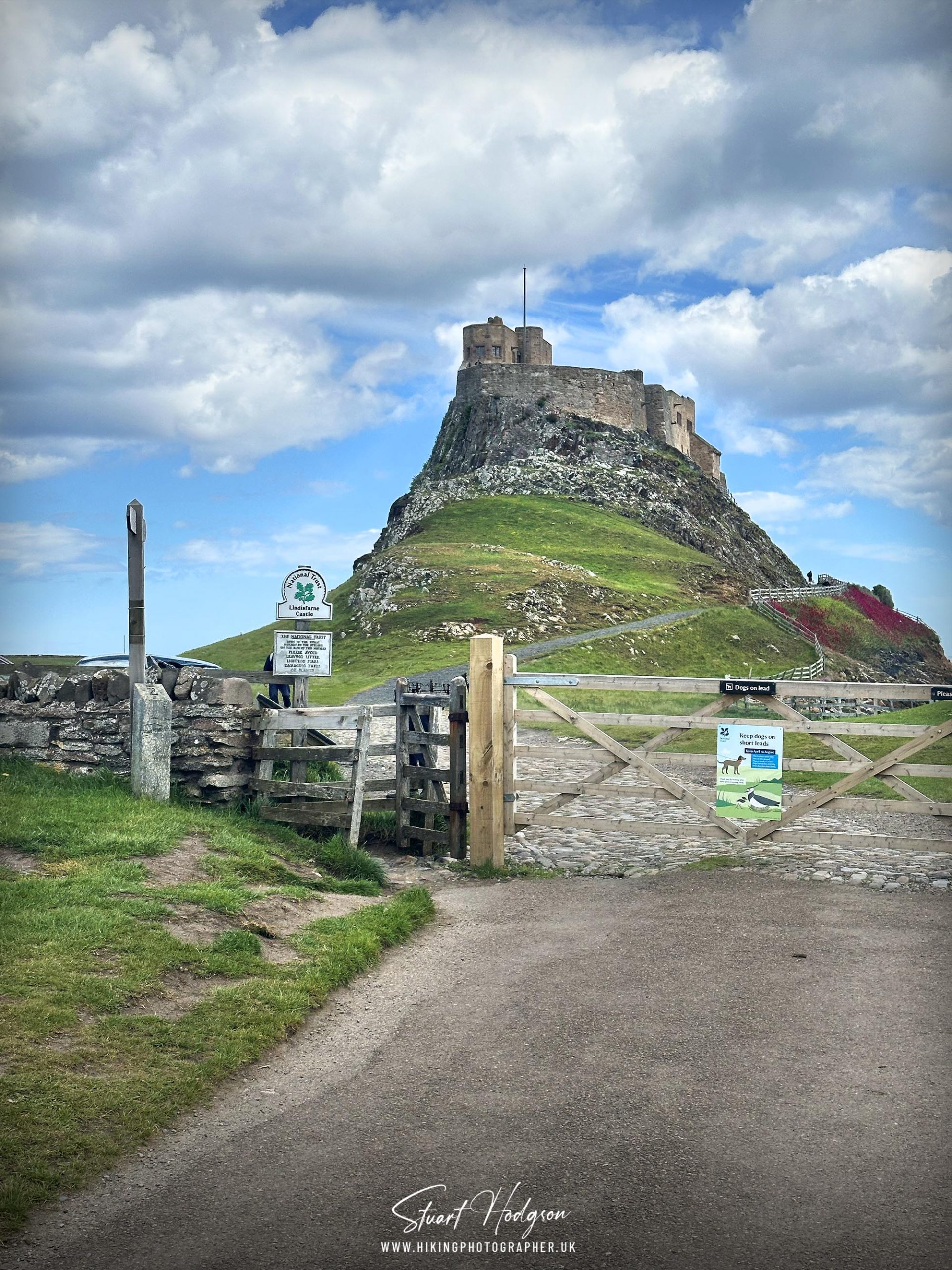
At this point we pass through the gate into the National Trust area which Lindisfarne Castle is now part of. But before I do – I like to dip down to the right here on the rocky shoreline as that’s another prime spot for some photography to get some nice shots of Lindisfarne Castle with some interesting foregrounds.
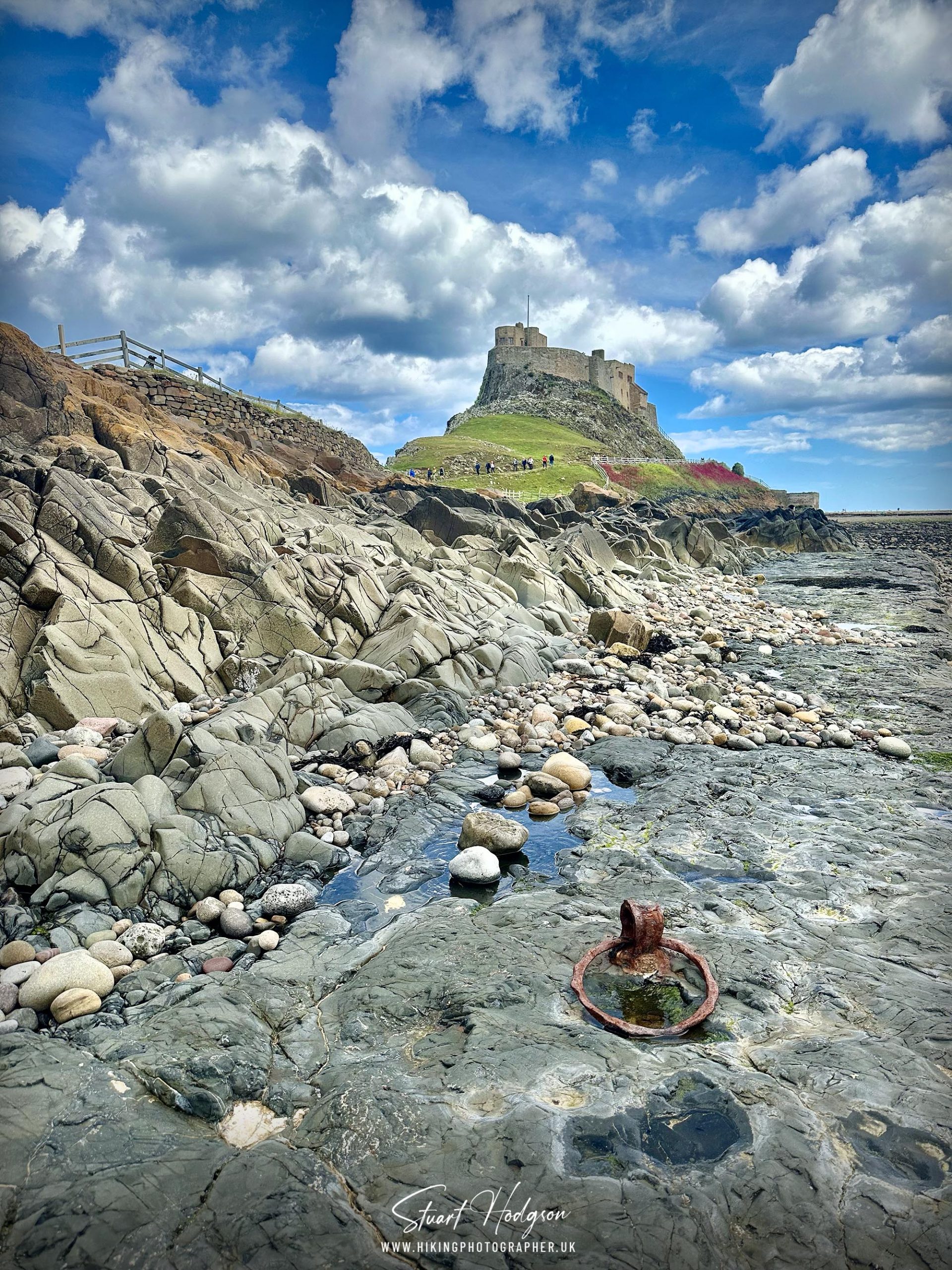
After having a little pit stop – we then head towards and around Lindisfarne Castle where the path skirts around it’s base.
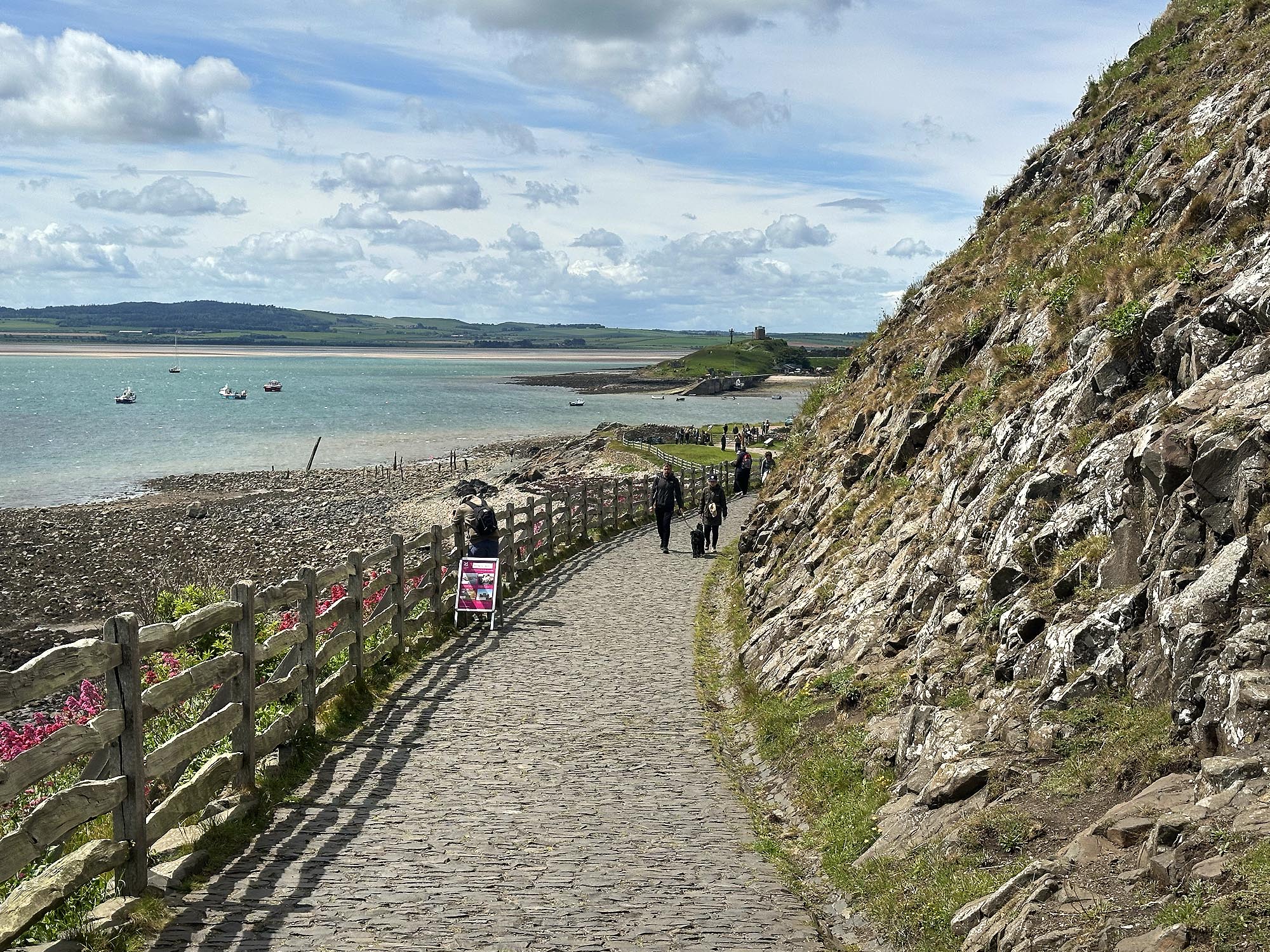
You can pay to go into Lindisfarne Castle itself – but we carry on past it, as time is of teh essence – heading first towards the old Lime Kilns
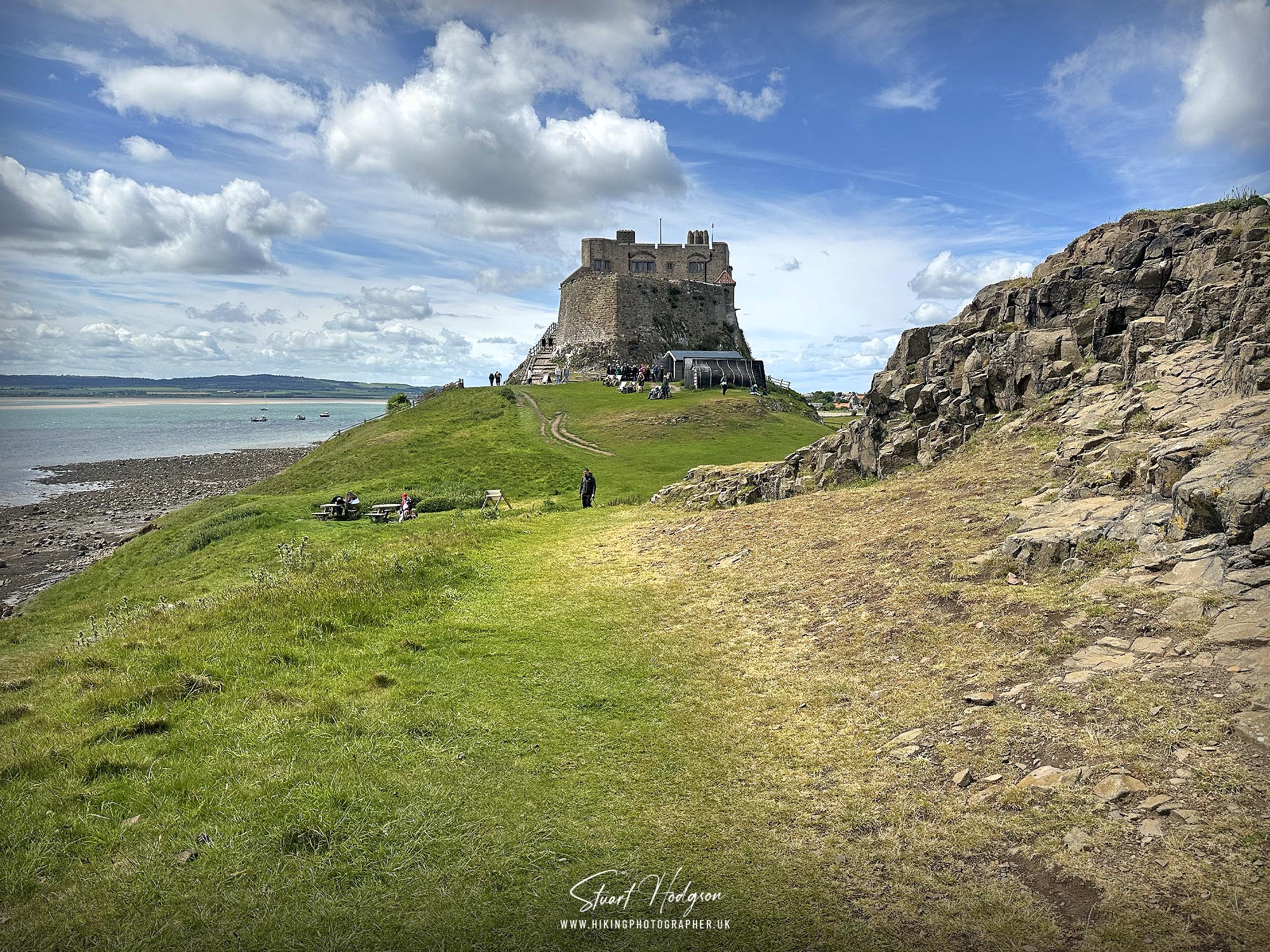
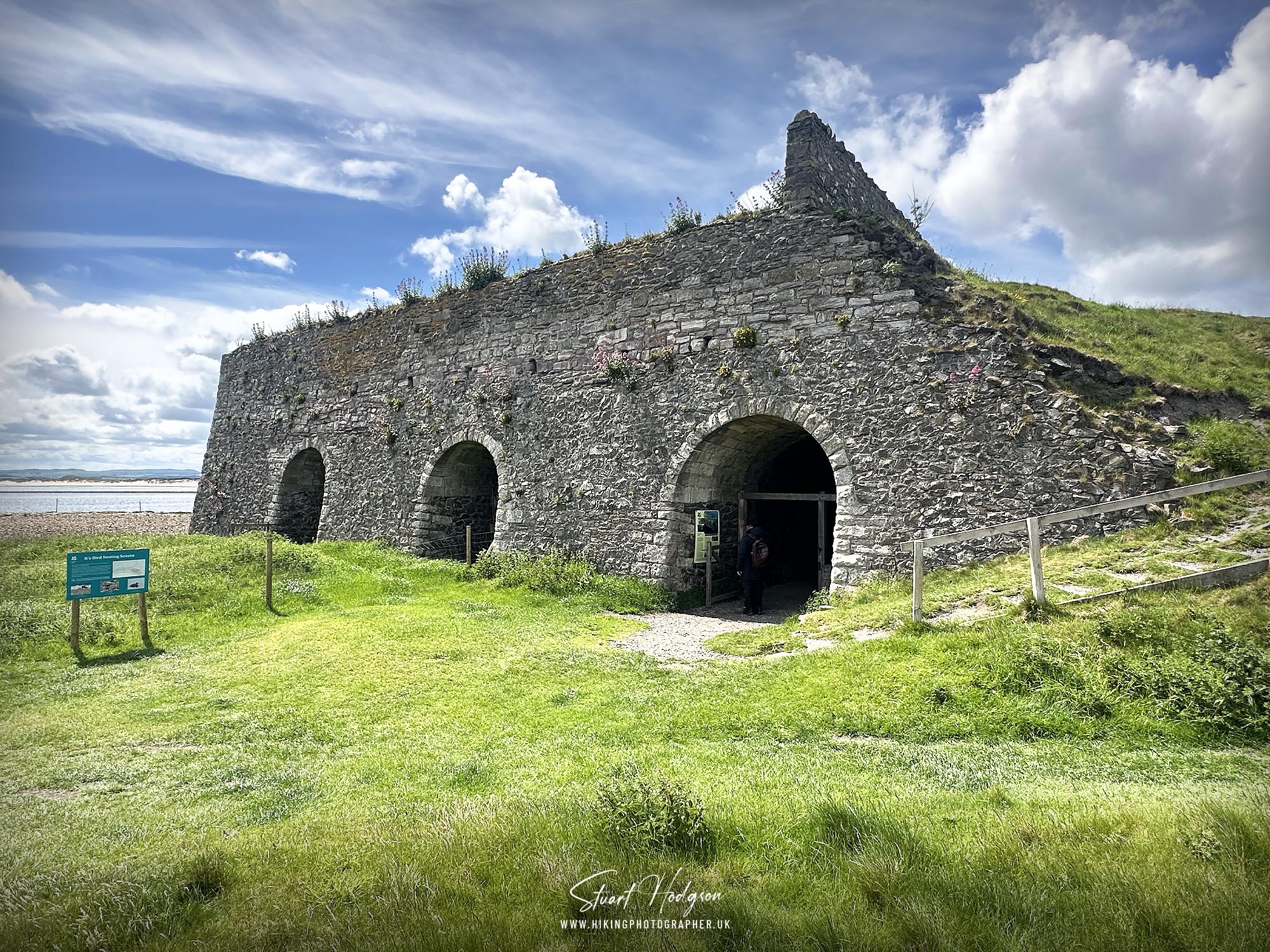
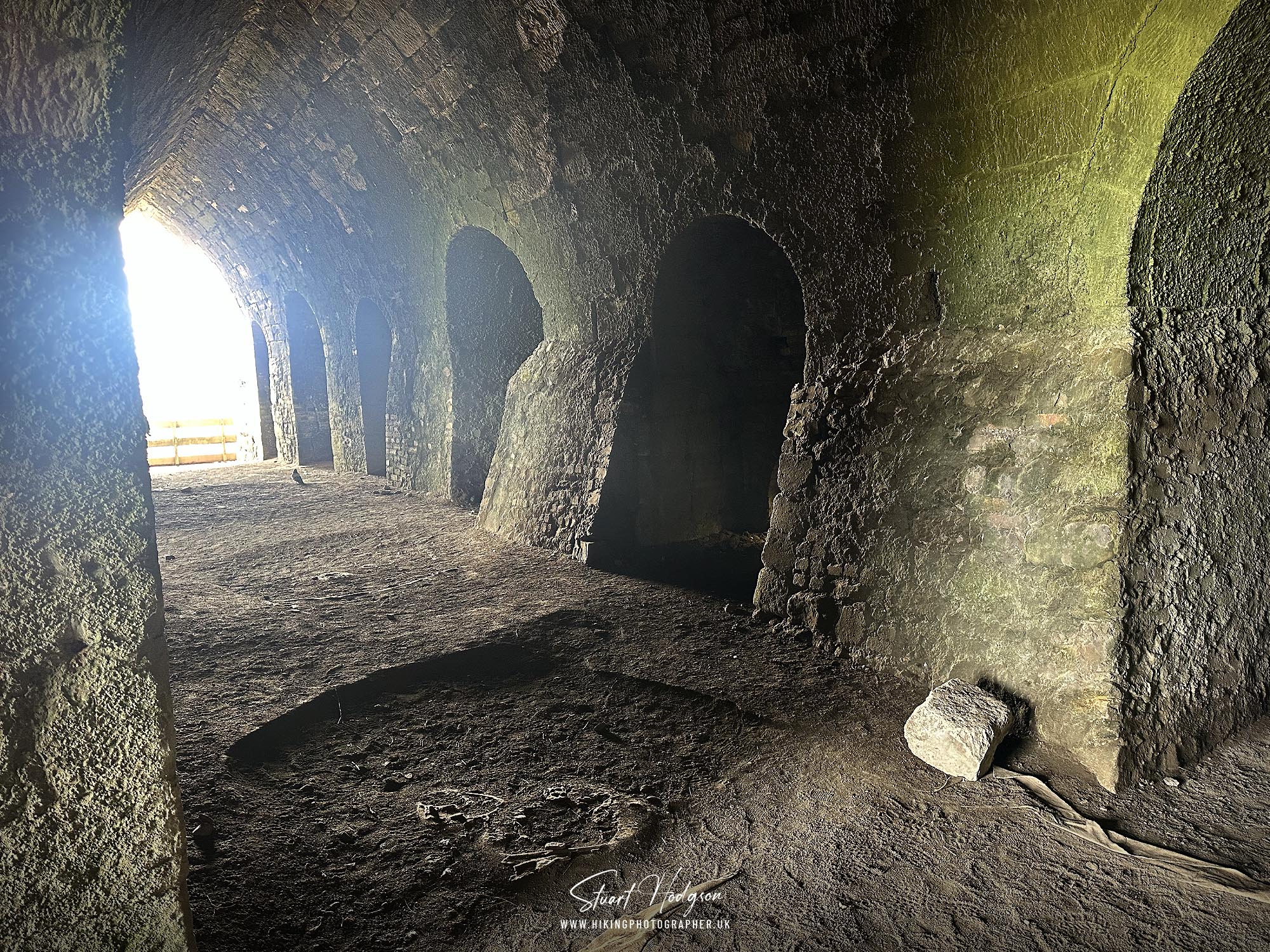
The Lime Kilns are a bit hidden from view as you approach them from behind – but the path drops down and it’s worth popping your head into the kilns which are pretty well preserved!
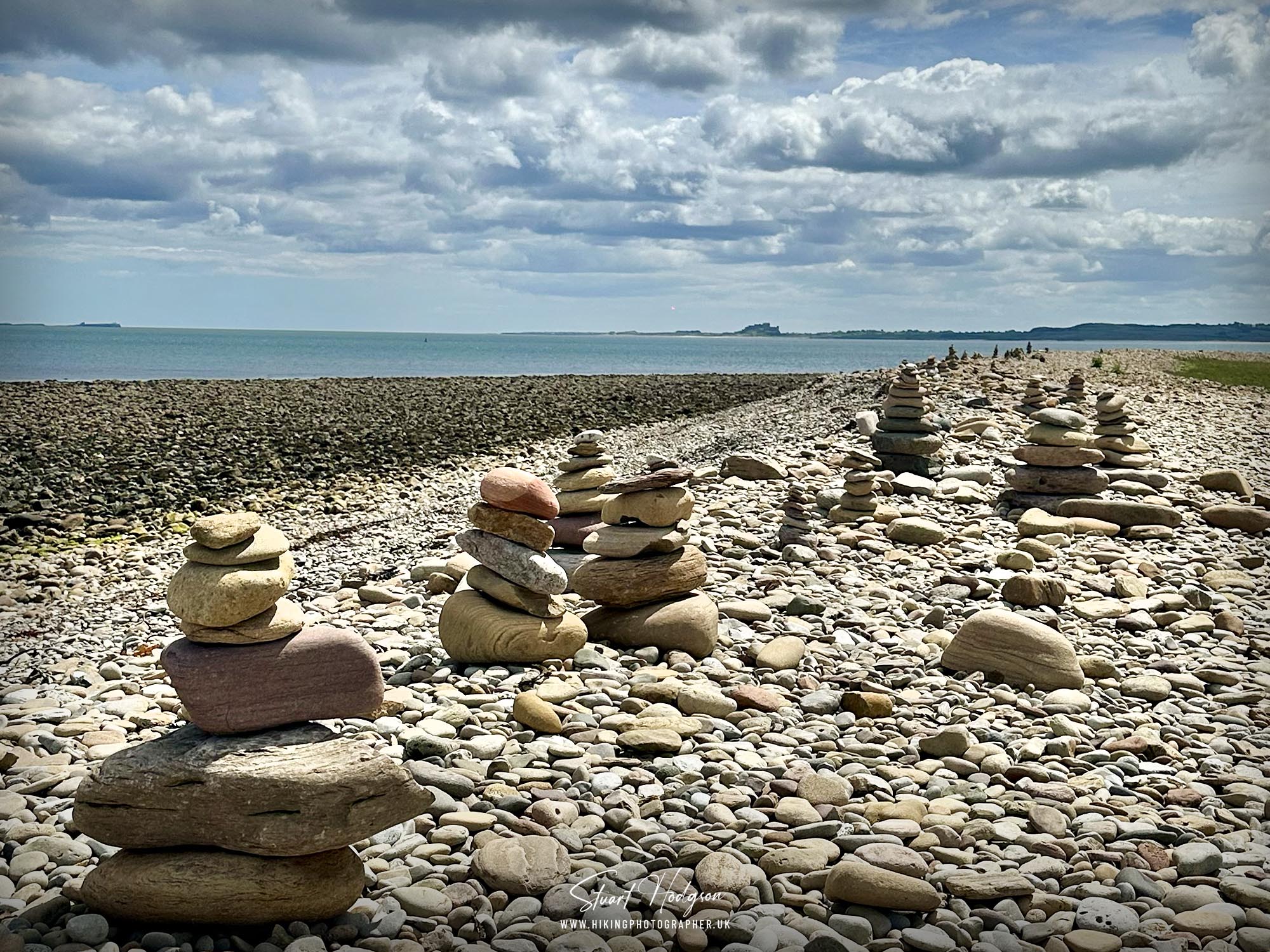
We are soon at the eastern shores of Holy Island where people have decided to make pebble towers. In this image you can see Bamburgh Castle in the far distance and even the Farne Islands to the left
WALK SECTION TO THE PYRAMID AT EMMANUAL HEAD
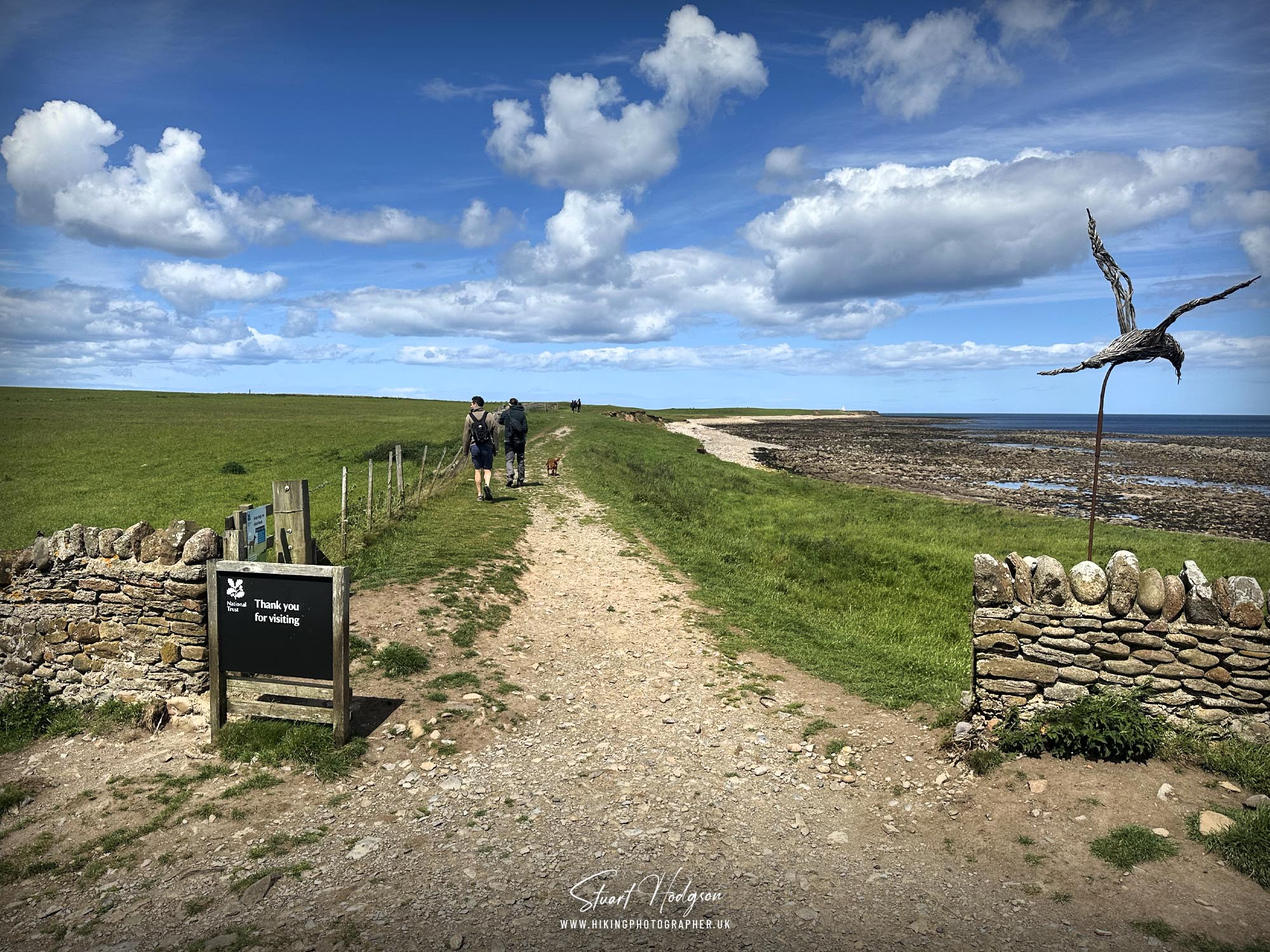
As we leave the Lindisfarne Castle National Trust Area, we follow the coastal path on Holy Islands Eastern flank towards Emmanual Head where the white pyramid lies. With today being such as sunny day the white pyramid is illuminated by the sun like a beacon and it’s clear where we are headed
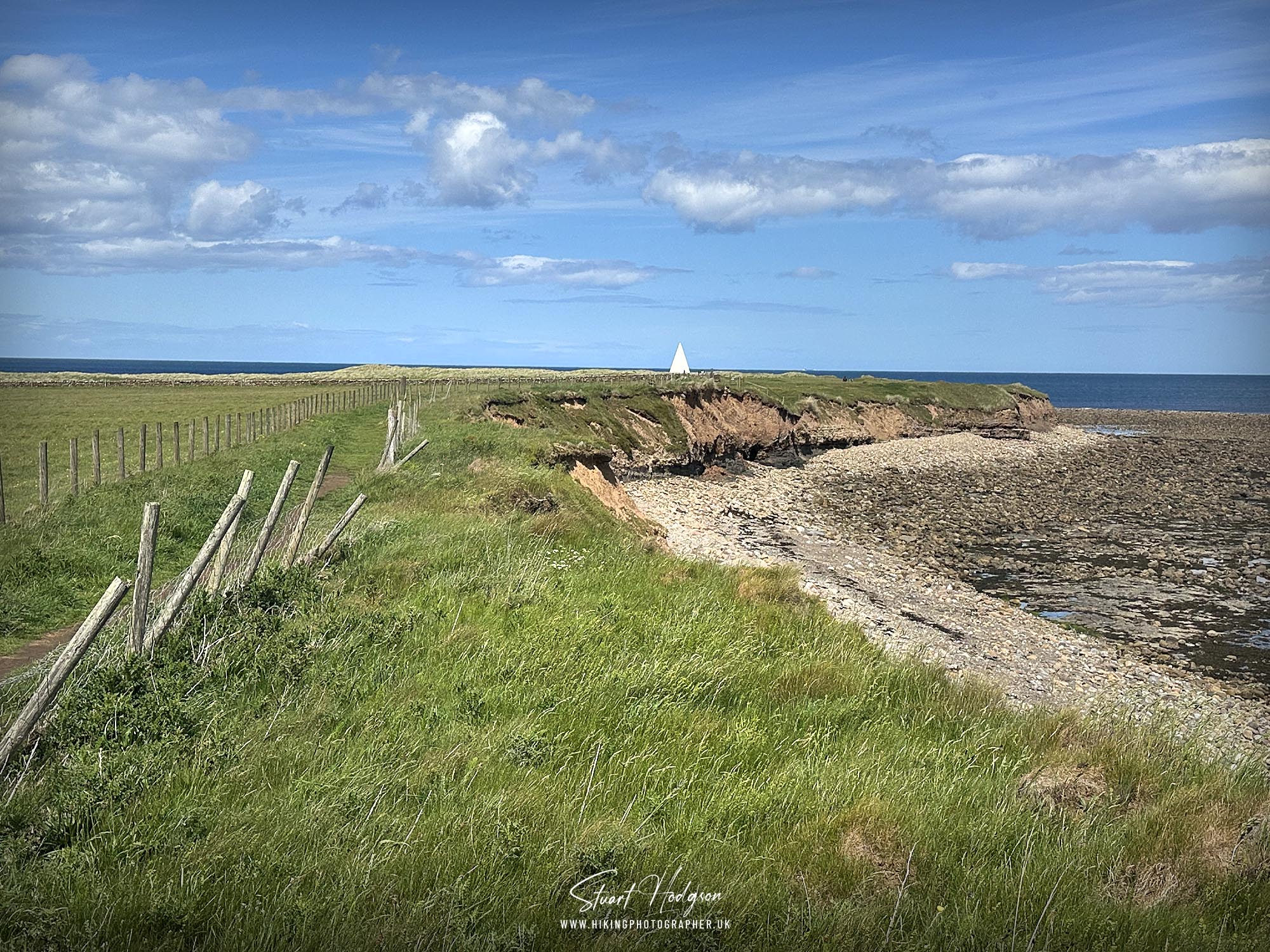
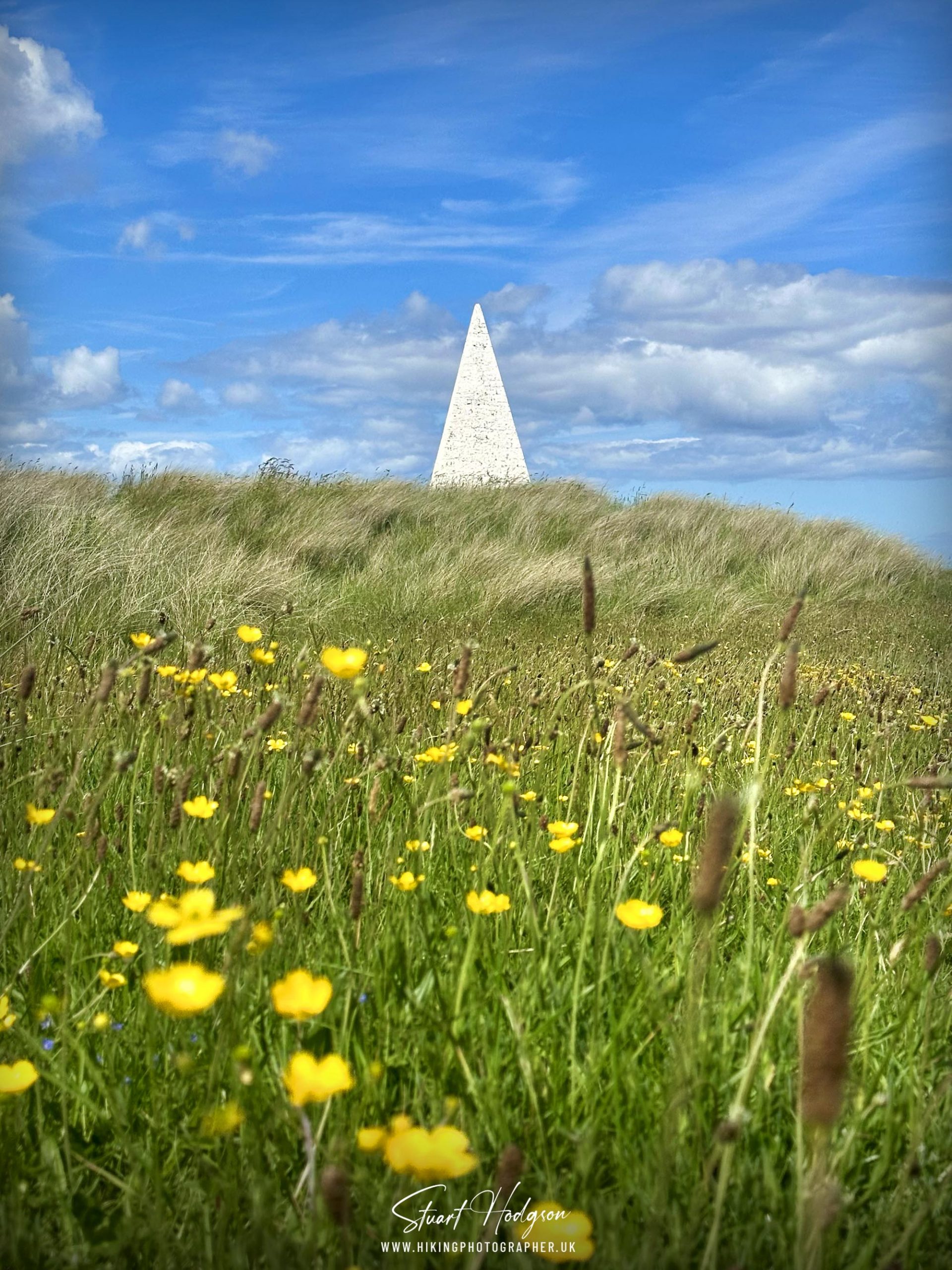
The pyramid at Emmanuel Head on the north-eastern coast of Holy Island (Lindisfarne) is a historic daymark, a daytime navigational beacon built between 1801 and 1810 by Trinity House. Standing roughly 35 feet (10 to 12 metres) tall. This stone and brick pyramid is painted a distinctive bright white to help mariners identify the true headland and avoid the hazardous, rocky shallows nearby. It is widely recognized as the oldest purpose-built coastal daymark in the United Kingdom.
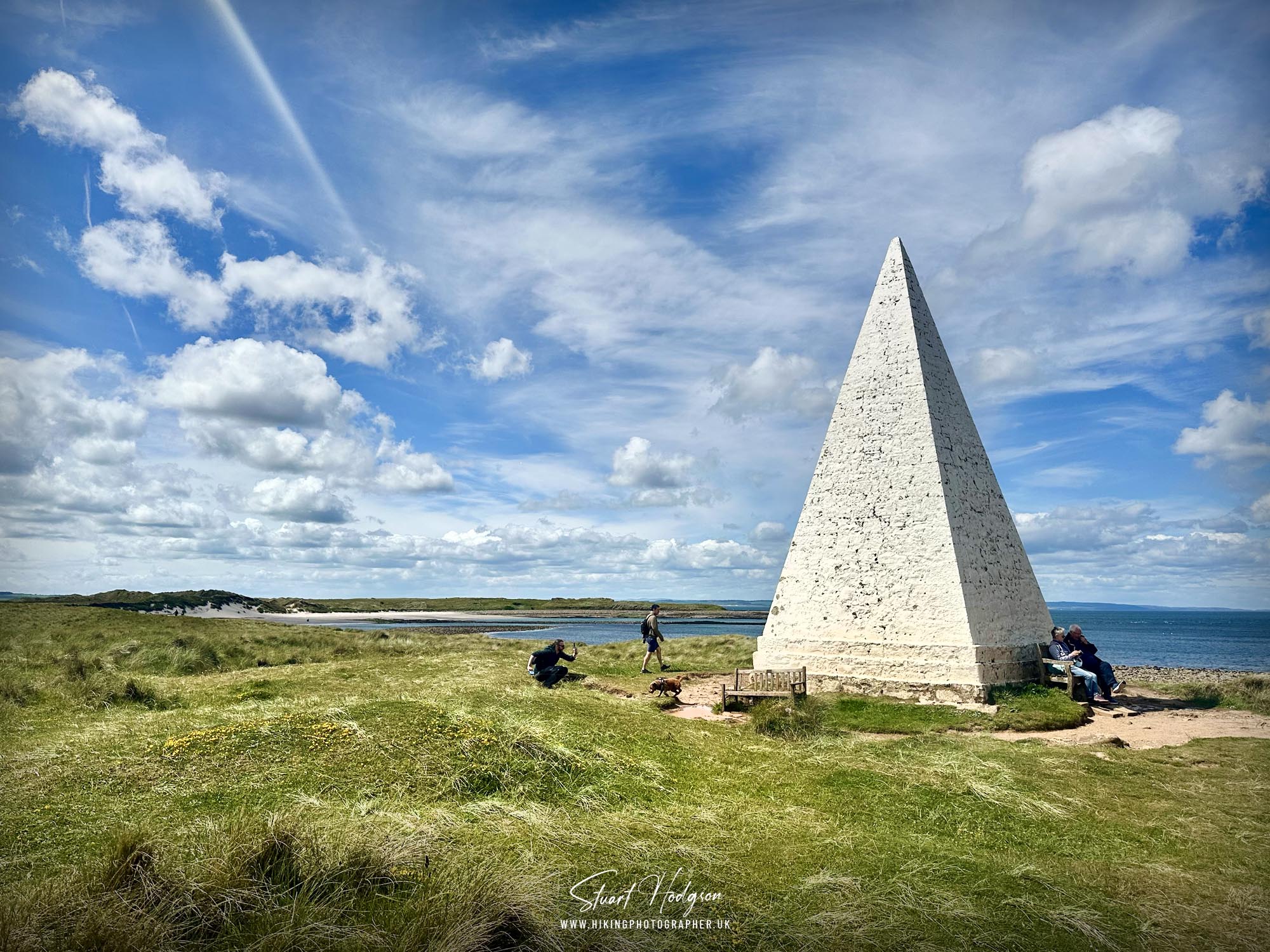
The pyramis makes for a good little stop before cracking on and completing the Holy Island walk
WALKING THE DUNES & BEACH COVES ON HOLY ISLANDS NORTHERN COASTLINE

From Emmanuel Head we then follow the grassy coastal path on Holy Islands Northern coastline. This is a really quiet section of the route and you won’t pass many people as not many visitors venture to this area. There are 2 main sandy coastal bays, which are perfect for walking on if the tide is out.
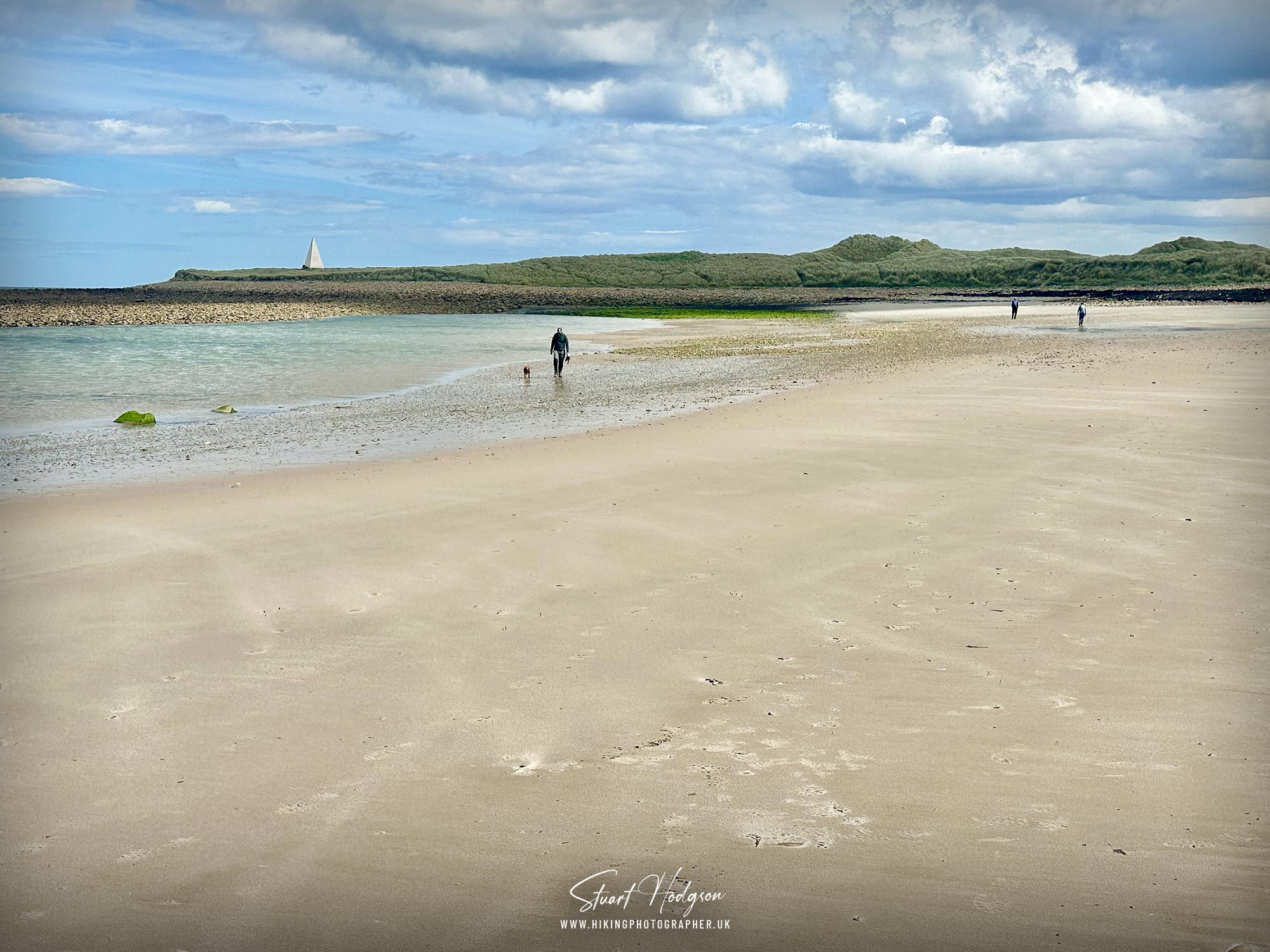
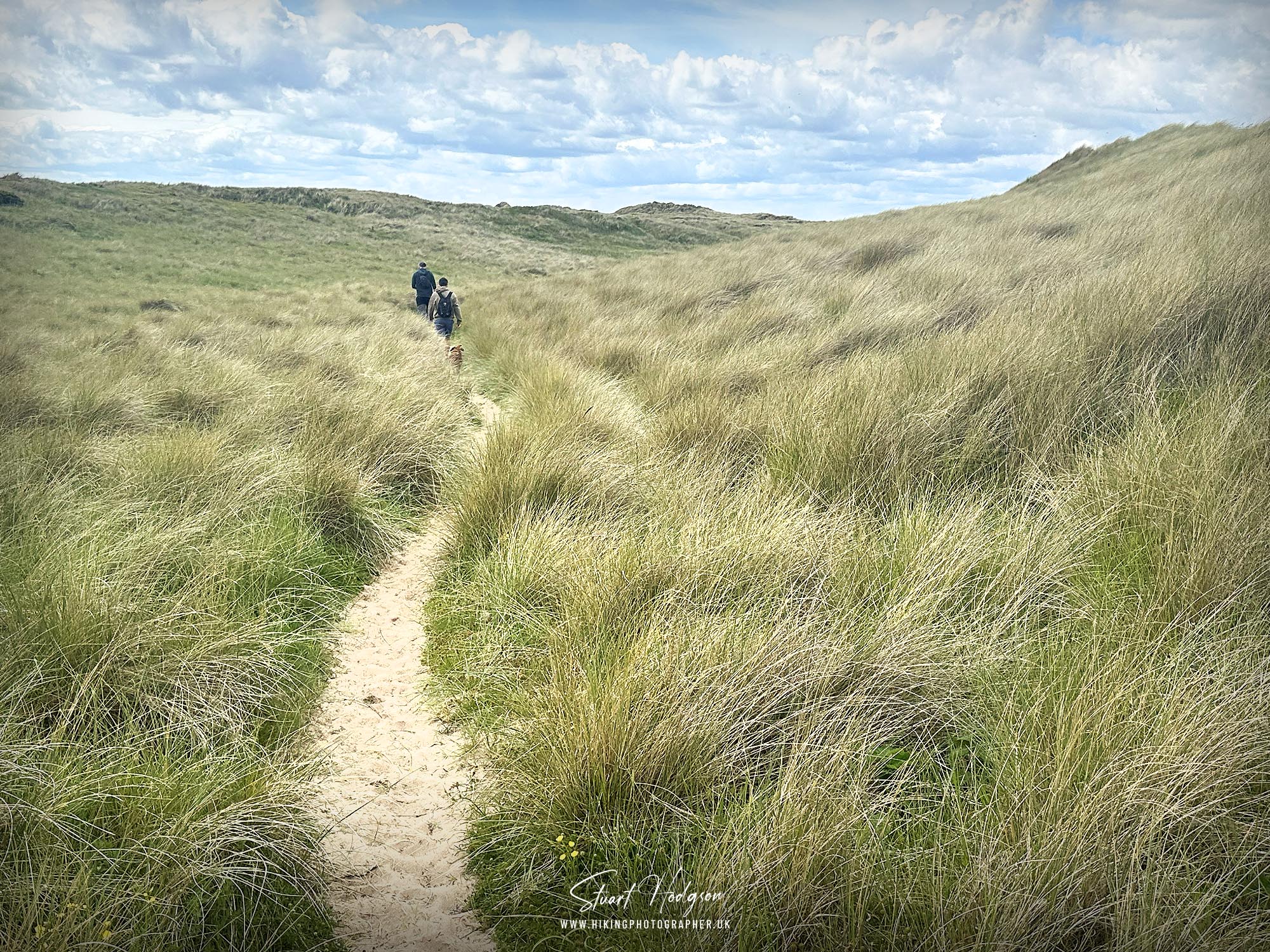
A lot of this section is through the dunes on clearly marked sandy paths, and feels very different to the route around the Castle. It almost feels like a deserted Island in this part,

WALKING THE CAUSEWAY BACK TO THE START
From the quiet northern coastline of Holy Island the path eventually leads you to the road causeway, and we’ll follow this and walk alongside it all the way back to the car park at Beal Sands.
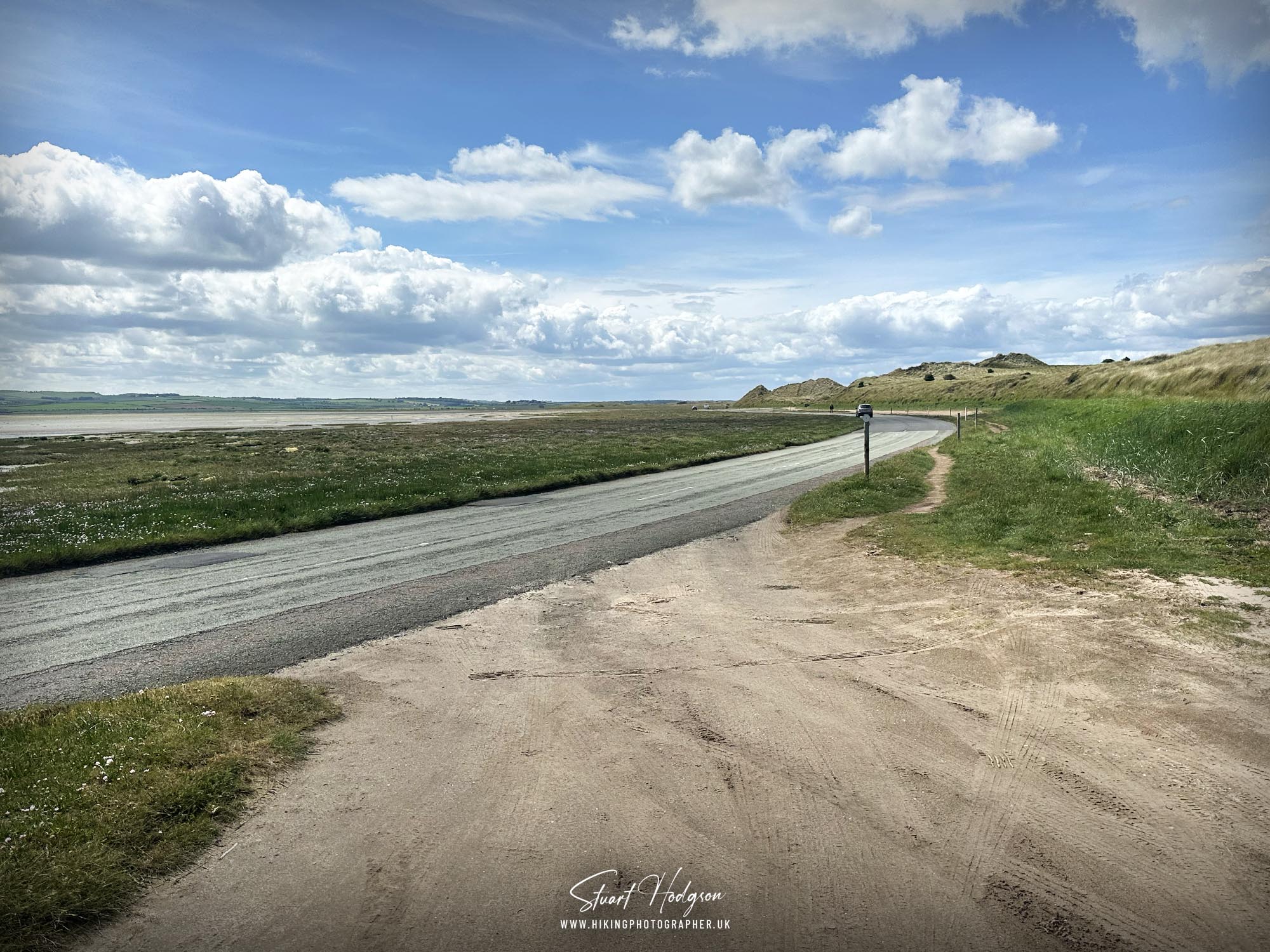
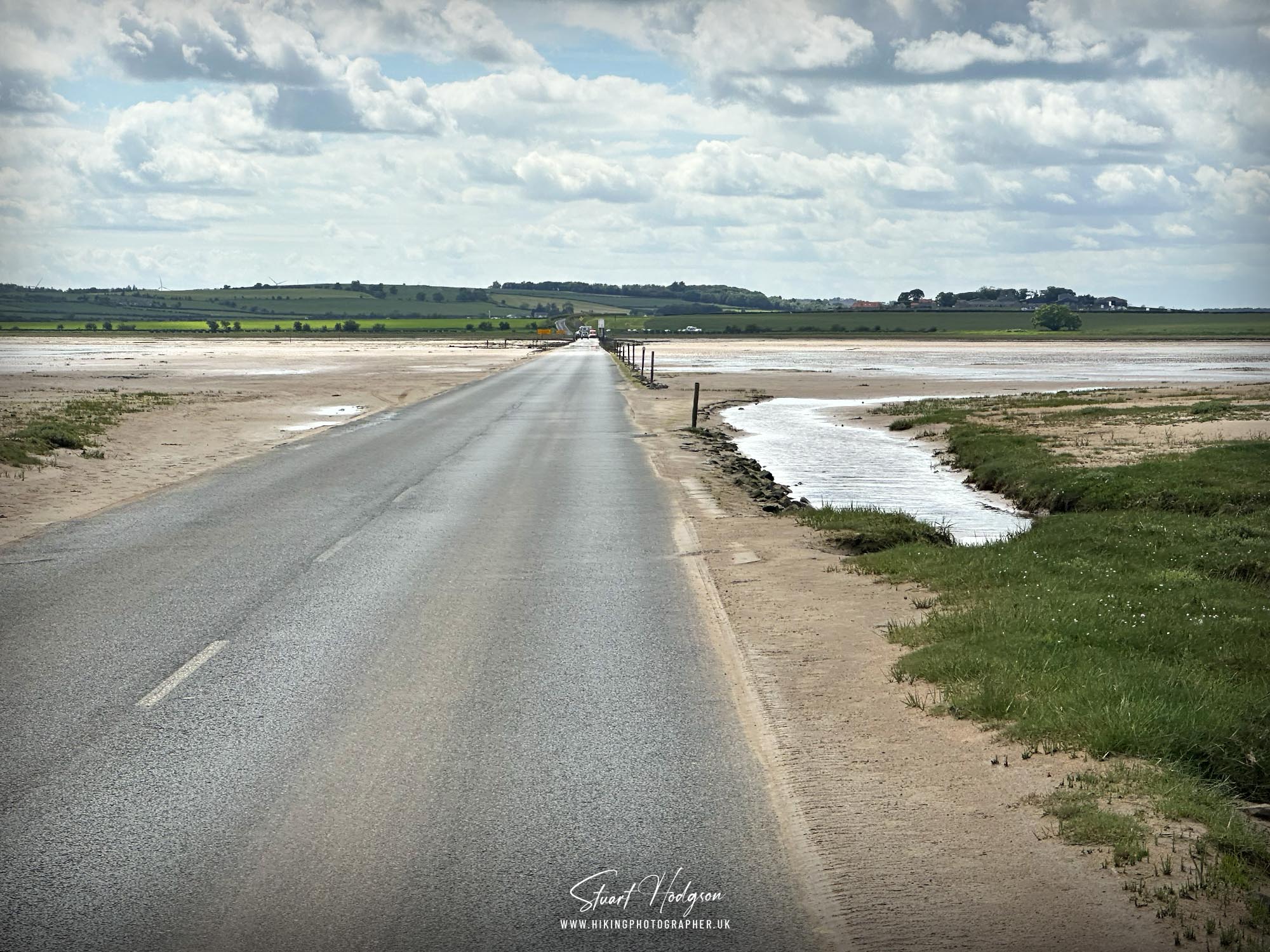
The end is now in sight! We’ve done this 10 mile walk in good time, and so the causeway is still open and we won’t be stranded haha! On a serious note this walk takes carefull planning as you do have a tidal window of around 7 hours. We did it in 5 hours with plenty of stops.
I really enjoyed this walk around Holy Island via the Pilgrims Way over the sands and it had a lot of variety and different views and of course it is steeped in history. It’s definitely one of the best walks I have done, and I highly recommend it -I hope the blog post has inspired you to give it a go. Just check those tide times! Enjoy!
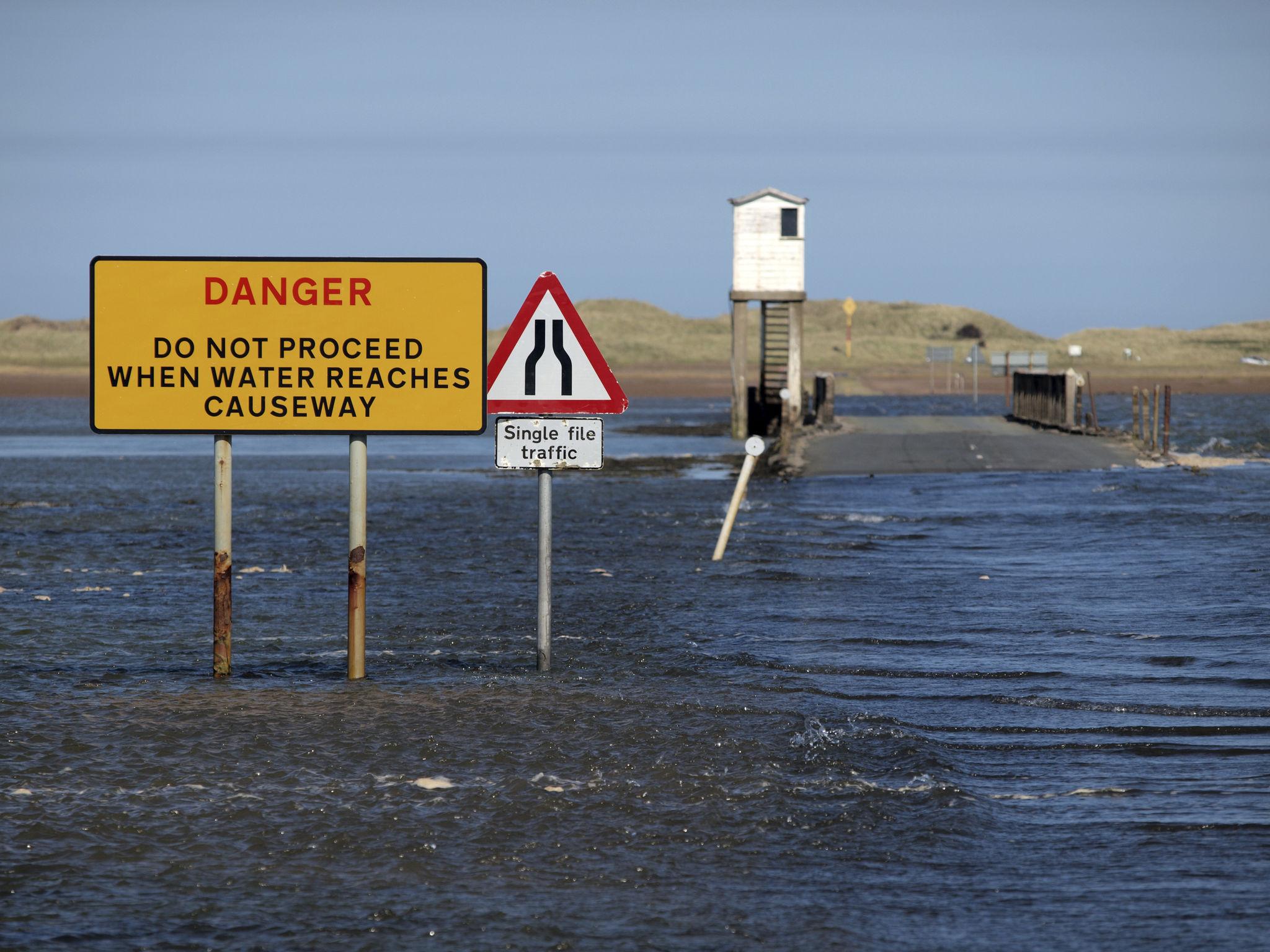
I think it’s worth sharing an image of the Holy Island Causeway under water – as a reminder that it is very important to check the causeway and tide times before you visit Holy Island. The road causeway that you drive on to Holy Island can end up beneath 1-2 metres of seawater at high tide. To put that into perspective – 30 cm of moving water can make a car lose traction and 60cm can float a car! Very occasionally you will see on the local news that a car has become stranded – don’t let that be you, the linsk below will help you plan your trip to perfection.
10 INTERESTING FACTS ABOUT HOLY ISLAND
Before I go, whenever I visit a place for a walk and explore – I like to learn a bit about the place and it’s history and some interesting facts. Holy Island must have some of teh most fascinating history in the UK, certainly for it’s size and here’s 10 facts that you might find interesting about Holy Island too!
1. It was one of the birthplaces of Christianity in England
In AD 635, the Irish monk Saint Aidan founded a monastery on Lindisfarne at the request of King Oswald. From here, Christianity spread throughout much of northern England.
2. The Lindisfarne Gospels are one of Britain’s greatest treasures
The breathtaking Lindisfarne Gospels were created around AD 700 by the monk-bishop Eadfrith. They feature intricate Celtic artwork and are considered one of the finest illuminated manuscripts ever produced. Today, the original manuscript is held at the British Library in London.
3. Lindisfarne was the site of the first major Viking raid in Britain
In AD 793, Vikings attacked the monastery in what became one of the most infamous events in British history. The raid shocked Christian Europe and is often seen as marking the beginning of the Viking Age in Britain.
4. St Cuthbert’s body was carried around Britain for seven years
After the Viking threat intensified, monks fled Lindisfarne carrying the remains of Saint Cuthbert and the Lindisfarne Gospels. They wandered for seven years before eventually settling in Durham, where Durham Cathedral was later built to house his shrine.
5. The island has been a pilgrimage destination for nearly 1,400 years
People still walk the ancient Pilgrim’s Way across the sands to Holy Island, following wooden posts that mark the historic route. The journey is thought to mirror the path medieval pilgrims took centuries ago.
6. Lindisfarne Castle was built using stones from the priory
Lindisfarne Castle was constructed in 1550 during the reign of Henry VIII to defend against potential Scottish invasions. Builders reused stones from the ruined priory, something quite common at the time.
7. The castle became an Arts and Crafts masterpiece
In 1901, publisher Edward Hudson bought the castle and hired renowned architect Edwin Lutyens to transform it into a stylish country retreat. The gardens were later designed by the celebrated horticulturalist Gertrude Jekyll.
8 Lindisfarne Mead has monastic origins
The island is famous for Lindisfarne Mead, a fortified wine inspired by traditional honey-based drinks associated with medieval monasteries. It’s been produced on Holy Island since the 1960s and has become something of a local institution.
9. It has a tiny permanent population
Although thousands of visitors arrive each year, only around 150 people live on Holy Island permanently, creating a close-knit community unlike anywhere else in England.
10. The island is internationally important for wildlife
Lindisfarne lies within the Lindisfarne National Nature Reserve, one of the UK’s most important sites for migrating birds. Vast mudflats and saltmarshes provide vital feeding grounds for species such as brent geese, curlews, oystercatchers and grey seals.
Lindisfarne is one of those rare places where history, spirituality, wildlife and landscape all overlap. In a single day, you can walk in the footsteps of saints, Vikings and medieval pilgrims while surrounded by some of the most beautiful coastal scenery in Britain.
I hope this blog post has helped you plan a visit to Holy Island!




0 Comments